Hosts prioritising Fairtrade
If Fairtrade certification matters more to you than a general sustainability claim, the Fairtrade Foundation’s distinction between its marks helps you check what the exact bar covers.


If Fairtrade is your priority, choose a chocolate bar by the mark on its current pack rather than by a familiar brand name or a general cocoa-sourcing claim. For a Boxing Day buffet, check what the mark covers, then choose a serving format that lets guests see each product’s ingredients and allergen information.
If Fairtrade certification matters more to you than a general sustainability claim, the Fairtrade Foundation’s distinction between its marks helps you check what the exact bar covers.
Assorted chocolate needs product-by-product checks. Ingredients and precautionary statements can differ between bars and flavours, so keep the relevant wrappers available when serving.
Sharing bars suit a cut-and-serve arrangement; individual wrappers keep each bar’s label close to hand. Either way, check certification and ingredients on the products you put out.
Start with the Fairtrade claim on the exact pack, then assess allergen information and how the bars will be served.
| Priority | What to check | Your needs |
|---|---|---|
| Fairtrade scope | Look for the mark on the current pack. The Fairtrade Foundation says its classic black-background mark covers all ingredients that can be Fairtrade-certified; the Fairtrade Sourced Ingredient mark names the ingredient it covers. | I want to know whether the Fairtrade claim covers the bar’s eligible ingredients or a named ingredient such as cocoa. |
| Other cocoa claims | Read the exact seal or programme wording. KitKat describes Rainforest Alliance-certified cocoa for its UK and Ireland chocolate and biscuits; Mars describes annual cocoa purchases equivalent to its European direct-factory requirements for named brands. Neither statement, by itself, identifies a bar as Fairtrade. | If Fairtrade is essential to my buffet, a different certification or manufacturer cocoa programme will not answer that requirement on its own. |
| Allergen information | Check each current ingredients list and any “may contain” wording. The Food Standards Agency explains that precautionary wording communicates possible unintended allergen presence. | Guests need access to the information for the particular pieces or bars they are offered, especially when products are served without their wrappers. |
| Serving format | Compare individual wrappers with a sharing bar and plan where its label will stay. Use any portion count as the manufacturer’s serving reference: Galaxy, for example, states 14 portions for its 360g milk bar. | I may prefer a sharing bar for a serving dish, or individual bars if keeping labels with each product is simpler. |
KitKat’s stated Rainforest Alliance cocoa certification and Mars’s European cocoa-purchasing programme do not, on their own, establish Fairtrade certification for an individual bar.
Check the exact pack for a Fairtrade mark before describing that product as Fairtrade.
The Fairtrade Foundation says the classic mark covers all ingredients that can be Fairtrade-certified, while the Fairtrade Sourced Ingredient mark identifies a named Fairtrade-sourced ingredient.
Read the ingredient named beside the mark and decide whether that scope meets your aim.
Removing wrappers can separate chocolate from its ingredients and “may contain” information. Those statements matter when assessing a particular product for a guest with an allergy.
Keep wrappers accessible, identify the pieces by product and check the current label against each guest’s requirements before offering them.
A larger bar or a stated portion count tells you about serving format, not its Fairtrade scope or its suitability for every guest.
Check the pack’s mark and ingredient information before deciding whether to serve a sharing bar or individually wrapped bars.
These brand references help distinguish product claims; check the current pack of any bar you plan to serve.
Divine presents itself as a Fairtrade-focused chocolate company.
Cadbury lists a 110g Dairy Milk bar among its chocolate products.
Galaxy offers larger bars, including a 360g milk chocolate bar with 14 manufacturer-stated portions.
Mars includes Mars-branded chocolate in its European responsibly sourced-cocoa programme.
Snickers is among the brands Mars names in its European cocoa programme.
Twix is another brand named in Mars’s European responsibly sourced-cocoa programme.
KitKat offers individual wafer bars and a 99g milk chocolate sharing bar.
These dark and milk chocolate bars offer different flavours and sizes for a buffet. Check each current pack’s Fairtrade mark and allergen information before deciding what to serve.
 No image available
A 90g dark chocolate bar for guests who prefer the stated 85% cocoa variety. Check the current pack’s Fairtrade mark and its scope; the listing also advises that it may contain almonds, hazelnuts and milk.
 No image available
A 180g milk chocolate bar with caramel and sea salt that can be divided for serving. Check the current pack’s Fairtrade mark and ingredient scope; the listing identifies milk and soya and gives further precautionary allergen wording.
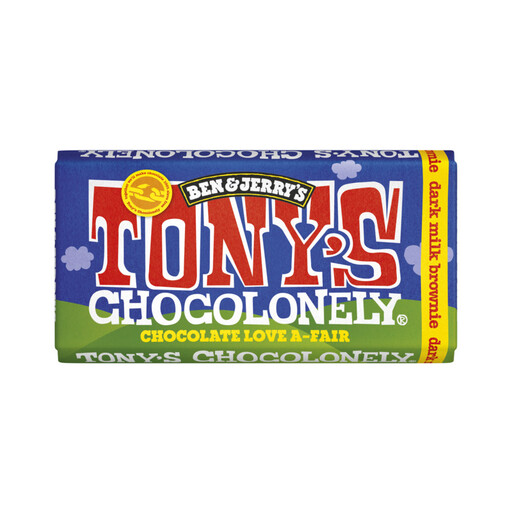 No image available
A 180g dark milk chocolate bar with fudge brownie flavour for a sharing dish. Check whether the Fairtrade mark on the current pack covers cocoa alone or other eligible ingredients; the listing identifies milk, soya and wheat.
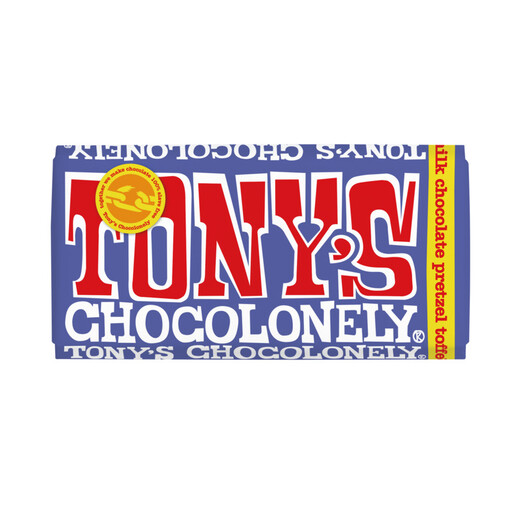 No image available
A 180g milk chocolate bar with pretzel and toffee for guests who want that combination. Confirm the current pack’s Fairtrade mark and scope before presenting it as Fairtrade; the listing identifies milk, soya and wheat.
 No image available
A 90g dark chocolate bar with raspberries and a stated 70% cocoa content. Check the current pack’s Fairtrade mark and all dietary information before serving: the listing’s vegan-friendly wording conflicts with its milk-allergen statement, and it also gives precautions for gluten and nuts.
Check the current pack for a Fairtrade mark. The Fairtrade Foundation says the classic black-background mark covers all ingredients that can be Fairtrade-certified, while the Fairtrade Sourced Ingredient mark identifies the ingredient it covers.
No. Rainforest Alliance certification and a manufacturer’s cocoa programme are distinct from Fairtrade. If Fairtrade is your requirement, check the exact product’s Fairtrade mark rather than relying on another seal or a brand-level statement.
Keep each product’s current packaging accessible and check both its ingredients and precautionary wording before offering it to a guest with an allergy. The Food Standards Agency explains that “may contain” wording communicates possible unintended allergen presence.
No. Snickers UK lists peanuts in its 40g bar and says it may contain other nuts; KitKat UK lists wheat in its 2 Finger Milk product. Assess each exact bar and its current label against your guests’ requirements.