What should you check before buying?
Decide how specific your Fairtrade claim needs to be, then check the individual bar and its packaging for sale.
| Priority | What to check | Your needs |
|---|
| Fairtrade claim |
Look for the current pack’s mark. The Fairtrade Foundation says the classic black FAIRTRADE Mark covers all ingredients that can be Fairtrade-certified; the white Fairtrade Sourced Ingredient mark identifies a named ingredient. |
I want to describe the bars accurately. If my claim is about Fairtrade cocoa specifically, I need the ingredient named on the pack rather than assuming the whole bar has the same scope. |
| Range selection |
Check the exact flavour and wrapper as well as any brand-wide statement. The Fairtrade Foundation says all Divine products are Fairtrade, but a brand’s history or a general cocoa programme does not establish the mark on another individual bar. |
A clearly stated Fairtrade range would help me choose stock, while the packs I put on the table still need to support what I tell buyers. |
| Food information |
Keep manufacturer packaging intact and the ingredients and allergen information readable. Food Standards Agency guidance distinguishes already-prepacked food from food packed at the place of sale before a customer selects it. |
Buyers should be able to inspect the label on the bar they are considering, rather than relying on a separate description at the stall. |
| Selling arrangements |
Check the organiser’s conditions and ask the relevant local authority about your selling pattern. GOV.UK food-business guidance includes temporary stalls; Business Companion notes that buying stock for resale or selling regularly can indicate trader status. |
If I am buying bars specifically to resell, I need to establish which arrangements apply before setting up the refreshment table. |
Brand references
A brand can help narrow the search, but the current wrapper determines what you can say about a particular bar.
Divine
The Fairtrade Foundation says all Divine products are Fairtrade and that their certifiable cocoa, sugar and vanilla are Fairtrade-certified. Divine describes itself as farmer co-owned.
- A stated range-wide Fairtrade commitment is useful when planning a Fairtrade-led selection.
- Check the flavour, ingredients, allergens and wrapper of each bar you buy for resale.
Tony’s Chocolonely
The Fairtrade Foundation describes Tony’s Chocolonely as Fairtrade-certified and refers to its milk, dark and white chocolate in UK materials.
- Worth investigating when you want a Fairtrade-focused alternative in more than one chocolate style.
- Check the mark and claim on the exact bar rather than applying a general brand description to every variant.
Green & Black’s
Green & Black’s is associated with Fairtrade chocolate, but a past product association does not establish the certification scope of a bar sold now.
- An option to inspect if you are considering dark chocolate for the refreshment table.
- Use only the Fairtrade claim and mark shown on the exact current wrapper.
Galaxy, Mars, Snickers and Twix
Mars says its European responsibly sourced cocoa programme purchases annual volumes equivalent to the cocoa needs of its direct European factories for these brands. Mars says the programme uses mass balance and that cocoa in a specific product may not come from it.
- These are familiar brands to consider for a general confectionery selection.
- The company programme does not establish that an individual bar is Fairtrade-certified; check its wrapper before making that claim.
Cadbury
Cadbury describes its Dairy Milk 110 g bar as milk chocolate and vegetarian friendly.
- A milk-chocolate format to consider for general refreshments.
- Do not describe a particular Cadbury bar as Fairtrade unless its current wrapper supports that claim.
KitKat
KitKat UK describes its 4 Finger Milk bar as a 41.5 g milk-chocolate and wafer product.
- A specified bar format to consider when selecting individually packaged refreshments.
- Check the exact wrapper before making any Fairtrade claim about the bar.
Chocolate bars to consider on Joybuy
These dark and milk chocolate options offer different flavours and bar sizes for a car boot refreshment table. Inspect each current wrapper for the Fairtrade mark, ingredients and allergens before deciding how to describe or sell it.
 No image available
Divine Chocolate 70% Dark Chocolate with Raspberries 90g
A raspberry and dark-chocolate option for the refreshment table. The Fairtrade Foundation says Divine products are Fairtrade; check this bar’s current mark and its ingredients and allergen label, particularly before making any milk-free or vegan claim.
View on Joybuy
 No image available
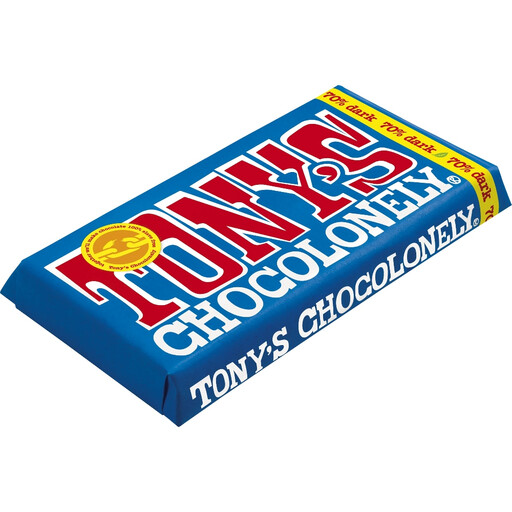
Tony’s Dark Chocolate 180g
A 180 g dark bar if you want a plain dark-chocolate option. Check the current wrapper for the Fairtrade mark’s scope and for ingredients and allergens before describing it to buyers.
View on Joybuy
 No image available
Green & Black’s Dark 85% Chocolate 90g
A 90 g dark bar labelled 85% for buyers looking for that chocolate style. Check its current Fairtrade mark and wording; do not assume a mass-balance sourcing description means ingredients are physically segregated. Keep the allergen label available to buyers.
View on Joybuy
 No image available
Tony’s Chocolonely Milk Chocolate with Caramel & Sea Salt 180g
A 180 g milk-chocolate choice with caramel and sea salt. Check which Fairtrade mark appears on the current wrapper and what it covers, and leave the ingredients and allergen information visible at the sale.
View on Joybuy
 No image available
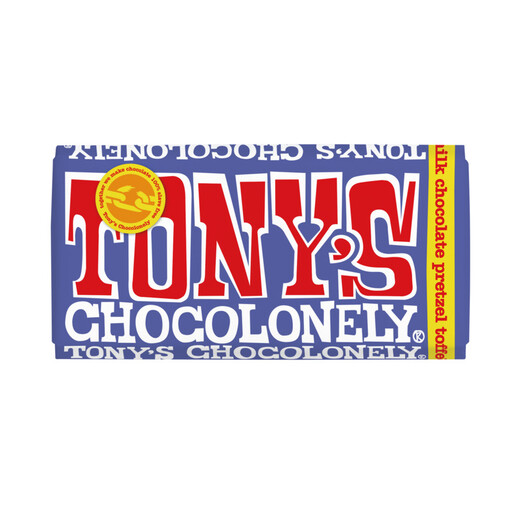
Tony’s Chocolonely Milk Chocolate with Pretzel & Toffee 180g
A 180 g milk-chocolate bar with pretzel and toffee for a different flavour and texture. Inspect its current Fairtrade mark and ingredients, and make sure buyers can read the allergen information on the wrapper.
View on Joybuy
Questions about Fairtrade bars and car boot sales
How can I identify a Fairtrade chocolate bar?
Check its current wrapper for the FAIRTRADE Mark. The Fairtrade Foundation says the classic black mark covers all ingredients that can be Fairtrade-certified, while the white Fairtrade Sourced Ingredient mark applies to the ingredient named on the pack, such as cocoa.
Does Mars’s cocoa programme mean a Galaxy, Mars, Snickers or Twix bar is Fairtrade?
No: Mars’s European responsibly sourced cocoa programme is not, by itself, a Fairtrade claim for an individual bar. Mars says it uses mass balance and that cocoa in a specific product may not come from the programme. Describe a bar as Fairtrade only when its current wrapper bears the relevant mark.
Should I repackage chocolate bars for a car boot sale?
Keeping manufacturer-packed bars unopened makes their existing ingredients and allergen information available to buyers. Food Standards Agency guidance says food packed at the place of sale before a customer selects it can fall under prepacked-for-direct-sale labelling requirements, including a food name and full ingredients list with allergens emphasised.
Do I need to check registration before selling chocolate at a car boot sale?
Yes, check whether your activity is treated as a food business before trading. GOV.UK food-business registration guidance includes temporary stalls, while Business Companion notes that buying goods specifically for resale or selling regularly can affect trader status. Ask the relevant local authority and the sale organiser what applies to your circumstances.


