What should you check?
Start with the sourcing claim if Fairtrade is your deciding criterion, then choose a flavour and format that suit the occasion.
| Priority | What to check | Your needs |
|---|
| Fairtrade claim |
Look for the mark on the exact pack. The Fairtrade Foundation says its standard FAIRTRADE Mark covers ingredients that can be Fairtrade-certified; its Sourced Ingredient mark identifies the Fairtrade-sourced ingredient instead. Read which mark is shown and what it names. |
I want a Fairtrade-certified bar, not just a general cocoa-sourcing statement. |
| Flavour |
Check whether the bar is milk or dark chocolate and note any stated cocoa percentage or added flavours. Treat the certification claim as a separate check. |
For a relaxed evening, I’d rather choose a flavour everyone eating the bar actually likes. |
| Bar format |
Read the pack weight and check whether the bar works for one person or for sharing. Do not assume a serving size from the total bar weight. |
Is this for one snack, or do I want a bar to split or keep for another evening? |
| Nutrition label |
Use the pack’s per-100g values to compare products on the same basis. Check the stated serving size separately if you want per-serving information. |
I want to see the sugar and saturated-fat figures without treating dark or Fairtrade chocolate as a different type of food. |
Brand and sourcing references
These references describe particular products, ranges or sourcing programmes; the label on an individual bar remains the purchase check.
Divine
Divine describes its chocolate business as co-owned by cocoa farmers in Ghana’s Kuapa Kokoo cooperative.
- Divine lists Fairtrade cocoa mass, sugar, cocoa butter and vanilla for its 70% dark chocolate product.
- A 70% dark bar is a different flavour choice from milk chocolate; check the exact pack and format you prefer.
Cadbury
Mondelēz describes Cadbury Dairy Milk cocoa as sourced through its Cocoa Life programme.
- Cadbury’s Dairy Milk product information identifies Cocoa Life Ghanaian cocoa.
- A Cocoa Life statement alone does not establish a product-level FAIRTRADE Mark; check the individual bar if that mark matters to you.
Galaxy
Mars describes the cocoa in Galaxy Smooth Milk products as sourced from Rainforest Alliance Certified farms.
- The stated sourcing claim applies specifically to Galaxy Smooth Milk products.
- Rainforest Alliance certification is a distinct claim from Fairtrade certification.
Mars, Snickers and Twix
Mars describes Cocoa for Generations and its Responsible Cocoa programme as group-level cocoa-sourcing initiatives.
- These programmes provide context for Mars’ approach to cocoa sourcing.
- A group-level programme does not establish Fairtrade certification for a particular Mars, Snickers or Twix bar.
KitKat
Nestlé UK & Ireland says KitKat moved to Rainforest Alliance certification as its cocoa-certification route.
- Nestlé identifies the certification scheme used for KitKat.
- Nestlé says the schemes differ without claiming one is better; the Rainforest Alliance statement is not a current Fairtrade claim for a KitKat bar.
Co-op own brand
Co-op states that all its own-brand chocolate confectionery is Fairtrade.
- That range-level commitment gives Fairtrade-focused shoppers another route to consider.
- Check an individual product’s pack for its ingredients, allergens, nutrition and format.
Chocolate bars on Joybuy
These milk, dark and flavoured bars offer different formats for a TV-night snack. If Fairtrade certification determines your choice, check the mark and its scope on the exact pack before buying.
 No image available
Tony's Chocolonely Fairtrade Milk Chocolate Caramel Sea Salt 180g
The 180g milk-chocolate bar offers a caramel-and-sea-salt flavour for a TV-night snack. Check which Fairtrade mark appears on the exact pack and what it covers.
 No image available
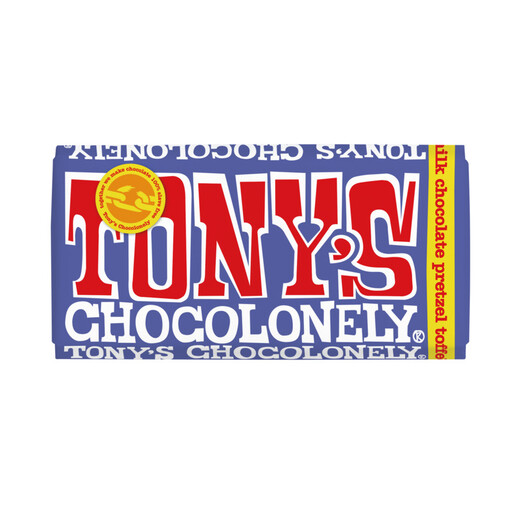
Tony's Chocolonely Milk Chocolate Pretzel & Toffee 180g
Choose this 180g milk-chocolate bar if pretzel and toffee appeal to your group. Check the exact pack for the Fairtrade mark and its scope if certification is decisive.
 No image available
Green & Black's Dark Chocolate 85% 90g
This 90g bar is an option if you prefer dark chocolate labelled 85% cocoa. Read its pack to establish the Fairtrade mark and the scope of any ingredient claim.
 No image available
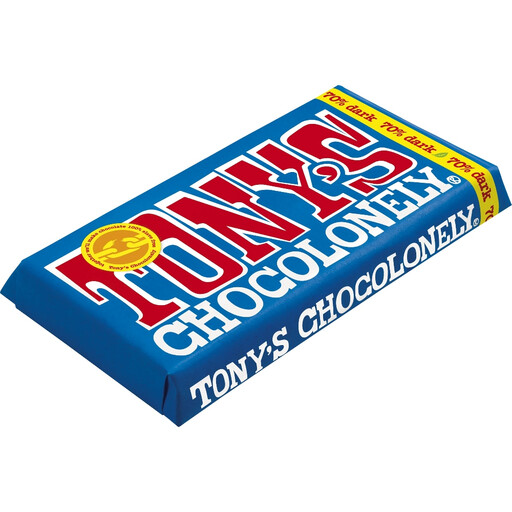
Tony's Dark Chocolate 180g
The 180g dark-chocolate format may suit a snack intended for sharing or keeping for another evening. Check the exact pack’s mark before relying on a Fairtrade claim.
 No image available
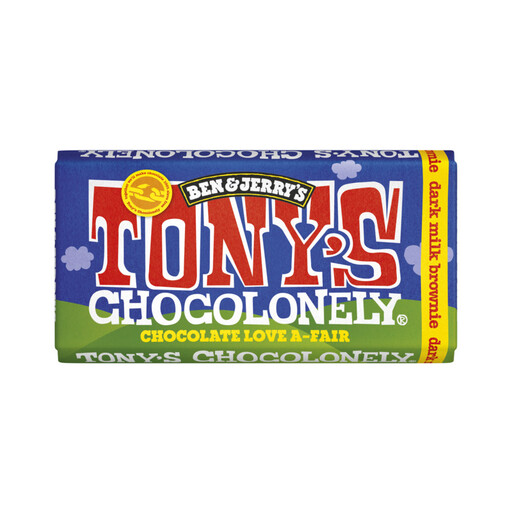
Tony's Chocolonely Ben & Jerry's Dark Milk Chocolate Fudge Brownie 180 g
This 180 g dark-milk chocolate bar offers a fudge-brownie flavour. If its cocoa-sourcing claim matters to you, read the exact pack’s mark and which ingredients it covers.
Questions about Fairtrade chocolate
How can I tell what a chocolate bar’s Fairtrade mark covers?
Read the mark on the exact pack. The Fairtrade Foundation says its standard black-background FAIRTRADE Mark means ingredients that can be Fairtrade-certified have been purchased on Fairtrade terms; a Fairtrade Sourced Ingredient mark identifies the particular Fairtrade-sourced ingredient.
Does a Rainforest Alliance or responsible-cocoa claim mean Fairtrade?
No: those claims describe distinct sourcing approaches, not a FAIRTRADE Mark. Mars describes Rainforest Alliance-certified cocoa for Galaxy Smooth Milk, Nestlé UK & Ireland identifies Rainforest Alliance certification for KitKat, and Mars describes Responsible Cocoa as its own programme. Check the individual bar if Fairtrade certification is required.
Does Fairtrade certification make chocolate suitable for school food in England?
No: Fairtrade certification does not decide school-food compliance. England’s current School Food Regulations define chocolate in any form, and products containing or coated with chocolate, as confectionery; the applicable requirements must be checked for the particular school-food setting.
Are England’s food-promotion restrictions the same as its school-food rules?
No. Department of Health and Social Care guidance addresses promotion and placement restrictions for certain foods high in fat, salt or sugar at businesses operating in and selling to England. Department for Education school-food guidance addresses food provided in state-funded schools in England.
Do the proposed September 2027 school-food standards already apply in England?
No. Department for Education materials describe revised standards intended for September 2027, subject to Parliamentary approval. For a current decision, use the applicable current England requirements and the school or caterer’s compliance process.


