Parents planning an occasional treat
A small wrapped bar gives you a ready-made amount. If you choose a larger bar, decide how much to serve before putting it out, and check its ingredients and allergens.


For an occasional after-school treat, check the Fairtrade mark on the exact chocolate bar, then choose a format that makes the amount you intend to serve straightforward: a small wrapped bar for one serving, or a larger bar divided before sharing. Fairtrade certification describes sourcing, not sugar content, so compare the pack’s nutrition information and check ingredients and allergens separately.
A small wrapped bar gives you a ready-made amount. If you choose a larger bar, decide how much to serve before putting it out, and check its ingredients and allergens.
Look at the mark on the particular wrapper rather than relying on a brand-wide cocoa programme. The classic FAIRTRADE Mark and the Fairtrade Sourced Ingredient mark have different scopes, according to the Fairtrade Foundation.
A 90g or 180g bar can be divided for a planned occasion. The pack size does not set an individual serving, so check the label and portion the bar at home.
Start with the certification mark, then choose the bar size and check the exact pack’s nutrition and ingredient information. A promotion is a separate consideration: a Food Standards Agency and Ipsos Northern Ireland survey interviewed 611 adults in Northern Ireland between 16 September and 23 November 2024.
| Priority | What to check | Your needs |
|---|---|---|
| Fairtrade scope | Inspect the exact pack. The Fairtrade Foundation says the classic black-background mark covers ingredients that can be Fairtrade-certified; the Fairtrade Sourced Ingredient mark identifies a named Fairtrade-sourced ingredient. | I want to know whether the mark covers the bar’s certifiable ingredients or a named ingredient such as cocoa. |
| Bar size | Check the pack weight and whether the bar is individually wrapped. A 35g bar provides a defined pack size; 90g and 180g bars require you to decide how much to serve. | For one occasional treat, I would rather use a small bar. If the family is sharing, I can divide a larger one beforehand. |
| Nutrition label | Compare sugars on the same per-100g basis, then read the stated serving information. Fairtrade certification does not describe a bar’s sugar content. | I want to choose the amount deliberately instead of assuming that Fairtrade sourcing changes the nutritional content. |
| Ingredients | Read the current pack’s ingredient and allergen statements, particularly when changing flavour or format. | Someone eating the chocolate may need me to check the precise variant, not just the brand name. |
| Promotions | Check the certification mark and nutrition label independently of any promotion; compare the products themselves on the same basis. | A promotion might catch my eye, but I still want to inspect the bar. In the Food Standards Agency and Ipsos Northern Ireland’s 2024 survey of 611 adults, 49% said a promotion made them more likely to buy chocolate confectionery, crisps and snacks; that measured promotion response, not parents’ snack preferences. |
Rainforest Alliance, Cocoa Life and Mars’ Responsibly Sourced Cocoa Program are not interchangeable with a FAIRTRADE Mark. Mars also says its mass-balance programme does not mean a particular bar contains cocoa purchased through that programme.
If Fairtrade certification matters to you, inspect the exact wrapper and check whether its mark applies to certifiable ingredients or a named sourced ingredient.
A 90g or 180g pack does not define how much one person should eat. Fairtrade sourcing does not change the need to read its sugar information.
Choose a smaller wrapped format when a defined pack size is useful, or divide a larger bar before serving and put the remainder away.
Department for Education guidance addresses food provided in state-funded schools in England; the Requirements for School Food Regulations 2014 define chocolate as confectionery. Those provisions should not be described as one rule governing every UK household’s snacks.
If a school is providing the food, check the rules applicable to its nation and the school’s arrangements. For chocolate eaten at home, make the choice using the pack’s certification, ingredients and nutrition information.
Fairtrade certification does not describe a chocolate bar’s allergens. Ingredients can also differ between flavours.
Read the current physical pack for the exact variant before serving it to someone with an allergy.
These references help distinguish Fairtrade-labelled options from other cocoa programmes; a brand name alone does not establish the mark on every bar.
Divine Chocolate lists a 35g milk bar made with Fairtrade Ghanaian cocoa and a 90g 45% milk bar made with Fairtrade-certified cocoa.
Tony's Chocolonely UK describes its 180g chocolate bars, including milk and dark varieties, as Fairtrade-certified.
Co-op says it sources cocoa for its own-brand range on Fairtrade terms and describes its own-brand chocolate range as Fairtrade.
Cocoa Life, associated with Mondelēz International, describes a Fairtrade partnership; that does not establish a FAIRTRADE Mark on a particular Cadbury bar.
Mars says it has purchased an annual cocoa volume equivalent to that required for its European direct-factory operations, including these brands, through its Responsibly Sourced Cocoa Program since 2023.
KitKat UK says cocoa mass for its UK and Ireland bars is Rainforest Alliance-certified and sourced through its income accelerator programme.
These are larger chocolate bars to divide for an occasional after-school treat or household sharing, rather than individually wrapped single bars. Check the exact wrapper for the Fairtrade mark and its scope before choosing one on that basis.
 No image available
The 180g format is for dividing before a planned treat or sharing occasion, not a pre-set individual serving. Check the physical pack for the Fairtrade mark, nutrition information and allergens.
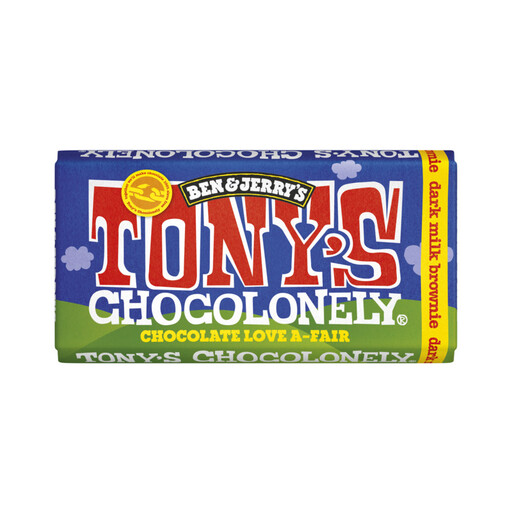 No image available
This 180g bar calls for a serving decision before sharing. Check the exact pack’s certification mark, ingredients and nutrition label rather than assuming they match another Tony's flavour.
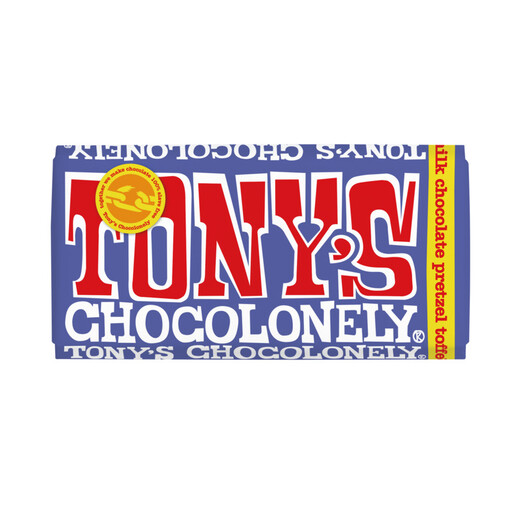 No image available
Plan how to divide this 180g bar if it is being served after school. Check the wrapper for the Fairtrade mark and read the ingredients and allergen statement for this pretzel-and-toffee variant.
 No image available
This 90g bar can be divided at home, but its pack size is not an individual serving. Check the physical wrapper for its Fairtrade mark and ingredients; do not rely on a vegan-friendly description without confirming the milk information on the pack.
Check the mark on the exact pack. The Fairtrade Foundation says the classic black-background FAIRTRADE Mark covers ingredients that can be Fairtrade-certified, while a Fairtrade Sourced Ingredient mark identifies the named Fairtrade-sourced ingredient, such as cocoa.
No: Fairtrade certification concerns sourcing rather than sugar content. For an occasional treat, choose the amount you intend to serve and read the exact bar’s nutrition information; NHS Healthier Families advises paying attention to sugar from snacks and drinks.
No. Department for Education guidance on school food in England addresses food provided in state-funded schools, and the Requirements for School Food Regulations 2014 define chocolate as confectionery. If a school is providing a snack, check the rules for its nation and the school’s arrangements rather than extending England’s provisions to home eating or every UK school.
No brand-wide conclusion about the FAIRTRADE Mark follows from the programmes described here. Mars describes a mass-balance cocoa programme for its European operations, KitKat UK describes Rainforest Alliance-certified cocoa mass for UK and Ireland bars, and Cocoa Life describes a Fairtrade partnership associated with Cadbury. If Fairtrade certification is essential, check the exact bar’s wrapper.