Hosts with a firm Fairtrade requirement
If Fairtrade matters to your christening plans, check the claim on the particular bar rather than relying on a brand’s wider cocoa-sourcing message.


If Fairtrade is a firm requirement for christening treats, check the exact bar’s FAIRTRADE Mark or named Fairtrade-ingredient claim: the Fairtrade Foundation says the two marks cover different things. Then choose a format that fits party bags, sharing or baking, and check each product’s ingredients and allergen warnings before serving; other responsible-cocoa schemes do not, on their own, establish a Fairtrade claim.
If Fairtrade matters to your christening plans, check the claim on the particular bar rather than relying on a brand’s wider cocoa-sourcing message.
Individually handed-out bars, larger bars for sharing and chocolate used in desserts call for different serving arrangements. Keep the packaging available so guests can identify what they are offered.
Fairtrade describes sourcing, not allergen suitability. Check the exact flavour and pack before serving it to a guest with an allergy.
Settle the Fairtrade claim first, then choose how the chocolate will be served and check the individual pack for allergens.
| Priority | What to check | Your needs |
|---|---|---|
| Fairtrade claim | Look for the mark on the exact pack and read its scope. The Fairtrade Foundation says the classic FAIRTRADE Mark covers ingredients that can be Fairtrade certified; the Fairtrade Sourced Ingredient mark names the Fairtrade ingredient. | I want the party treats to meet a specific Fairtrade requirement, not just carry a general responsible-cocoa message. |
| Allergens | Read the ingredients, emphasised allergens and any precautionary warnings for each flavour. Keep the original packaging with chocolate offered to guests. | Guests need to be able to identify a bar before accepting it, particularly if chocolate will also be displayed or served in pieces. |
| Serving format | Check the bar size, whether each guest receives a wrapped bar, and whether the product is intended for baking or decorating. Kingdom Coffee lists Divine Fairtrade bars in 30 × 35g cases; Ocado describes an M&S 100g milk chocolate product for baking and decorating. | For party bags, I’d choose a format I can hand out individually. For a dessert, I’d check the ingredients of the chocolate used to make it. |
| Chocolate style | Check the named flavour and cocoa percentage where stated. Divine lists a 70% dark 90g bar, while Green & Black’s identifies its 90g 70% dark bar as Organic Fairtrade. | If I’m putting out chocolate to share, I want guests to know which bar they’re choosing rather than assuming every dark or milk bar has the same ingredients. |
Cadbury’s Cocoa Life, Mars’s responsible-cocoa programme and Rainforest Alliance certification are distinct from the Fairtrade marks described by the Fairtrade Foundation. Galaxy and Mars also describe mass-balance sourcing, under which cocoa can be mixed during processing.
If Fairtrade is required, check the particular bar’s mark or clearly stated Fairtrade-ingredient claim before describing it as Fairtrade.
Fairtrade sourcing does not determine a bar’s ingredients. Ocado’s listing for an M&S Fairtrade milk chocolate, for example, identifies milk and soya and carries nut and peanut precautionary warnings.
Check each exact product, retain its wrapper and keep any alternative clearly identified rather than relying on an unlabelled mixed bowl.
Breaking up larger bars involves handling the chocolate and keeping its ingredient information associated with the pieces. Kingdom Coffee lists a Divine Fairtrade 30 × 35g case that offers a different format for handouts.
Decide whether the chocolate is for party bags, sharing or a dessert before choosing the bar size.
Department for Education school-food guidance concerns food and drink provided in state-funded schools in England; it is not guidance for all private christening parties.
If the event is at a school or uses its catering service, ask the venue which requirements and catering terms apply.
A brand’s sourcing programme is a starting point, not a substitute for checking the exact chocolate bar.
Divine describes its chocolate as Fairtrade and says members of Ghana’s Kuapa Kokoo cocoa co-operative co-own the business.
M&S says its Choc Marks range is made with Fairtrade cocoa and that Fairtrade Premium support from the bars goes to the Yeyasso Co-operative.
Green & Black’s identifies its 90g 70% dark bar as Organic Fairtrade.
Cadbury describes Dairy Milk cocoa as sourced through Cocoa Life. Its Cocoa Life page also describes a partnership with Fairtrade, but that is not a Fairtrade claim for every Cadbury bar.
Mars names these brands in its European responsible-cocoa programme. Galaxy separately describes Rainforest Alliance-certified cocoa sourcing for Smooth Milk.
KitKat says its UK and Ireland bars use Rainforest Alliance-certified cocoa with Mixed Identity Preserved traceability.
These Joybuy bars offer dark and flavoured chocolate formats to consider for sharing at a christening. Check the Fairtrade wording and allergens on the exact pack before choosing one for guests.
 No image available
A 90g dark bar to consider for a shared chocolate table. Check the exact pack for the scope of its Fairtrade claim and for allergen warnings, particularly if guests have nut or milk allergies.
 No image available
This 180g caramel-and-sea-salt bar is a sharing format rather than an individually wrapped party-bag treat. The listing identifies milk and soya and gives further precautionary allergen warnings; check the exact pack and its Fairtrade wording before serving.
 No image available
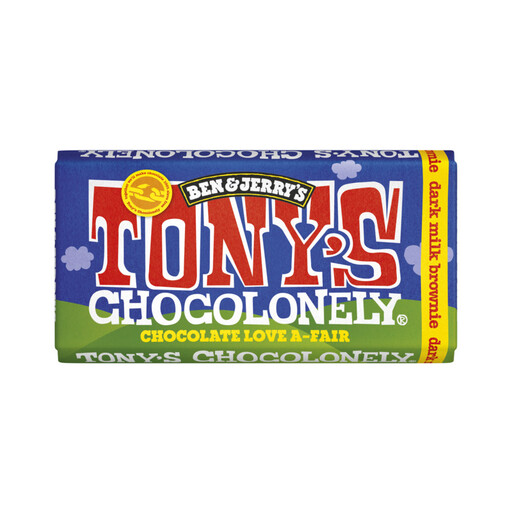
This 180g dark-milk bar with fudge brownie pieces is a sharing option. The listing identifies milk, soya and wheat and gives precautionary warnings for other allergens; read the pack’s allergen information and Fairtrade-cocoa claim before offering it to guests.
 No image available
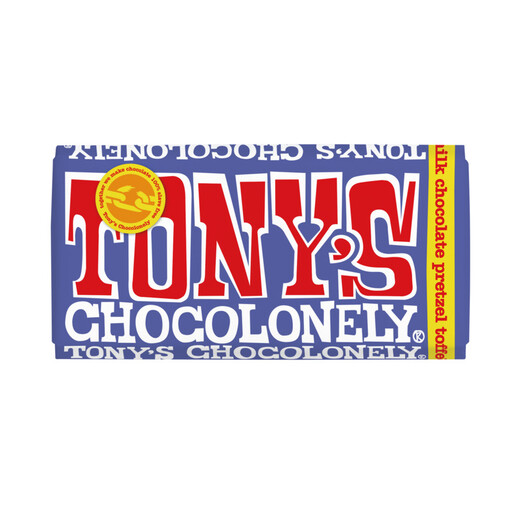
A 180g pretzel-and-toffee bar to consider when chocolate will be shared. The listing identifies milk, soya and wheat and gives other precautionary allergen warnings; check the exact pack’s ingredients and Fairtrade claim.
 No image available
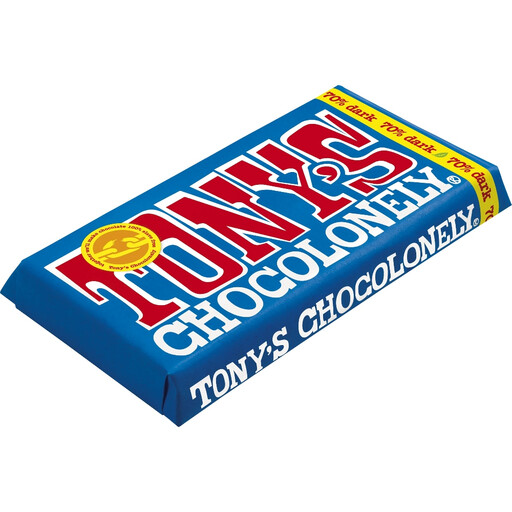
This 180g dark bar is a sharing format. Its listing identifies soya and gives precautionary warnings for other allergens; check the pack for those warnings and the scope of its Fairtrade-ingredient statement before serving.
Check the exact pack and read what its mark covers. The Fairtrade Foundation says the classic FAIRTRADE Mark covers ingredients that can be Fairtrade certified, whereas the Fairtrade Sourced Ingredient mark identifies the particular Fairtrade-sourced ingredient, such as cocoa.
No: the cited brand information describes Cocoa Life for Cadbury, Mars responsible-cocoa sourcing for Galaxy, Mars, Snickers and Twix, and Rainforest Alliance-certified cocoa for UK and Ireland KitKat bars. Those descriptions do not establish a Fairtrade claim for every bar; check the individual pack if Fairtrade is required.
Check the exact product’s ingredients and allergen warnings, and keep its original packaging available. Fairtrade status does not establish allergen suitability: Ocado’s M&S Fairtrade milk chocolate listing, for example, identifies milk and soya and carries nut and peanut precautionary warnings. Do not rely on an unlabelled mixed bowl for a guest with an allergy.
Department for Education school-food guidance concerns food and drink provided in state-funded schools in England, rather than private parties generally. If the celebration is held at a school or uses school catering, ask the venue which requirements and terms apply.
An individually handed-out bar avoids having to divide a larger bar: Kingdom Coffee lists Divine Fairtrade chocolate in 30 × 35g cases. Check the selected flavour’s ingredients and allergen warnings before putting it in a guest’s bag.