What to check before choosing
Start with the pack’s Fairtrade claim, then compare carbohydrate for the amount you intend to carry and eat. Treat the bar as one part of the ride’s food and drink plan.
| Priority | What to check | Your needs |
|---|
| Fairtrade claim |
Check the exact pack for the classic Fairtrade Mark or Fairtrade Sourced Ingredient wording. The Fairtrade Foundation says the latter identifies a particular sourced ingredient; mass balance does not guarantee that certified cocoa is physically present in a specific bar. |
I want to know whether the claim covers certifiable ingredients in the product or a named ingredient such as cocoa. |
| Carbohydrate portion |
Compare the labelled carbohydrate per 100g with the portion you plan to eat. The Natural Grocery Store lists 57.3g per 100g for Divine’s 35g milk bar, or approximately 20g per bar. British Cycling advises eating from the start on rides over about 90 minutes. |
A single bar might be one snack on my ride; I do not want to mistake its carbohydrate contribution for a complete plan. |
| Pack size |
Decide whether you want a 35g bar or will divide a larger bar into portions. Check that you can carry and open the pack where you intend to eat it. |
For an on-bike snack, I would rather know my portion in advance than work it out while riding. |
| Ingredients and allergens |
Read the current ingredient and allergen panel for the precise flavour and variant. Practise eating your chosen portion in training, as British Cycling advises for ride food. |
I need a bar whose ingredients suit me and whose portion is practical at my intended riding effort. |
Brand and sourcing references
These brand claims help distinguish sourcing labels; they do not establish that every product from a brand carries the same certification.
Divine Chocolate
The Natural Grocery Store lists Fairtrade ingredients for Divine’s 35g milk bar, while Divine Chocolate identifies its 90g 45% milk bar as Fairtrade.
- The 35g milk bar is a defined small portion; its listed 57.3g carbohydrate per 100g works out to approximately 20g per bar.
- Do not apply that milk bar’s nutrition figures to Divine’s 90g 45% cocoa variant. Divine lists 41.1g carbohydrate and 42g fat per 100g for the latter.
Tony's Chocolonely
Tony's Chocolonely UK identifies Fairtrade cocoa and sugar in its 32% milk chocolate, with a mass-balance statement.
- Its published nutrition information gives 52g carbohydrate per 100g for that milk chocolate, allowing a planned portion to be calculated.
- The same information lists 33g fat per 100g; check the size and nutrition label of the particular bar rather than applying one format’s portion to another.
Cadbury
Cocoa Life describes Cadbury Dairy Milk cocoa as sourced through its programme and says Mondelēz International partners with Fairtrade.
- The stated partnership gives shoppers a specific sourcing claim to examine.
- A partnership does not establish that an individual Dairy Milk bar carries a Fairtrade Mark; check its wrapper if that is your requirement.
Mars Snacking portfolio
Mars describes a responsibly sourced cocoa programme for European products including Galaxy, Mars, Snickers and Twix.
- Mars explains that the programme uses mass balance, giving shoppers a way to interpret its sourcing claim.
- Mars says cocoa in a specific product may not come from cocoa purchased through that programme. The claim does not establish Fairtrade certification for an individual bar.
KitKat
KitKat UK describes Rainforest Alliance-certified cocoa for its UK and Ireland bars.
- The brand identifies the certification system behind its stated cocoa-sourcing claim.
- Rainforest Alliance certification is not a Fairtrade Mark. Check the individual pack if Fairtrade is the deciding requirement.
Chocolate bars to consider on Joybuy
These three Tony's Chocolonely 180g bars are options to assess if you are willing to plan a portion from a larger bar. Check the current pack’s Fairtrade wording, ingredients and nutrition label before choosing one for a ride.
 No image available
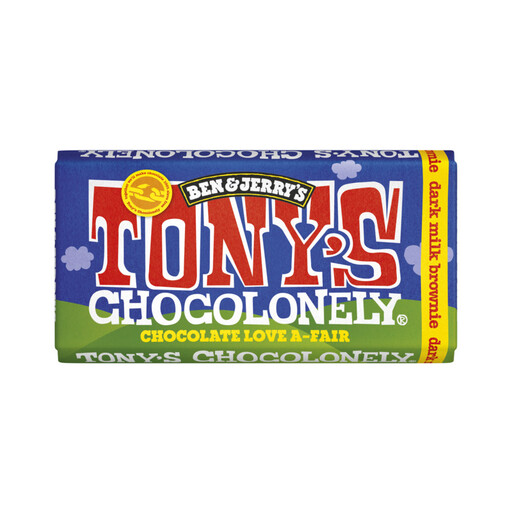
Tony's Chocolonely Ben & Jerry's Dark Milk Chocolate Fudge Brownie 180g
If you want to take this larger bar on a ride, plan how much of the 180g pack you intend to eat. The product listing describes Fairtrade cocoa; check the mark and wording on the current wrapper, along with its allergen panel.
View on Joybuy
 No image available
Tony's Chocolonely Milk Chocolate Caramel Sea Salt 180g
This 180g bar calls for a portion decision before an on-bike snack. Its listing names Fairtrade ingredients; check the exact wrapper’s mark, nutrition information and allergen panel before choosing it.
View on Joybuy
 No image available
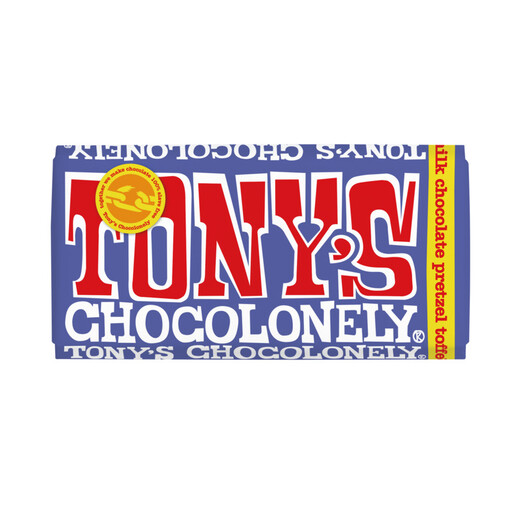
Tony's Chocolonely Milk Chocolate Pretzel & Toffee 180g
Decide on a portion of this 180g bar before taking it on a ride. The listing’s broad Fairtrade claim conflicts with its more specific ingredient statement, so check the current wrapper’s mark and wording; read its allergen panel as well.
View on Joybuy
Questions about chocolate on rides
Is one Fairtrade chocolate bar enough for a long bike ride?
Do not use one bar as the whole plan for a long ride. British Cycling advises eating from the start on rides over about 90 minutes and taking food at intervals; compare the carbohydrate in your chosen portion with what else you intend to carry.
Does a ride shorter than 90 minutes require an on-bike chocolate snack?
Not automatically. British Cycling says additional fuel generally should not be needed for rides up to about 90 minutes when you start appropriately fuelled. A chocolate bar can still be a snack you choose to carry.
What should I look for on a Fairtrade chocolate wrapper?
Check the mark and the ingredients it covers. The Fairtrade Foundation says the classic Fairtrade Mark covers ingredients capable of Fairtrade certification, while a Fairtrade Sourced Ingredient Mark identifies a particular sourced ingredient. A mass-balance statement does not promise physical separation of certified material in each bar.
Are Cadbury, Galaxy, Mars, Snickers, Twix or KitKat bars Fairtrade?
Do not assume Fairtrade certification from any of those brand names. Cocoa Life describes a Fairtrade partnership for Cadbury’s cocoa programme, Mars describes its European responsibly sourced cocoa programme, and KitKat UK describes Rainforest Alliance certification. Check the particular bar for a Fairtrade mark or ingredient claim if that is your buying requirement.
What should I check before packing chocolate for a ride?
Read the current pack’s portion, nutrition, ingredient and allergen information for the exact flavour. Decide how much you will carry and practise eating it during training; British Cycling advises against trying unfamiliar ride food for the first time on event day.


