Parents planning treats at home
For children sharing a half-term snack, the useful checks are the exact Fairtrade claim, a manageable bar format and the current ingredients and allergen information for each flavour.


For half-term treats at home, choose the chocolate bar by checking what its Fairtrade mark covers, then match the flavour and bar size to the people sharing it. Fairtrade International distinguishes the FAIRTRADE Mark, which covers ingredients available under Fairtrade conditions in a multi-ingredient product, from the white Fairtrade Sourced Ingredient mark, which identifies only the named ingredient; neither replaces a check of the current allergen label. For school lunches covered by England’s Requirements for School Food Regulations 2014, confectionery must not be provided.
For children sharing a half-term snack, the useful checks are the exact Fairtrade claim, a manageable bar format and the current ingredients and allergen information for each flavour.
A larger bar may suit a group, but milk, dark and flavoured varieties are different choices. Check the size, additions and allergen statements of the bar you intend to serve.
Chocolate bought for home is not the same decision as food provided in a regulated school lunch. Schedule 2 of England’s Requirements for School Food Regulations 2014 says confectionery must not be provided for those lunches.
Start with the sourcing claim on the exact bar, then consider who will eat it and where it will be served.
| Priority | What to check | Your needs |
|---|---|---|
| Fairtrade coverage | Read the mark on the exact pack. Fairtrade International says the FAIRTRADE Mark on a multi-ingredient product covers ingredients available under Fairtrade conditions; a white Fairtrade Sourced Ingredient mark identifies the named ingredient, such as cocoa. A separate responsible-cocoa programme is not the same claim. | I want to know whether the claim covers eligible ingredients across the bar or specifically its cocoa. |
| Ingredients and allergens | Read the current ingredients list and any precautionary statements for the chosen flavour. The Food Standards Agency says the 14 regulated allergens must be emphasised in the ingredients list of prepacked food. | Before sharing chocolate with children or a mixed group, I need to check the particular bar rather than rely on its brand name. |
| Bar format | Compare pack size, flavour and how the bar can be divided. Divine lists a 90g dark bar, while Tony’s Chocolonely describes its Fairtrade-certified 180g range as unevenly divided; the formats need different sharing plans. | A smaller bar may fit our plans, or we may want a larger bar to divide among several people. |
| Serving setting | Distinguish a treat served at home from a regulated school lunch. Schedule 2 of England’s Requirements for School Food Regulations 2014 says confectionery must not be provided for those lunches; a Fairtrade claim does not change that requirement. | If I am arranging a school lunch in England, I need a non-confectionery option rather than choosing between chocolate bars. |
The claims cover different things. Fairtrade International distinguishes its product and named-ingredient marks; Mars describes a separate mass-balance approach for specified Galaxy products, under which certified and non-certified cocoa may be mixed.
If Fairtrade certification matters to you, check the mark and its ingredient scope on the exact chocolate pack rather than relying on a general sourcing statement.
Fairtrade certification does not make chocolate suitable for every setting. Schedule 2 of England’s Requirements for School Food Regulations 2014 says confectionery must not be provided for school lunches covered by those requirements.
For a covered school lunch in England, choose a non-confectionery alternative. For another organised activity, check the rules that apply to that setting rather than assuming the school-lunch provision covers it.
Ingredients and precautionary statements can differ between bars. Divine’s variety-bundle information, for example, gives allergen details for the individual varieties.
Read the current ingredients and allergen panel for every flavour you plan to share, particularly when serving a group.
Use these ranges to compare sourcing claims and formats, then check the exact bar: a brand name alone does not establish a product’s certification or ingredients.
Divine offers milk and dark chocolate choices for shoppers looking for stated Fairtrade ingredients.
Tony’s Chocolonely describes its 180g milk, dark and flavoured bar range as Fairtrade-certified, offering a larger format for sharing.
Galaxy is a comparison point if you are considering a responsible-cocoa statement rather than requiring a Fairtrade claim.
Cadbury offers bars and other chocolate formats that may be familiar to a household choosing half-term treats.
These dark, milk and flavoured bars offer different sizes and ingredient claims for half-term treats at home. Check each current pack for the precise Fairtrade mark and allergen information before choosing one for a group.
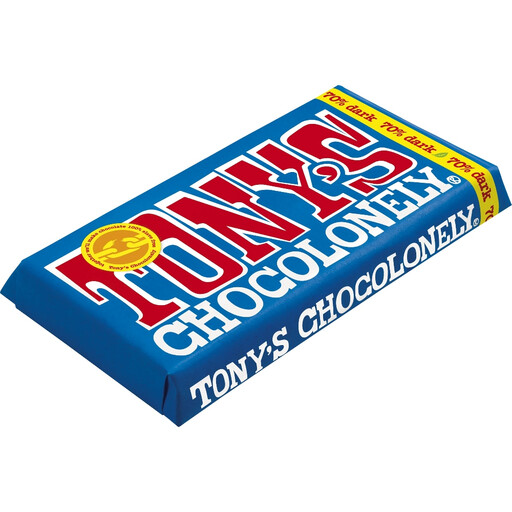 No image available
The 180g dark bar is an option to divide at home. If the scope of its Fairtrade claim matters to you, check the mark on the current pack; read its allergen and precautionary statements before sharing.
 No image available
This 180g milk-chocolate bar combines caramel and sea salt for a flavoured sharing option. Check what the Fairtrade mark covers on the current pack, along with its ingredients and allergen statements.
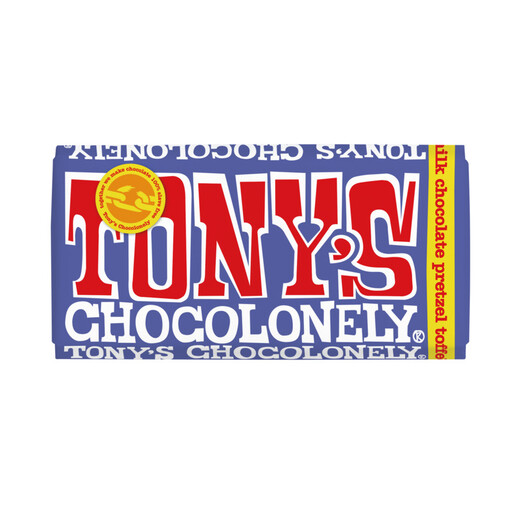 No image available
This 180g milk-chocolate bar offers a pretzel-and-toffee flavour for sharing. Check the current pack’s Fairtrade mark and ingredient coverage, and inspect its allergen panel for everyone being served.
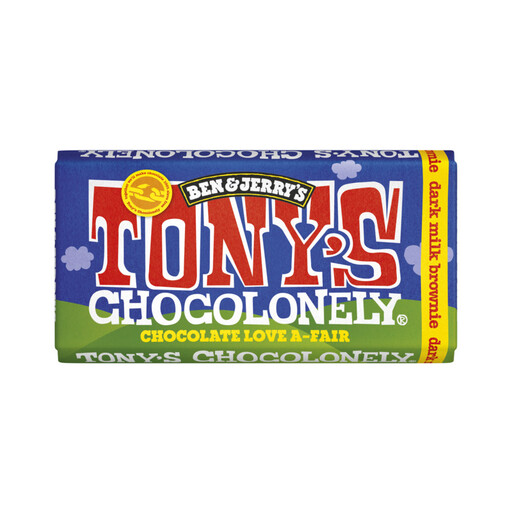 No image available
This 180 g dark-milk chocolate bar has a fudge-brownie flavour. If you want Fairtrade coverage beyond cocoa, check the exact claim on the current pack rather than treating a cocoa claim as one for every ingredient; check its allergens too.
 No image available
The 90g bar is a smaller-format dark chocolate option labelled 85%. Check the current pack for the scope of its Fairtrade ingredient claim, any mass-balance qualification and its allergen statements.
Not necessarily. Fairtrade International says its white Fairtrade Sourced Ingredient mark identifies the ingredient named on the label, such as cocoa; the FAIRTRADE Mark on a multi-ingredient product indicates that ingredients available under Fairtrade conditions have been certified. Read the mark on the exact pack to see which claim applies.
Not for a school lunch covered by England’s Requirements for School Food Regulations 2014. Schedule 2 says confectionery must not be provided, and Fairtrade certification does not change that requirement. Check the applicable arrangements separately for other food-serving settings.
No. Department of Health and Social Care guidance describes England’s high fat, salt or sugar promotion restrictions as rules about the placement and volume-price promotion of in-scope products in retail settings and their online equivalents. They are separate from England’s school-food requirements and do not create a general ban on buying chocolate for home.
Check the ingredients and allergen information on the exact current pack before serving it. The Food Standards Agency says the 14 regulated allergens must be emphasised in the ingredients list of prepacked food; also read any product-specific precautionary statements, which can differ between flavours.