For a midnight snack, check the exact bar’s Fairtrade mark or ingredient statement before choosing by flavour and size. A 90g dark bar is a smaller-format option; a 180g milk bar gives you more to divide or share. Cocoa Life, other responsible-sourcing programmes and Rainforest Alliance certification do not, by themselves, establish that a bar meets a Fairtrade-only requirement.
Who is this for?
Fairtrade-first snack shoppers
If Fairtrade sourcing is a condition of your purchase, look at the mark or ingredient statement on the particular bar. The Fairtrade Foundation distinguishes a mark covering all certifiable ingredients from one naming a single Fairtrade-sourced ingredient.
Dark-chocolate shoppers choosing a smaller bar
A 90g bar may suit you if you want a compact format and prefer dark chocolate. Divine Chocolate, for example, lists a 90g bar with 70% cocoa in its UK range.
Milk-chocolate shoppers comparing sourcing claims
If you prefer milk chocolate, check whether the exact bar states a Fairtrade ingredient scope. A brand’s broader cocoa programme or a different certification is not the same statement.
What should you check?
Start with the sourcing statement on the bar, then choose a size and flavour that fit how you plan to eat it. Check nutrition and allergens on that same product rather than treating Fairtrade certification as a dietary label.
| Priority |
What to check |
Your needs |
| Fairtrade scope |
The Fairtrade Foundation says the classic FAIRTRADE Mark covers all ingredients that can be Fairtrade-certified. Its Fairtrade Sourced Ingredient Mark names the ingredient covered. Read any product-specific ingredient statement as well. |
I want to know whether Fairtrade applies to the bar’s certifiable ingredients or to a named ingredient such as cocoa. |
| Size and flavour |
Compare the stated bar weight and cocoa percentage. Divine Chocolate lists a 90g, 70% dark bar; Tony’s Chocolonely lists 180g milk and dark bars, including a 32% cocoa milk bar. |
A smaller dark bar appeals to me for one snack, or I would rather have a larger milk bar to divide or share. |
| Nutrition and allergens |
Compare nutrition per 100g alongside the amount you expect to eat. Read the ingredients, declared allergens and any precautionary allergen statement for the exact flavour. |
I need to check sugar or ingredients, or avoid an allergen; a Fairtrade statement does not answer those questions. |
Common buying mistakes
-
Treating every ethical cocoa claim as Fairtrade
A responsible-sourcing programme or Rainforest Alliance certification does not establish the Fairtrade scope of an individual chocolate bar.
If Fairtrade is essential to your choice, check that bar for a FAIRTRADE Mark or an explicit statement naming its Fairtrade ingredients.
-
Using certification as a nutrition or allergen shortcut
Fairtrade describes sourcing, not sugar content or allergen suitability. Tony’s Chocolonely lists 51g sugars per 100g for its 32% milk bar and declares milk and soya among its allergens.
Read the nutrition panel and allergen information for the exact flavour and size you intend to buy.
-
Overlooking how much chocolate is in the bar
A 180g bar offers a different amount to a 90g bar, even when both fit your flavour and sourcing preferences.
Choose the pack size with your intended snack in mind, particularly if you are buying a larger bar to divide over more than one occasion.
Brand references for Fairtrade checks
Brand-wide sourcing information is a starting point; use the exact bar’s pack to decide whether it meets your Fairtrade requirement.
Divine Chocolate
Divine Chocolate presents itself as a Fairtrade-focused, farmer co-owned brand and lists a 90g, 70% dark bar in its UK range.
- Divine says farmers from Ghana’s Kuapa Kokoo cooperative co-own the business.
- Check the chosen bar’s current certification, ingredients and allergen information rather than applying a brand-wide description to every variant.
Tony’s Chocolonely
Tony’s Chocolonely UK lists Fairtrade-certified 180g milk and dark chocolate bars.
- For its 32% milk bar, Tony’s specifies Fairtrade cocoa and sugar, with a stated total of 76% and sugar under mass balance.
- That statement does not say every ingredient is Fairtrade; check the details for the particular flavour.
Cadbury
Cadbury Dairy Milk cocoa is described by Cocoa Life and Mondelēz International as sourced through the Cocoa Life programme.
- Mondelēz also describes a Fairtrade partnership and identifies Green & Black’s separately in its account of Fairtrade ingredient sourcing.
- Cocoa Life wording alone does not establish that a particular Cadbury bar meets a Fairtrade-only requirement.
KitKat
KitKat is a chocolate-wafer brand with cocoa-sourcing information from Nestlé UK & Ireland.
- Nestlé announced in June 2020 that KitKat in the UK and Ireland would move to Rainforest Alliance Certified cocoa from October 2020.
- Nestlé said its Fairtrade partnership was ending; Rainforest Alliance certification is not itself a Fairtrade statement for a specific bar.
Mars confectionery brands
Galaxy, Mars, Snickers and Twix are among the familiar chocolate brands associated with Mars.
- Mars reports company-level work on cocoa traceability and its supply chain.
- Those statements do not establish Fairtrade certification for an individual Galaxy, Mars, Snickers or Twix bar.
Chocolate bars on Joybuy
These options include smaller dark bars and larger milk or dark-milk bars for the midnight-snack decision. Compare the Fairtrade wording and dietary information for the exact variant you choose.
 No image available
Green & Black’s Dark 70% Chocolate 90g
A 90g dark bar for shoppers who want a smaller format. Its product information identifies Fairtrade cocoa, sugar and vanilla and states a 100% total on a mass-balance basis. Check the current pack if that sourcing arrangement matters to you; the product information also notes possible milk and nut cross-contact.
View on Joybuy
 No image available
Tony’s Chocolonely Milk Chocolate Caramel Sea Salt 180g
A larger milk-chocolate bar to consider if you intend to divide or share it. Its product information names Fairtrade sugar, cocoa butter and cocoa mass, with a stated total of 69%. It declares milk and soya and lists possible cross-contact with gluten-containing cereals, eggs, nuts and peanuts.
View on Joybuy
 No image available
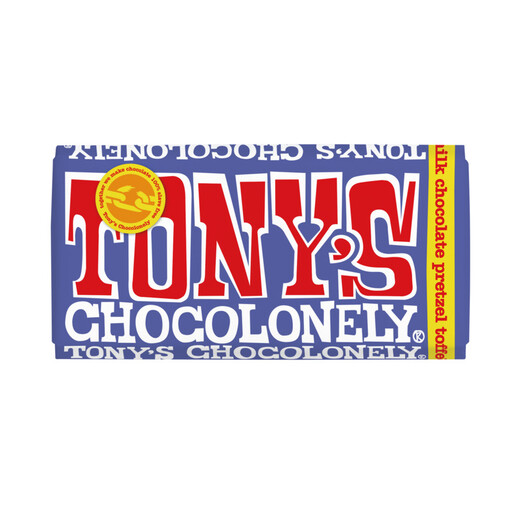
Tony’s Chocolonely Milk Chocolate, Pretzel & Toffee 180g
This 180g milk bar is a larger-format option with pretzel and toffee. Its product information identifies Fairtrade sugar, cocoa mass and cocoa butter, with a stated total of 73%; it does not describe every ingredient as Fairtrade. It declares milk, soya and wheat, with possible cross-contact with eggs, nuts and peanuts.
View on Joybuy
 No image available
Divine Chocolate 70% Dark Chocolate with Raspberries 90g
A 90g dark bar with raspberries for shoppers considering a smaller format. The product description calls this bar Fairtrade-certified; check its current pack if you need to know which ingredients are covered. Check that pack’s ingredients and allergen statement carefully before relying on dietary-suitability claims in the product description.
View on Joybuy
 No image available
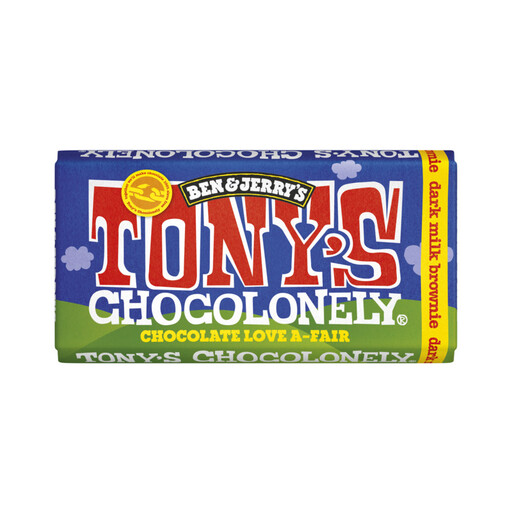
Tony’s Chocolonely Ben & Jerry’s Dark Milk Chocolate Fudge Brownie 180g
A 180g dark-milk bar to consider if you plan to divide a larger bar. Its product information states that it uses Fairtrade cocoa beans; check the pack if you require Fairtrade sourcing for other ingredients too. It declares milk, soya and wheat and lists possible cross-contact with eggs, nuts and peanuts.
View on Joybuy
Questions about Fairtrade chocolate
How can I tell what a chocolate bar’s Fairtrade mark covers?
Check the mark and wording on the exact pack or product page. The Fairtrade Foundation says the classic FAIRTRADE Mark indicates that all ingredients capable of Fairtrade certification are certified, while the Fairtrade Sourced Ingredient Mark names the ingredient it covers. A general sustainability statement does not tell you the same thing.
Does a higher cocoa percentage tell me which bar to choose?
Use cocoa percentage to compare the chocolate styles you prefer, not to draw a nutrition or health conclusion. Check the exact bar’s nutrition per 100g and consider the amount you intend to eat. Tony’s Chocolonely, for example, lists 51g sugars and 544 kcal per 100g for its 32% milk bar; those figures should not be applied to its other flavours.
Are Cadbury, Galaxy, Mars, Snickers, Twix or KitKat automatically Fairtrade choices?
No brand-level statement establishes that every individual bar is Fairtrade-certified. Cocoa Life and Mondelēz International describe Cadbury’s Cocoa Life sourcing; Nestlé UK & Ireland announced KitKat’s move to Rainforest Alliance Certified cocoa; and Mars describes supply-chain work. If Fairtrade is required, inspect the particular bar’s current mark or ingredient statement.
Do England’s school-food rules affect chocolate bought for a midnight snack at home?
No. The Department for Education’s school-food guidance addresses food and drink provided in state-funded schools in England, not ordinary purchases for home snacking. Its September 2026 guidance describes changes planned for September 2027 as subject to Parliamentary approval; a poster for those future secondary-school standards excludes chocolate snacks in its school setting.


