Office managers stocking regular treats
A defined case size helps you plan supplies for meetings or a snack area. Check whether the bars are individually packaged before relying on them for one-per-person distribution.


For routine office snacks, look for Fairtrade bars in a defined case size and check that each bar has the individual packaging your workplace needs; Divine lists cases of 30 × 35g milk and dark bars. Larger Tony’s bars and assortments make more sense for voluntary sharing. Check the Fairtrade mark and allergen information on the exact pack rather than treating a general cocoa-sourcing claim, or a vegan label, as an answer to either requirement.
A defined case size helps you plan supplies for meetings or a snack area. Check whether the bars are individually packaged before relying on them for one-per-person distribution.
Match the mark on the exact chocolate pack to the purchasing brief. Cocoa Life, Rainforest Alliance and company cocoa programmes should not automatically be described as Fairtrade certification.
Keep each product’s ingredients and allergen information accessible, particularly with mixed flavours or a vegan-labelled bar that also carries a precautionary allergen statement.
Decide whether the chocolate is for regular individual distribution or an opt-in sharing occasion, then check the certification claim and each pack’s ingredients.
| Priority | What to check | Your needs |
|---|---|---|
| Fairtrade scope | Check the mark on the exact pack. The Fairtrade Foundation says the classic FAIRTRADE Mark covers all ingredients that can be Fairtrade-certified; the Fairtrade Sourced Ingredient Mark identifies a particular Fairtrade-sourced ingredient. | I need the chocolate claim to match our purchasing brief, not just a general statement about responsible cocoa sourcing. |
| Portion format | Check the bar size, case count and whether each portion is wrapped. Divine lists cases of 30 × 35g bars; Tony’s lists 180g bars and sharing assortments. | For regular meetings, I want to offer one packaged item per person. For a voluntary team occasion, a larger bar or assortment could work. |
| Allergen information | Read the current ingredient list and any separate ‘may contain’ statement for every flavour. Divine’s vegan-labelled 70% dark 35g bar, for example, states ‘MAY CONTAIN: Milk, Gluten, Nuts’. | Colleagues need to be able to check the information for the chocolate they are offered; a vegan label alone does not answer an allergy question. |
| Flavour choice | Compare milk and dark options, then check inclusions in mixed flavours. Tony’s Everything Bar lists almonds, nougat and pretzel pieces. | A choice of flavours would be useful, but I would not assume every colleague can eat an assorted box. |
A sourcing programme or another certification scheme may not meet a brief requiring a particular Fairtrade mark. The Fairtrade Foundation also distinguishes its classic mark from its ingredient-specific mark.
Specify which mark and scope your office accepts, then inspect the exact product pack before ordering.
Flavours in an assortment can have different ingredients and precautionary allergen statements. A vegan-labelled product can carry a ‘may contain’ warning too.
Keep the current packaging or ingredient information beside the supply so colleagues can check each option.
A large bar does not provide the same one-bar-per-person format as a case of smaller bars, and its product information may not remain with each portion.
Check individual packaging for regular distribution. Use larger bars where sharing is voluntary and the pack information remains available.
England’s school-food requirements are distinct from ordinary office provision. The Department for Education identifies standards for food provided to pupils at state-funded schools, while the school-food regulations include chocolate in the definition of confectionery.
If the intended setting is a school, check the currently applicable rules for its nation, setting and type of provision before selecting chocolate.
Divine lists cases of 30 × 35g milk and 70% dark bars made with Fairtrade ingredients, making its smaller-bar formats relevant to a regular office supply.
Tony’s UK describes Fairtrade-certified 180g bars and a Tiny Tony’s assortment containing 20 bite-size pieces, formats to consider for voluntary sharing.
Cadbury is relevant if colleagues want a familiar bar, but a Fairtrade requirement still needs a check of the specific product pack.
KitKat describes a cocoa-sourcing approach that buyers can consider when their brief allows claims other than Fairtrade product certification.
These familiar Mars Wrigley names may suit an office choosing mainstream bars, but certification and allergens must be checked product by product.
These chocolate bars and assortment are options to consider for voluntary office sharing, rather than a confirmed supply of individually packaged bars for routine one-per-person distribution. Check the exact pack’s Fairtrade mark, wrapping and allergen information against your office requirements.
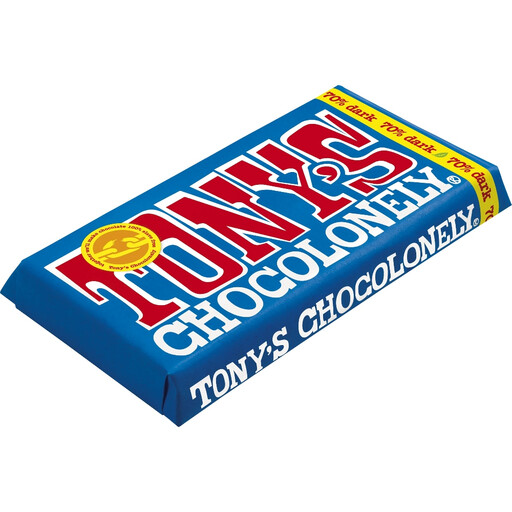 No image available
A 180g dark bar to consider for voluntary sharing. Check the current pack for its Fairtrade mark and allergen statement, and confirm the wrapping if you need separate portions.
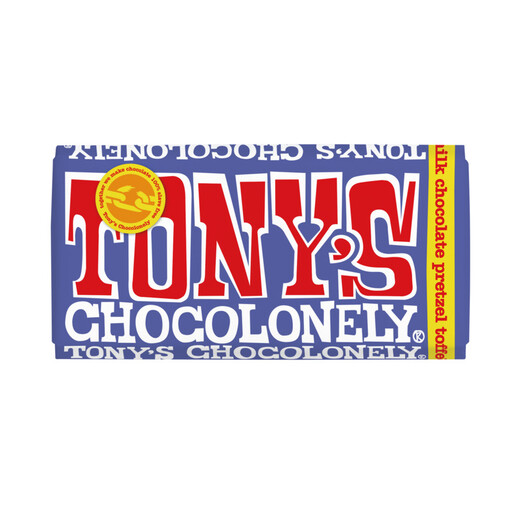 No image available
A 180g flavoured bar for an opt-in sharing occasion. Its product information identifies milk, soya and wheat; check the current pack for the full allergen statement, Fairtrade mark and portion format.
 No image available
A 180g milk-chocolate bar with caramel and sea salt for voluntary sharing. Check the exact pack’s Fairtrade mark and allergen information; confirm its wrapping before planning individual distribution.
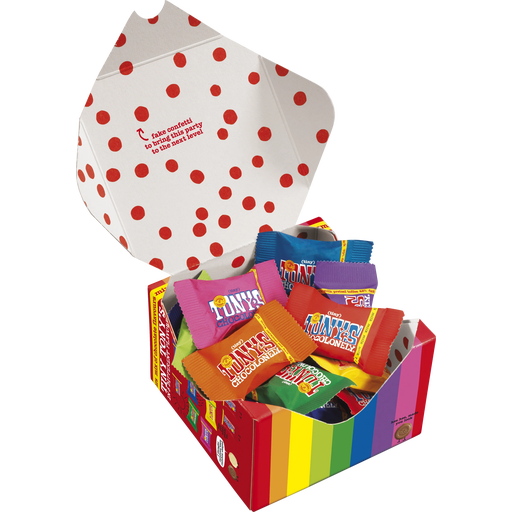 No image available
An assorted 180g box for colleagues to choose from at a sharing occasion. Check the exact pack for its piece count, wrapping, Fairtrade claim and flavour-by-flavour ingredients, including allergen information.
 No image available
A 90g, 85% dark bar for colleagues who prefer dark chocolate. Confirm the exact pack’s Fairtrade mark and claim scope before using it to meet a certification brief; also check its allergen statement and wrapping.
Look at the mark on the exact pack. The Fairtrade Foundation says its classic FAIRTRADE Mark covers all ingredients that can be Fairtrade-certified, while its Fairtrade Sourced Ingredient Mark identifies a particular sourced ingredient, such as cocoa. A Cocoa Life or Rainforest Alliance claim is not automatically interchangeable with either mark.
For one item per person, start with a defined case of smaller bars and confirm that each is individually packaged. Divine lists 30 × 35g cases; a 180g sharing bar is a different format and may make more sense when colleagues choose to share voluntarily.
Do not infer allergy suitability from a vegan label. Divine’s vegan-labelled 70% dark 35g bar states ‘MAY CONTAIN: Milk, Gluten, Nuts’, so check the current label of the exact product and make that information available to colleagues.
The Food (Promotion and Placement) (England) Regulations 2021 concern specified promotion and placement of certain less-healthy foods by covered businesses in store and online contexts; they do not establish a general ban on an employer offering chocolate in an ordinary staff area. If the workplace also sells or promotes food, check whether that particular activity falls within the regulations.
Do not carry an office choice over to a school without checking the applicable rules. The Department for Education identifies legal school-food standards for state-funded schools in England, and England’s school-food regulations define confectionery to include chocolate. Check the current requirements for the school’s nation, setting and type of food provision before ordering.