Shoppers seeking Fairtrade chocolate while avoiding an allergen
Start with the ingredient list and precautionary wording on the exact bar and pack size. Compare Fairtrade marks only among products that meet your own allergen requirements.


Check the exact chocolate bar’s ingredients and any “may contain” statement against the allergen you need to avoid before comparing Fairtrade marks. A Fairtrade mark describes ingredient sourcing, not allergy suitability; a vegan label does not rule out allergen cross-contact either. For an acute allergy, use the current physical pack rather than a retailer listing or general brand information as the basis for your decision.
Start with the ingredient list and precautionary wording on the exact bar and pack size. Compare Fairtrade marks only among products that meet your own allergen requirements.
Find out which allergens the recipient needs to avoid before choosing a bar. A familiar brand, dark-chocolate description or vegan label cannot answer that question for them.
If you are avoiding milk or another animal-origin allergen, check both the ingredients and any “may contain” statement. Vegan labelling alone does not establish whether allergen cross-contact is relevant.
Screen the exact pack for your allergen requirements, then examine the sourcing mark. These are separate checks: neither a Fairtrade nor a vegan claim replaces allergen information.
| Priority | What to check | Your needs |
|---|---|---|
| Allergen information | Read the current pack’s ingredients for the named allergen. Check any precautionary statement, such as “may contain”, against the same requirement; the Food Standards Agency says such wording communicates possible unintended allergen presence. | I need to know whether this particular bar and pack size meets the requirements for the allergen being avoided, not whether chocolate bars in general seem suitable. |
| Vegan labelling | Check ingredients and precautionary allergen wording even when a bar says “vegan”. The label alone does not establish that cross-contact with animal-origin allergens is absent. | I cannot use “vegan” alone to assess a milk or egg allergy. In Food Standards Agency research conducted by Ipsos UK in December 2023, 53% of surveyed respondents with a food hypersensitivity to specified animal-origin allergens, and 50% of those who regularly shopped for someone with one, were aware before the survey that vegan products might be unsuitable because of cross-contamination. The online survey drew on people aged 16–75 in England, Wales and Northern Ireland; these are two distinct respondent groups, not figures for all chocolate shoppers. |
| Fairtrade mark | Look for the mark on the specific pack. The Fairtrade Foundation says the standard Fairtrade Mark covers ingredients that can be Fairtrade-certified, while the Fairtrade Sourced Ingredient mark names the ingredient sourced on Fairtrade terms. | I want to understand whether the sourcing claim covers certifiable ingredients generally or a named ingredient such as cocoa. Neither mark tells me whether the bar meets my allergen requirements. |
The Fairtrade Foundation’s marks concern sourcing. Divine Chocolate’s listed Fairtrade dark bars in a variety pack, for example, carry “may contain” wording for gluten, milk and nuts.
Check the exact bar’s ingredients and precautionary wording against the relevant allergen before using its Fairtrade mark to choose between products.
A dark or vegan description does not settle the question of cross-contact. The Food Standards Agency’s research on vegan labelling identifies this as a consideration for people with food hypersensitivities to animal-origin allergens.
Read both the ingredients and any “may contain” statement on the pack you intend to buy, including when you switch flavour or size.
Allergen declarations differ between products. The checked Galaxy Smooth Milk multipack lists milk and soya ingredients, while the checked Snickers 40 g bar lists peanuts, milk, soya and egg ingredients and says it may contain other nuts.
Check the individual product and its current pack rather than carrying an assumption across a brand’s bars, multipacks or variants.
Pack information can differ from older or general product copy. Mars directs people with acute allergies to the allergen information on the back of its packs.
Check the physical label before consumption. If its wording is unclear or conflicts with the applicable allergy-avoidance instructions, do not treat the listing as confirmation of suitability.
These examples show why allergen and sourcing claims must be checked at product level; a brand name does not establish that another bar in its range has the same declaration.
Divine describes its chocolate as Fairtrade and farmer co-owned, with dark and milk bars in its UK range.
Mars provides product-level ingredient and allergen information for its UK chocolate bars.
Galaxy publishes ingredients for individual UK products, including its Smooth Milk multipack.
The checked Snickers 40 g bar combines peanuts, caramel and milk chocolate.
KitKat publishes product-level ingredients for its UK wafer-and-chocolate bars.
These dark and dark-milk chocolate bars offer different formats to assess for this Fairtrade-and-allergen shopping question. A listing’s sourcing or allergen wording is a starting point: check the mark, ingredients and precautionary statement on the exact physical pack before deciding whether a bar meets your requirements.
 No image available
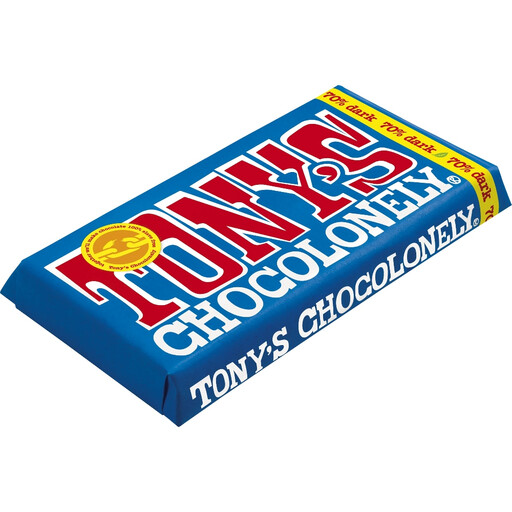
This 90g dark chocolate bar is an option to examine if you want to compare Fairtrade sourcing claims. The listing describes Fairtrade ingredients with a mass-balance qualification and notes possible almond, hazelnut, milk and other nut presence; check the mark and allergen wording on the current pack against your requirements.
 No image available
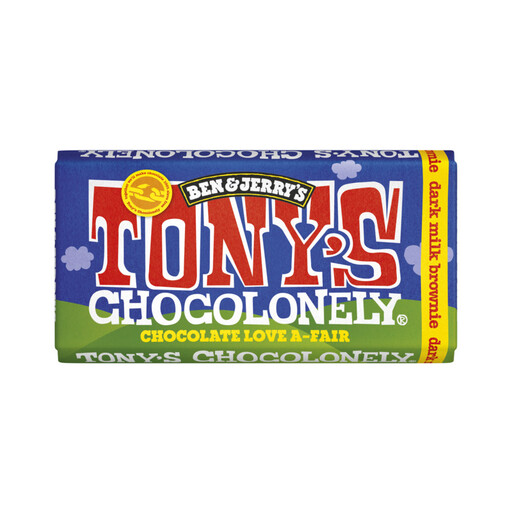
This 180 g dark-milk Fudge Brownie variant is for shoppers considering that specific flavour and pack. Its listing claims Fairtrade cocoa and identifies milk, soya and wheat, with precautionary wording for eggs, nuts and peanuts. Check those statements and the sourcing claim on the current pack before assessing it for a particular allergy.
 No image available
This 180g dark chocolate bar is another pack to assess if dark chocolate and Fairtrade sourcing both matter to you. The listing makes a Fairtrade sourcing claim, identifies soya and notes possible cereals containing gluten, eggs, milk, nuts and peanuts. Compare its current pack wording with the allergens you need to avoid.
No. The Fairtrade Foundation’s marks describe ingredient sourcing, not allergen absence. Check the exact pack’s ingredients and any precautionary allergen statement against the allergen that must be avoided.
The Fairtrade Foundation says its standard Fairtrade Mark indicates that ingredients which can be Fairtrade-certified are certified. Its Fairtrade Sourced Ingredient mark identifies a particular Fairtrade-sourced ingredient, such as cocoa; it does not say that every ingredient is Fairtrade-sourced.
No. Vegan labelling does not rule out allergen cross-contact, as the Food Standards Agency’s research on vegan labels and food hypersensitivities explains. Read the exact product’s ingredients and any precautionary statement for milk.
The Food Standards Agency says food packed by the seller before it is offered for sale as prepacked for direct sale must carry its name and a full ingredients list, with regulated allergens emphasised in that list. Check the label on the particular item, including chocolate packed for sale at a counter.
Use the current physical pack for the final allergen check. Mars says that, for acute allergies, it can only stand by the allergen information displayed on the back of its packs; a retailer listing or general brand page should not override it.