What matters when choosing a bar?
Settle the certification requirement first, then match the chocolate format, cocoa percentage and pack size to the recipe.
| Priority |
What to check |
Your needs |
| Fairtrade claim |
Check the mark or product-specific wording on the current pack. The Fairtrade Foundation distinguishes the standard FAIRTRADE Mark from the Fairtrade Sourced Ingredient Mark; read any mass-balance wording without assuming physical segregation in the bar. |
I want the chocolate used in my biscuits to meet a specific Fairtrade requirement, rather than a different cocoa-sourcing claim. |
| Chocolate format |
Read the ingredient list for caramel, wafer, nougat or nut pieces. Choose a plain bar when the recipe calls for chocolate to be chopped or melted without those additions. |
For chocolate chunks or a topping, I want to control which textures and ingredients go into the biscuits. |
| Cocoa percentage |
Compare the percentage on the exact bar with the chocolate specified by the recipe. The reviewed Waitrose No.1 Uganda bar states 85% cocoa solids; the reviewed Divine and Tony’s dark bars state 70%. |
I would choose a higher-cocoa dark bar for a more pronounced cocoa flavour, or a 70% bar when that better fits the intended biscuit flavour. |
| Allergens |
Read declared ingredients and “may contain” statements on the current pack. The Food Standards Agency explains that precautionary allergen labelling communicates possible unintentional allergen presence. |
When I bake for someone with an allergy, I need to check the particular bar before using it, even if it is plain dark chocolate. |
| Recipe quantity |
Compare the recipe’s required chocolate weight with the bar weight. The reviewed Divine 70% bar is 90g, while Tony’s Extra Dark 70% bar is 180g. |
I want enough chocolate for the batch without assuming that one bar supplies the amount in the recipe. |
Brand and product-line references
These examples illustrate claims and ingredients on particular bars or product lines; check the exact pack rather than applying a brand-wide claim to every bar.
Divine Chocolate
Divine lists Fairtrade ingredients for its plain 70% Dark Chocolate 90g bar.
- Its listed ingredients include Fairtrade cocoa mass, sugar, cocoa butter and vanilla, alongside sunflower lecithin.
- The bar may contain gluten, milk and nuts. Check whether 70% dark chocolate suits the recipe.
Tony’s Chocolonely
Tony’s Extra Dark 70% is a 180g bar for recipes needing that chocolate format and quantity.
- Tony’s lists Fairtrade cocoa and sugar, stating a 99% Fairtrade total with sugar sourced on a mass-balance basis.
- Its ingredients include soya lecithin, and the bar may contain gluten, egg, milk and nuts.
Waitrose No.1
The range includes a Fairtrade Uganda dark bar stating 85% cocoa solids and a Fairtrade Dominican Republic milk bar stating at least 49% cocoa solids.
- Waitrose lists cocoa mass, cane sugar and cocoa butter for the 85% dark bar.
- The dark bar may contain peanuts, milk and nuts; the milk bar contains milk ingredients and may contain peanuts and nuts.
Galaxy
Galaxy Smooth Milk is relevant when considering a cocoa-sourcing claim other than Fairtrade.
- Galaxy says it sources cocoa for Galaxy Smooth Milk from Rainforest Alliance-certified farms using mass balance.
- That statement does not establish Fairtrade certification for the bar.
KitKat
KitKat’s wafer format belongs in recipes that deliberately call for wafer pieces, rather than plain chocolate to melt.
- KitKat describes a programme supporting cocoa-farming families.
- That programme statement is not a product-specific Fairtrade claim. Check any particular bar’s pack if Fairtrade certification is required.
Mars, Snickers and Twix
Consider a filled confectionery bar only if its additions belong in the biscuit recipe.
- The published Snickers Duo ingredients provide a concrete example of a bar with peanuts and caramel.
- Snickers Duo also lists milk ingredients, palm fat and egg white powder. Do not assume this ingredient list or a Fairtrade claim applies to other bars in the group.
Joybuy chocolate bars for biscuit baking
These plain dark-bar options suit recipes calling for chocolate chunks or a topping. If Fairtrade certification is essential, confirm the wording on each current pack before using it.
 No image available
Green & Black's Dark Chocolate 70% 90g
A 90g dark bar for a biscuit recipe calling for 70% chocolate. Check the current pack’s Fairtrade wording, ingredients and allergen warnings before use.
View on Joybuy
 No image available
Green & Black's Dark Chocolate 85% 90g
A 90g option when the biscuit recipe calls for 85% dark chocolate. Compare that cocoa percentage with the recipe and check the current pack’s Fairtrade and allergen wording.
View on Joybuy
 No image available
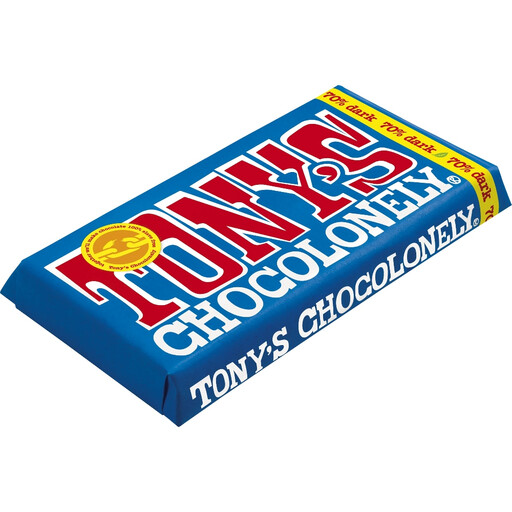
Tony's Dark Chocolate 180g
A 180g dark bar to compare with the chocolate weight required for a batch of biscuits. Check its current pack for the cocoa percentage, exact Fairtrade claim, ingredients and allergen warnings; do not assume it is the separately described Extra Dark 70% bar.
View on Joybuy
Questions about baking with chocolate bars
Does a responsible-cocoa claim mean a bar is Fairtrade?
No. The Fairtrade Foundation describes distinct FAIRTRADE and Fairtrade Sourced Ingredient marks, while Galaxy’s statement about Galaxy Smooth Milk concerns Rainforest Alliance-certified cocoa sourced under mass balance. Check the specific bar’s Fairtrade wording if that certification is required.
Should I choose 70% or 85% dark chocolate for biscuits?
Choose the percentage that matches the recipe and the flavour you want: 85% gives a more cocoa-forward contribution, while 70% is a less intense dark option. Waitrose & Partners states 85% cocoa solids for its No.1 Uganda dark bar; Divine and Tony’s state 70% for the particular dark bars described above. Check the exact bar rather than assuming every product from those brands has the same percentage.
Can I chop or melt a chocolate bar for a biscuit recipe?
A plain solid bar can be broken into pieces, and bars can be melted where a recipe calls for melted chocolate; BBC Good Food gives an example of melting broken-up dark and milk chocolate bars. Follow the biscuit recipe’s method and quantity, and avoid filled bars unless their additions are intended.
What should I check when baking for someone with an allergy?
Read the ingredients and any “may contain” statement on the current chocolate pack before using it. The Food Standards Agency explains that precautionary allergen labelling flags possible unintentional presence; a plain dark bar is not automatically free from milk, nuts or other allergens.
Is an online ingredient list enough to choose a bar?
Use an online list to narrow the options, then read the physical pack before baking. This matters particularly when you need to confirm the exact Fairtrade claim or assess ingredients and precautionary allergen warnings for the people eating the biscuits.


