Households looking specifically for Fairtrade
If a general sustainability claim is not enough for your purchase, look for a Fairtrade mark on the individual bar and read which ingredients it covers.


If Fairtrade is your deciding criterion, choose a chocolate bar with a FAIRTRADE Mark or Fairtrade Sourced Ingredient Mark and check which ingredients the claim covers. Rainforest Alliance and responsible-cocoa claims describe different sourcing arrangements; before sharing any bar, check the exact pack’s ingredients and allergen warnings.
If a general sustainability claim is not enough for your purchase, look for a Fairtrade mark on the individual bar and read which ingredients it covers.
Check each flavour’s ingredients and allergen warnings before offering it to children. Pack size also matters if you plan to divide a bar into portions.
Food supplied by a state-funded school in England raises a separate school-food question. The Department for Education’s school-food guidance applies to that setting, not automatically to snacks bought for home.
Start with the sourcing claim that matters to you, then check the particular bar and where it will be served.
| Priority | What to check | Your needs |
|---|---|---|
| Fairtrade scope | Fairtrade International says the FAIRTRADE Mark with an arrow on a multi-ingredient product covers all ingredients available on Fairtrade terms. Its Fairtrade Sourced Ingredient (FSI) Mark identifies a particular ingredient sourced on those terms. Read the wording beside the mark. | I want to know whether Fairtrade applies to eligible ingredients across the bar or to a named ingredient such as cocoa. |
| Other cocoa claims | Identify the scheme or programme named on the exact product. Mars and Galaxy describe mass-balance arrangements in which cocoa from different sources can mix; those statements do not establish Fairtrade certification for an individual bar. | A different cocoa-sourcing programme may meet my preference, but I do not want to mistake it for a Fairtrade claim. |
| Ingredients and allergens | Read the current ingredients, stated allergens and ‘may contain’ warning for each flavour. Divine Chocolate’s 45% milk and 70% dark bars, for example, have different milk declarations on their product pages. | Before sharing chocolate, I need to check the particular bar against the intended children’s requirements. |
| Pack format | Check the bar’s weight and whether you intend to portion it. Tony’s Chocolonely UK lists 180g bars; a larger format is not a substitute for checking the individual flavour’s label. | Will I divide one bar among several people, or would a smaller bar suit the occasion? |
| Serving setting | Distinguish home snacks from food supplied through a school. For a state-funded school in England, check the applicable Department for Education school-food guidance and the provider’s current arrangements. | If an organisation will serve the chocolate, I want to confirm its rules before supplying it. |
A Rainforest Alliance or company responsible-cocoa statement does not, by itself, identify a bar as Fairtrade certified.
If Fairtrade is required, find the FAIRTRADE or FSI Mark on the exact pack and read what it covers.
Mars and Galaxy say cocoa from different sources may be mixed under their described arrangements, so a programme purchase does not establish the physical origin of cocoa in a particular bar.
Read mass-balance wording as a description of the sourcing arrangement, not as an ingredient-by-ingredient traceability claim.
The Department for Education’s school-food guidance addresses food and drink provided in state-funded schools in England. Buying snacks for home is a different situation.
For food served through a school, club or holiday programme, ask the provider which current rules and policies apply.
Even bars from the same brand can have different ingredients and precautionary allergen statements.
Read the physical pack for every flavour you plan to share.
These references describe particular products or sourcing statements, not every bar made by each brand.
Divine Chocolate’s product pages identify Fairtrade ingredients in its 45% Milk Chocolate 90g and 70% Dark Chocolate 90g bars.
Tony’s Chocolonely UK describes its listed chocolate bars as Fairtrade certified and offers several 180g varieties.
KitKat UK describes Rainforest Alliance-certified cocoa sourcing for its UK and Ireland bars; this is distinct from a Fairtrade claim.
Galaxy describes Rainforest Alliance-sourced cocoa for specified Smooth Milk products under a mass-balance arrangement.
Mars says its European factory operations purchase an annual volume through its Responsibly Sourced Cocoa Program equivalent to the volume needed for brands including Mars, Snickers and Twix.
Cadbury provides product information for checking ingredients, nutrition and dietary requirements. Its Dairy Milk Wholenut 120g page refers to sustainably sourced cocoa.
These bars include larger 180g formats and a 90g dark chocolate option for home snack planning. Compare the Fairtrade wording and allergen information on each physical pack before sharing.
 No image available
The 180g bar is a format to consider if you plan to divide chocolate for home snacks. Check the pack’s Fairtrade wording and allergen statement for this caramel and sea salt variety.
 No image available
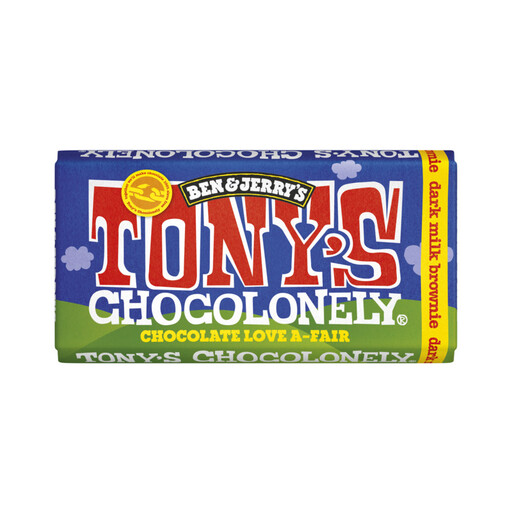
This 180g fudge brownie variety gives you a larger bar to portion. If Fairtrade cocoa is the reason for choosing it, check the precise claim on the pack rather than assuming it covers every ingredient; read its allergen statement too.
 No image available
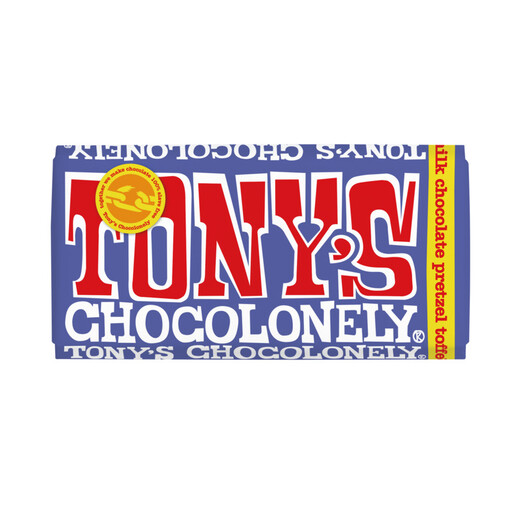
Consider this 180g bar if you want a pretzel and toffee variety to divide at home. Check which ingredients its Fairtrade wording covers, and read the current allergen warning before sharing.
 No image available
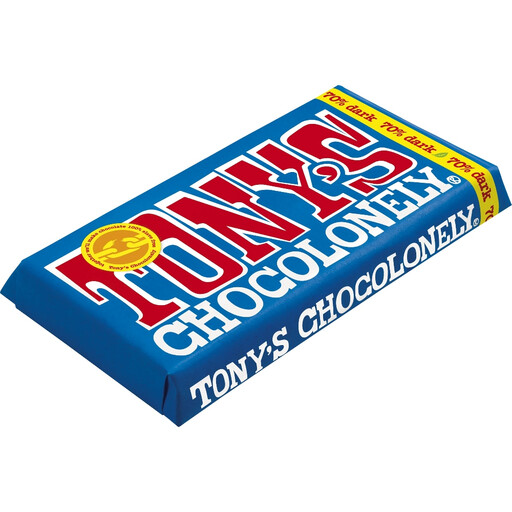
This 180g dark chocolate bar offers a larger format to portion. Dark chocolate does not settle allergen suitability: check this bar’s physical pack, along with the scope of its Fairtrade claim.
 No image available
The 90g format is smaller than the 180g bars shown here, and the title identifies it as 85% dark chocolate. Check the pack’s Fairtrade and mass-balance wording, as well as its allergen warning, before choosing it for children to share.
Fairtrade International says that, on a multi-ingredient product such as a chocolate bar, the FAIRTRADE Mark with an arrow means all ingredients available under Fairtrade conditions must be bought on those terms. The Fairtrade Sourced Ingredient (FSI) Mark applies to a named ingredient; read the wording beside it to see what is covered.
No. Rainforest Alliance and Fairtrade are distinct claims. KitKat describes Rainforest Alliance-certified cocoa for its UK and Ireland bars, while Mars and Galaxy describe other cocoa-sourcing arrangements; look for a Fairtrade claim on the exact bar if that is your requirement.
Read the ingredients and precautionary allergen statement on each physical pack. Divine Chocolate’s product pages, for example, say its 45% milk bar contains milk, while its 70% dark bar may contain milk; do not use one variety’s declaration for another.
The Department for Education’s school-food guidance concerns food and drink provided in state-funded schools in England, not chocolate bought for home snacks. If a school or holiday programme will supply the food, confirm its current requirements with the provider.
No: the Department of Health and Social Care’s guidance describes restrictions on certain retail promotions and placements by businesses operating in and selling to England, not a ban on consumers buying chocolate. Whether a particular product and promotion fall within those rules is a separate question from whether its pack carries a Fairtrade claim.