What should you check?
Decide where the fudge will be eaten, then choose between a marked ready-made product and a recipe whose ingredients you select yourself.
| Priority | What to check | Your needs |
|---|
| Fairtrade coverage |
Identify the mark on the pack. According to the Fairtrade Foundation, the classic FAIRTRADE Mark covers all ingredients that can be Fairtrade-certified; the Fairtrade Sourced Ingredient Mark identifies one Fairtrade-sourced ingredient. |
I want to know whether the claim applies across the fudge’s certifiable ingredients, not just to its sugar or cocoa. |
| Ready-made or homemade |
For a packaged option, check the finished fudge’s mark and pack size. For homemade fudge, choose the sugar, chocolate or cocoa, and recipe separately; an ingredient’s certification does not certify the finished batch. |
A ready-made treat would save preparation, or I might prefer to make a batch and choose its ingredients myself. |
| Where it will be served |
Distinguish private snacking from food supplied under school-food requirements. The 2014 Regulations define chocolate-containing products as confectionery, and Department for Education guidance identifies the school-food requirements as applying in England. |
If I’m providing food to pupils at a school in England, I need to check the applicable standards before choosing chocolate fudge. |
| Pack information |
Read the current ingredients, emphasised allergens, storage instructions and date marking. Check the nutrition declaration per 100g or per serving if you need to compare packs or plan portions. |
Before serving, I want the information on the actual pack, particularly if someone has an allergy or a specific dietary requirement. |
Joybuy ingredients for homemade fudge
These two sugars are options for choosing an ingredient for homemade fudge; neither is ready-made fudge. If Fairtrade coverage of the chocolate or finished treat matters to you, assess those separately.
 No image available
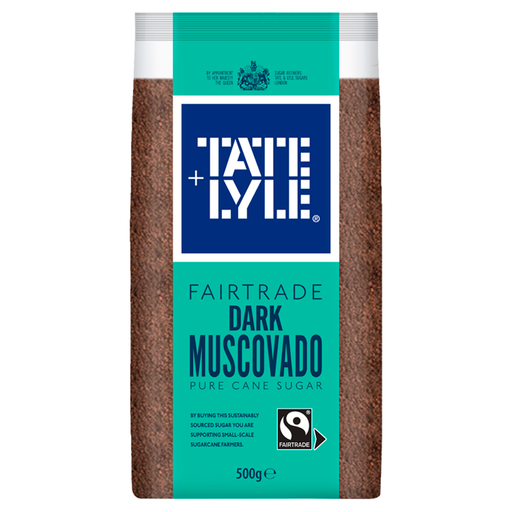
Tate & Lyle Fairtrade Muscovado Dark 500g
A 500g dark muscovado sugar for selecting the sugar in a homemade recipe, rather than buying finished fudge. The product information describes mass balance, under which Fairtrade sugar may be mixed with non-certified sugar; check the pack’s mark and wording for the precise claim. You will need to choose the other fudge ingredients separately.
View on Joybuy
 No image available
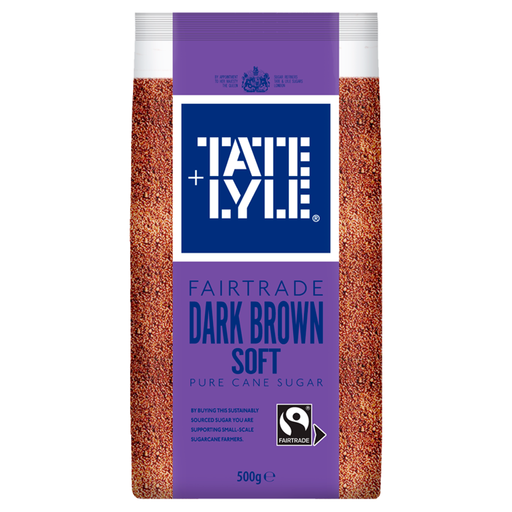
Tate & Lyle Dark Soft Brown Sugar Fairtrade 500g
A 500g dark soft brown sugar for a homemade baking route, not a ready-made fudge product. Check the pack’s Fairtrade mark to understand the sugar’s certification claim, and choose any cocoa or chocolate separately; the sugar’s claim does not certify the finished recipe.
View on Joybuy
Frequently asked questions
Does Fairtrade chocolate fudge mean every ingredient is Fairtrade?
Not necessarily. The Fairtrade Foundation says the classic FAIRTRADE Mark covers all ingredients that can be Fairtrade-certified, while the Fairtrade Sourced Ingredient Mark identifies one Fairtrade-sourced ingredient. Check the mark on the finished pack rather than relying on the product description alone.
Can I make chocolate fudge with Fairtrade sugar?
Yes, Fairtrade sugar can be an ingredient in a homemade recipe. M&S identifies Fairtrade Dark Muscovado Sugar, and Sainsbury’s describes its Fairtrade Light Soft Brown Sugar as suitable for making fudge. Choose and check the cocoa or chocolate separately: the sugar’s certification does not certify the finished fudge.
Can I choose chocolate fudge for food supplied at a school in England?
Check the applicable school-food standards before choosing it. The Requirements for School Food Regulations 2014 define chocolate and products containing chocolate as confectionery, and Department for Education guidance sets out the requirements for covered schools in England. Do not apply that England-specific guidance as a rule for every UK school setting.
Is an online product description enough to check allergens?
Read the current pack before serving. M&S and Sainsbury’s advise shoppers to check product labels because ingredient and allergen information can change; a flavour description alone cannot establish suitability for someone with an allergy.
Does mass balance mean the sugar in every pack was kept separate?
No. Sainsbury’s says its Fairtrade sugar may be replaced or mixed with non-certified sugar under mass balance. Do not interpret that wording as a claim that the physical sugar in an individual pack was kept separate throughout processing.


