What should you check?
Start with the certification claim on the exact pack, then compare the bar’s size and nutrition information with what you want to eat after training.
| Priority |
What to check |
Your needs |
| Fairtrade claim |
Look for the mark on the current pack. The Fairtrade Foundation distinguishes the FAIRTRADE Mark from the Fairtrade Sourced Ingredient Mark, which identifies a particular sourced ingredient. |
For me, a general responsible-cocoa statement is not enough if the particular bar must carry a Fairtrade claim. |
| Post-gym food |
Consider what else you will eat after training. University College London Hospitals NHS Foundation Trust describes carbohydrate-and-protein snacks as options used around exercise. |
If I am counting on this snack for recovery, I do not want to assume that chocolate alone covers it. |
| Portion |
Compare the pack weight with the amount you intend to eat. Divine Chocolate describes both a 35g dark bar and 90g bars; a larger bar can be divided into portions. |
A smaller bar suits me when I want one portion without dividing a larger pack. |
| Dark or milk |
Compare sugars on a per-100g basis, then check the amount you will eat. Divine Chocolate lists 28.9g sugars per 100g for its 70% dark bar and 40.1g for its 45% milk bar. |
I may prefer milk chocolate’s flavour, or choose dark chocolate and portion it deliberately; the sugar figure alone does not settle my whole snack choice. |
Brands and certification claims
These brand references help distinguish product-specific Fairtrade claims from broader cocoa-sourcing statements; check the current bar rather than assuming the same claim applies across a range.
Divine Chocolate
Divine Chocolate describes Fairtrade cocoa and sugar in its 35g 70% dark bar and Fairtrade-certified cocoa in its 45% milk bar.
- Its stated 35g and 90g formats offer different ways to plan a portion.
- Fairtrade ingredients do not make either chocolate bar a complete post-gym snack.
Tony's Chocolonely
Tony's Chocolonely describes Fairtrade certification as part of its sourcing approach.
- A Joybuy product description for its 180g milk chocolate bar specifies ingredients traded in compliance with Fairtrade Standards.
- Check the current pack for the mark and the scope of its claim when those details determine your choice.
Green & Black's
Green & Black's is named in Cocoa Life’s account of Mondelēz International’s work with Fairtrade.
- Its 85% dark bar is an option for shoppers who prefer a higher-cocoa flavour.
- A brand-programme statement does not establish the mark or ingredient scope on every current bar.
Cadbury
Cocoa Life describes its programme for Cadbury and a collaboration with Fairtrade.
- The programme gives shoppers a specific cocoa-sourcing claim to examine.
- It does not, by itself, establish that a particular Cadbury bar carries a FAIRTRADE Mark.
Mars Wrigley: Galaxy, Mars, Snickers and Twix
Galaxy describes a Rainforest Alliance cocoa-sourcing claim for its Smooth Milk products.
- The named Galaxy products offer a specific sourcing statement to compare with your criteria.
- Do not extend that statement to every Galaxy, Mars, Snickers or Twix bar, or treat it as a Fairtrade claim without checking the pack.
Chocolate bars on Joybuy
These dark and milk chocolate options suit shoppers considering a portioned treat after the gym. Their product descriptions make differing Fairtrade-ingredient claims; check the current pack’s mark if its exact certification scope is essential to you.
 No image available
Tony's Chocolonely Milk Chocolate Caramel & Sea Salt 180g
A milk-chocolate option with caramel and sea salt for a treat after training. The 180g bar can be divided into portions; check its current pack if the precise FAIRTRADE Mark matters to you.
View on Joybuy
 No image available
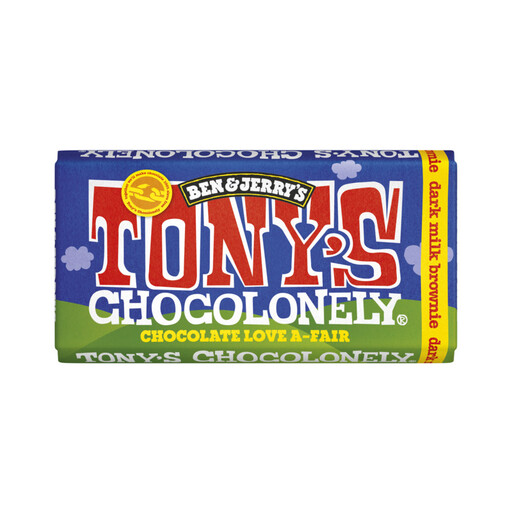
Tony's Chocolonely Ben & Jerry's Dark Milk Chocolate Fudge Brownie 180g
Dark milk chocolate with a fudge-brownie flavour for those who prefer that combination. Plan a portion from the 180g bar and check the current pack’s Fairtrade claim and allergen information.
View on Joybuy
 No image available
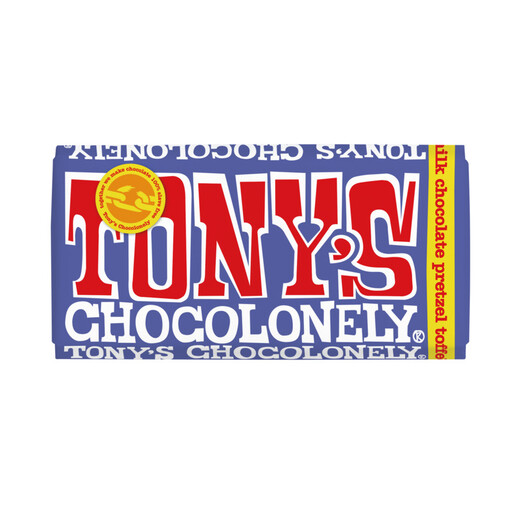
Tony's Chocolonely Milk Chocolate, Pretzel & Toffee 180g
A milk-chocolate bar with pretzel and toffee when you want contrasting textures. Divide the 180g bar if you intend to eat a smaller portion, and check the pack’s certification and allergen details.
View on Joybuy
 No image available
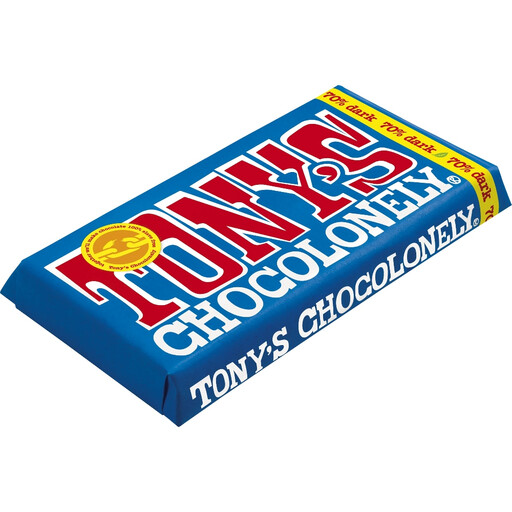
Tony's Dark Chocolate 180g
A dark-chocolate alternative to the milk bars in this selection. Its 180g size calls for a portion decision; check the current wrapper if the exact Fairtrade mark and its scope matter to you.
View on Joybuy
 No image available
Green & Black's 85% Dark Chocolate 90g
An 85% dark-chocolate option in a 90g bar. Its product description refers to Fairtrade ingredients on a mass-balance basis; check the current pack’s mark and scope if strict certification is your deciding factor.
View on Joybuy
Questions about post-gym chocolate
Is a Fairtrade chocolate bar enough as a post-gym snack?
Do not assume it covers what you want from food after exercise. University College London Hospitals NHS Foundation Trust describes carbohydrate-and-protein snacks as options used around exercise; if recovery is your priority, consider a suitable snack or meal and have chocolate separately if you want it.
How can I check a bar’s Fairtrade claim?
Read the current wrapper for its FAIRTRADE Mark and the claim it makes. The Fairtrade Foundation distinguishes the FAIRTRADE Mark from the Fairtrade Sourced Ingredient Mark, which identifies a particular ingredient; a responsible-cocoa statement is not automatically the same claim.
Is every chocolate bar automatically classified as HFSS?
Do not determine a particular bar’s classification from its category alone. The Department of Health and Social Care describes the UK Nutrient Profiling Model as a scoring tool for determining whether a food is less healthy; check the product information and the rules relevant to the setting in question.
Do England’s school-food rules apply to a personal post-gym purchase?
No: Department for Education guidance concerns food and drink provided in state-funded schools in England, not an adult’s personal purchase. For that school setting, the Requirements for School Food Regulations 2014 define confectionery to include chocolate; buyers supplying school food should check the applicable requirements and exceptions.


