What should you check before buying?
Start with how the chocolate will be handed out or served, then inspect the exact pack’s Fairtrade wording and allergen information. A brand’s sourcing programme alone does not tell you what claim applies to every bar it sells.
Mini bars for handouts
Choose when: Guests need separate treats for party bags or a doorstep bowl; check that the selected pack contains individually wrapped portions.
Bear in mind: A multipack count does not replace checking each portion’s packaging and the current allergen declaration.
Larger bars for a serving table
Choose when: A smaller group can select portions from bars served at the gathering.
Bear in mind: Pieces broken from a bar no longer carry the pack label, so keep that information available to guests.
| Priority | What to check | Your needs |
|---|
| Fairtrade claim |
Read the mark and wording on the exact pack. The Fairtrade Foundation says its classic black-background FAIRTRADE Mark covers all ingredients that can be Fairtrade-certified; an ingredient-specific claim should be described only at that scope. |
I want to describe the chocolate accurately, rather than assume a brand name or cocoa-sourcing statement certifies every ingredient. |
| Serving format |
Compare the number of bars with the number of guests. For handouts, check whether portions are separately wrapped; for a table, check the bar’s net weight and how it will be served. |
Party bags call for one sealed item per guest. At a small gathering, I can serve portions from larger bars instead. |
| Allergens |
Inspect the current pack’s ingredients, highlighted allergens and precautionary statements for each variant. Keep the packaging available if you divide a bar for serving. |
Guests or parents need to be able to check the actual chocolate offered, especially when several flavours or fillings are involved. |
| School setting |
Establish whether food is being provided to pupils at a state-funded school in England during the school day. Department for Education guidance prohibits confectionery and chocolate across that period. |
If this is a school-day event covered by those standards, I need a permitted non-chocolate option, regardless of its Fairtrade claim. |
Brand references for this choice
These examples illustrate different Fairtrade claims and serving formats; the particular product and its current label matter more than the brand name alone.
Divine Chocolate
Divine lists a 100-pack of milk-chocolate mini bars made with Fairtrade cocoa and sugar, a format worth checking for party-bag use.
- Divine says cocoa farmers from Ghana’s Kuapa Kokoo cooperative co-own the business.
- Its milk mini bars contain milk. Check the selected pack’s full allergen and precautionary wording, as well as how the bars are individually packaged.
Green & Black’s
The brand describes a range of Fairtrade and organic bars that may suit a small gathering or tasting table.
- Milk and dark styles allow hosts to choose a particular type of bar for table service.
- Check the exact flavour’s Fairtrade wording and allergens; a larger bar is not a separately labelled portion for each guest.
Cadbury
A Cadbury Dairy Milk case is a possible larger-bar format when its exact Fairtrade claim suits the event.
- Cadbury Gifts Direct describes its specific case of 21 × 110g Dairy Milk bars as Fairtrade certified and made with Fairtrade Ghanaian cocoa beans.
- That retailer’s description does not establish certification for every Cadbury product or pack. Check the case you intend to buy and each relevant allergen declaration.
Chocolate bars on Joybuy
These larger bars are options to consider for a small Halloween gathering or serving table, rather than a list of individually wrapped party-bag treats. Check each current pack’s Fairtrade mark and wording before deciding how to describe its sourcing.
 No image available
Green & Black's Dark Chocolate 70% 90g
A 90g dark bar for a serving table, labelled 70% cocoa in its product name. Check the pack’s Fairtrade claim and precautionary allergen wording before serving; it is not a separately wrapped treat for each guest.
 No image available
Green & Black's Dark Chocolate 85% 90g
Another 90g table-serving option, distinguished by the 85% cocoa figure in its name. Read this variant’s own Fairtrade wording and allergen statements rather than relying on those of the 70% bar.
 No image available
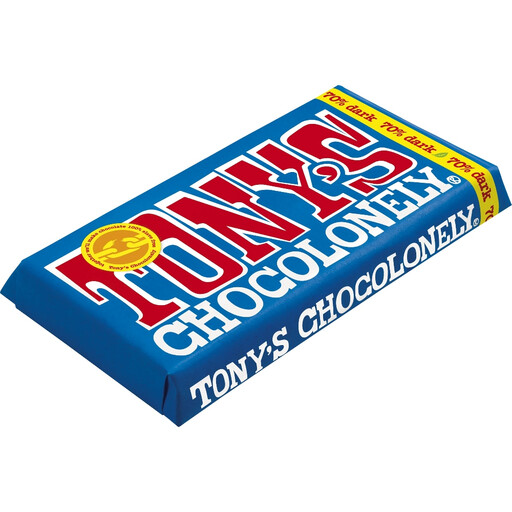
Tony's Dark Chocolate 180g
A 180g dark bar to consider when serving portions to a small group. Check the current pack for the scope of its Fairtrade ingredient claim and for allergen warnings before putting pieces on a table.
 No image available
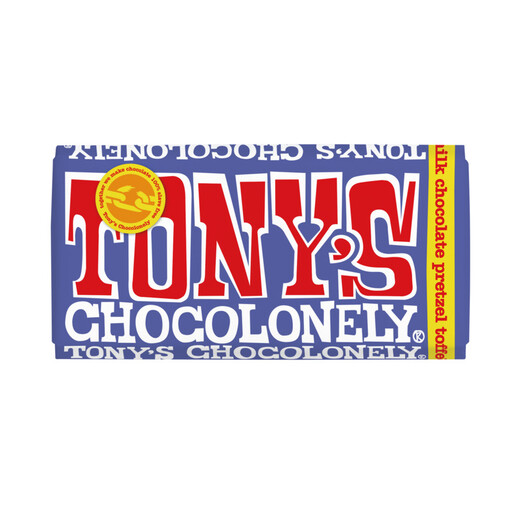
Tony's Chocolonely Milk Chocolate, Pretzel & Toffee 180g
A 180g milk-chocolate bar with pretzel and toffee for table service. Its listing identifies milk, soya and wheat; check the current pack for the full allergen wording and the precise Fairtrade claim.
 No image available
Tony's Chocolonely Milk Chocolate Caramel Sea Salt 180g
A 180g caramel-and-sea-salt milk-chocolate bar to consider for sharing at a small gathering. Check the pack to distinguish its Fairtrade ingredient wording from a whole-product claim, and inspect its allergen and precautionary statements.
Questions about Fairtrade party chocolate
What should I look for on a Fairtrade chocolate pack?
Check the exact pack’s mark and wording, including which ingredients the claim covers. The Fairtrade Foundation says its classic black-background FAIRTRADE Mark means all ingredients that can be Fairtrade-certified are certified; do not treat a general brand or cocoa-sourcing statement as the same claim.
Should I choose mini bars or larger bars for Halloween?
Choose separately wrapped, labelled portions if each guest needs a handout; use larger bars when you plan to serve chocolate at a table. Divine lists a 100-pack of mini bars made with Fairtrade cocoa and sugar, but confirm how the current pack is wrapped before using it for one-per-guest distribution.
Can Fairtrade chocolate be provided to pupils at a state-funded school event in England?
Not during the school day where the school-food standards govern food provided to pupils. The Department for Education says its restriction on confectionery and chocolate applies across the whole school day; Fairtrade certification does not create an exception.
Does a Fairtrade claim tell me whether a bar is suitable for someone with an allergy?
No. A Fairtrade claim concerns sourcing, not allergens. Read the ingredients, highlighted allergens and precautionary statements on each current pack; this is especially important when offering different recipes or filled bars.
Is an online allergen description enough before serving?
Use it to compare products, then inspect the physical packaging of the chocolate you will serve. Keep that information available if you open or divide a bar, so guests can check the ingredients and warnings for the actual product.


