Older coffee drinkers cutting back on caffeine
Decaf pods offer a way to keep a familiar coffee routine while reducing caffeine. The NHS notes that sensitivity varies, and NHS Tayside says caffeine can worsen some bladder and bowel symptoms.


Choose a pod with a product-specific Fairtrade claim that fits the older person’s exact coffee machine. If they want to reduce caffeine, look for a decaf version; the NHS says coffee counts towards fluid intake, but it does not replace meals or an individual nutrition plan.
Decaf pods offer a way to keep a familiar coffee routine while reducing caffeine. The NHS notes that sensitivity varies, and NHS Tayside says caffeine can worsen some bladder and bowel symptoms.
Check the machine’s exact system before choosing a repeat purchase. A pod described as Nespresso-compatible is not interchangeable with a Tassimo T DISC or a Dolce Gusto capsule.
Check the claim on the exact pack, alongside its caffeine description and machine compatibility. A brand’s broader sourcing message does not establish that every capsule it sells is Fairtrade-certified.
Start with the coffee’s Fairtrade claim and the machine format, then decide whether regular or decaf coffee suits the person who will drink it.
| Priority | What to check | Your needs |
|---|---|---|
| Fairtrade claim | Look for the FAIRTRADE Mark or a certification statement for the exact coffee pod. If the pack uses a Fairtrade Sourced Ingredient mark, check which ingredient it names; the Fairtrade Foundation distinguishes this from the classic mark. | I want to know that the coffee in the pod carries a specific Fairtrade claim, rather than relying on general ethical-sourcing wording. |
| Caffeine | Check whether the exact pod is decaf, regular or part of a mixed pack. The NHS says caffeine sensitivity varies; NHS Tayside notes that caffeine can worsen some bladder and bowel symptoms. | If caffeine causes difficulties for the person drinking it, I would look for a decaf option without assuming every older person needs to avoid regular coffee. |
| Machine fit | Match the stated capsule format to the machine’s exact line and read any exclusions. Tassimo says its machines take official T DISCs only; a domestic Nespresso-compatible claim may exclude professional or built-in machines. | I’m buying for a machine already in the home, so the pack needs to name a format that fits it. |
| Eating and drinking routine | The NHS says coffee counts towards daily fluid intake. Keep meals, other drinks and any individual nutrition or fluid guidance in view when choosing a coffee routine. | I want coffee to remain an enjoyable drink, not to stand in for a meal or a care plan. |
A general sourcing claim does not establish the Fairtrade status of the specific coffee being bought.
Read the exact pack or product listing for a FAIRTRADE Mark or product-specific certification statement. If a Fairtrade Sourced Ingredient mark appears, check the ingredient named beside it.
Capsule systems are not interchangeable. Tassimo requires official T DISCs, while some Nespresso-compatible pods exclude professional or built-in machines.
Identify the machine’s exact line and compare it with the pod’s compatibility wording before ordering.
Fairtrade describes sourcing, not the role of coffee in a person’s meals. Caffeine also affects people differently.
Keep coffee within the person’s usual eating and drinking routine. If they follow individual fluid or dietary guidance, account for it when choosing regular or decaf coffee.
Collection and disposal routes depend on the capsule and the services available locally.
Follow the capsule brand’s collection instructions. For capsules described as industrially compostable, check whether the local collection accepts them.
Machine formats and Fairtrade claims need checking at product level; these brand references do not establish certification for an entire range.
Nespresso has distinct capsule systems. Its Fairtrade-described Pro Origins Indonesia coffee belongs to the professional range, not evidence of a Fairtrade claim across domestic capsules.
Dolce Gusto offers coffee and other capsule drinks for its own machine system.
Tassimo uses its own T DISC format for drinks including coffee, tea and hot chocolate.
Lavazza sells different capsule formats, including A Modo Mio and capsules described as compatible with Nespresso Original machines.
Sainsbury’s gives explicit Fairtrade wording for certain own-brand coffee products, including ground coffee.
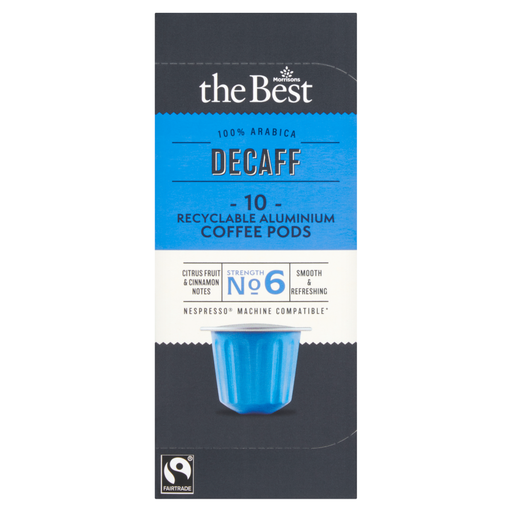
This option is for shoppers seeking a Fairtrade-labelled decaf coffee pod. Confirm its capsule format against the older person’s machine before ordering.
 No image available
For a shopper seeking decaf coffee with a Fairtrade claim, the Morrisons description on Joybuy states that these pods contain decaffeinated 100% Arabica coffee and describes the coffee as 100% Fairtrade. The pack is 54g. Check the capsule format against the exact home machine before buying.
No. Check for a product-specific certification statement or the FAIRTRADE Mark. The Fairtrade Foundation says its classic mark covers ingredients that can be Fairtrade-certified; a Fairtrade Sourced Ingredient mark identifies the named ingredient instead.
Decaf is an option if the person wants to reduce caffeine while keeping a pod-coffee routine. NHS Tayside says caffeine can worsen some bladder and bowel symptoms, but suitability depends on the individual rather than age alone; the pod must also fit their machine.
Yes. The NHS includes tea and coffee in daily fluid intake and advises moderation with caffeine because sensitivity varies. Coffee does not replace meals or any individual nutrition and fluid guidance.
No. Tassimo says its machines accept official Tassimo T DISCs only. Look for that format and check the Fairtrade claim on the specific product.
Follow the instructions for the particular capsule rather than assuming it belongs in household recycling. Nespresso UK describes drop-off and collection options; for capsules described as industrially compostable, check whether your local collection accepts them.