For an occasional after-school chocolate treat, check the Fairtrade Mark on the particular bar: the classic mark covers all ingredients that can be Fairtrade-certified, while the Fairtrade Sourced Ingredient Mark identifies a particular Fairtrade-sourced ingredient. Divine describes a farmer-co-owned Fairtrade business, and M&S lists a Fairtrade 85% dark chocolate bar, but neither sourcing nor cocoa percentage makes chocolate the default everyday snack; NHS Healthier Families favours fruit and vegetables for routine snacks.
Who is choosing?
The first distinction is whether the chocolate is a family treat eaten after school or food being supplied by a school.
Families seeking a Fairtrade-labelled treat
If certification is the reason for buying, compare the mark and its wording on the bar. The Fairtrade Foundation distinguishes the classic Fairtrade Mark from the Fairtrade Sourced Ingredient Mark; a general ethical-sourcing statement does not tell you which one applies.
Families trying darker flavours
A child who enjoys one dark chocolate bar may not enjoy a more intense one. Compare the stated cocoa percentage, ingredients, nutrition panel and allergen warning on the exact product before choosing.
Staff buying food for a school
Food supplied by a school needs a separate check against the rules for that nation and setting. England’s Requirements for School Food Regulations 2014 classify chocolate as confectionery; a suggestion for a treat at home is not a school-food approval.
What should you check?
Start with the sourcing claim you want the pack to make, then check whether its flavour, nutrition information and allergen statement work for the intended eater. Keep a school purchase separate from a family’s after-school choice.
| Priority | What to check | Your needs |
|---|
| Fairtrade coverage |
Look for the mark on the bar and read any named ingredient beside it. The Fairtrade Foundation says the classic mark covers all ingredients that can be Fairtrade-certified; the Sourced Ingredient Mark identifies one Fairtrade-sourced ingredient. |
I want to know whether the claim covers every certifiable ingredient or a named ingredient such as cocoa. |
| Farmer ownership |
Check the brand’s specific ownership and sourcing statements as well as the product mark. Divine says farmers in Ghana’s Kuapa Kokoo cooperative co-own its business and that it pays Fairtrade prices and premiums for every possible ingredient. |
Farmer co-ownership matters to my choice, but I still want to see what the particular bar’s pack says. |
| Cocoa intensity |
Compare the cocoa percentage on the exact bar, then consider whether the intended eater likes a stronger dark-chocolate flavour. An 85% or 100% bar should not be chosen on percentage alone. |
Will this be enjoyable for someone trying dark chocolate, or do they already prefer an intense cocoa taste? |
| Snack pattern |
Read sugars and saturates per 100g and the front-of-pack traffic-light label where present. NHS Healthier Families recommends fruit and vegetables for routine snacks and advises cutting down on snacks showing red indicators. |
I’m choosing an occasional chocolate treat, not assuming that Fairtrade sourcing or a higher cocoa percentage makes it an everyday snack. |
| Allergens |
Read the current pack’s ingredients and precautionary allergen statement. M&S says its Collection 85% bar is unsuitable for milk, nut and peanut allergies; warnings differ between products. |
If an allergy or dietary restriction affects our choice, I need the statement for this exact bar rather than another product from the same brand. |
| School setting |
For food supplied by a school, establish the relevant nation, school setting and applicable rules before ordering. England’s 2014 school-food regulations classify chocolate as confectionery. |
Am I buying a treat to serve at home after school, or food that the school will provide? |
Common buying mistakes
-
Reading any ethical cocoa claim as a Fairtrade Mark
A company sourcing programme, an unspecified certified-cocoa claim and the two Fairtrade marks make different statements. One cannot establish the coverage of another.
If Fairtrade certification is essential, inspect the particular pack for its mark and any wording that names the certified ingredient.
-
Letting dark chocolate become the routine after-school snack
Ethical sourcing and cocoa percentage do not replace the nutrition panel or the wider snack choice. NHS Healthier Families favours fruit and vegetables for routine snacks.
Keep chocolate as an occasional treat and compare packaged snacks using their front-of-pack traffic-light information where available.
-
Choosing a cocoa percentage without considering taste
A more intense bar may not appeal to the intended eater, even when its sourcing claim meets the household’s requirements.
Check the cocoa percentage and choose an 85% or 100% bar only if that stronger flavour is wanted.
-
Applying home-snack advice to school food
Rules for food supplied by a school are a different question from what a parent serves at home. England’s Requirements for School Food Regulations 2014 classify chocolate as confectionery.
Before buying for a school, check the applicable national rules, their timing and the school’s arrangements.
Brand and product references
These examples illustrate different sourcing statements and bar specifications. A brand-wide statement is not a substitute for checking the mark, ingredients and allergen information on the product you intend to buy.
Divine
Divine lists a 70% Dark Chocolate 90g bar and describes its business as farmer co-owned.
- Divine says farmers in Ghana’s Kuapa Kokoo cocoa cooperative co-own the company and that it pays Fairtrade prices and premiums for every possible ingredient.
- Check the selected bar’s current Fairtrade Mark, ingredients and allergen statement; the brand’s ownership model does not answer those pack-specific questions.
M&S
M&S lists a Collection Fairtrade 85% Dark Chocolate 100g bar made with cocoa beans from Peru.
- The M&S product page states a minimum of 85% cocoa solids and lists 15.9g sugars and 30.5g saturates per 100g.
- M&S says this bar is unsuitable for milk, nut or peanut allergies and advises reading the product label because information can change.
Montezuma’s
Montezuma’s describes its Absolute Black bar as 100% cocoa, with no added sugar or milk in the recipe.
- Montezuma’s lists 0.6g sugars per 100g for Absolute Black and says its cocoa is certified.
- Its stated certification scheme is not identified in that company claim, so check the bar for a Fairtrade Mark if required. Absolute Black may contain traces of milk, nuts and peanuts.
Lindt
Lindt describes a company cocoa-sourcing programme; that statement does not establish a Fairtrade Mark on its Excellence 70% bar.
- Lindt says its cocoa products were sourced through its Farming Program or other Responsible Sourcing Standards in 2025.
- Lindt Shop UK lists 29g sugars and 24g saturates per 100g for Excellence 70%, with possible traces of nuts, milk, soya and sesame. Check the exact bar if certification or allergens govern the choice.
Dark chocolate options on Joybuy
These bars offer different cocoa strengths and flavour choices for an occasional after-school chocolate treat. Check the current pack if a particular Fairtrade Mark, ingredient coverage or allergen statement is decisive.
 No image available
Green & Black’s Dark 85% 90g
An 85% dark chocolate option for someone who already enjoys an intense cocoa flavour. If the scope of its Fairtrade claim matters, check the mark and wording on the current pack; check its allergen statement for milk and nuts.
View on Joybuy
 No image available
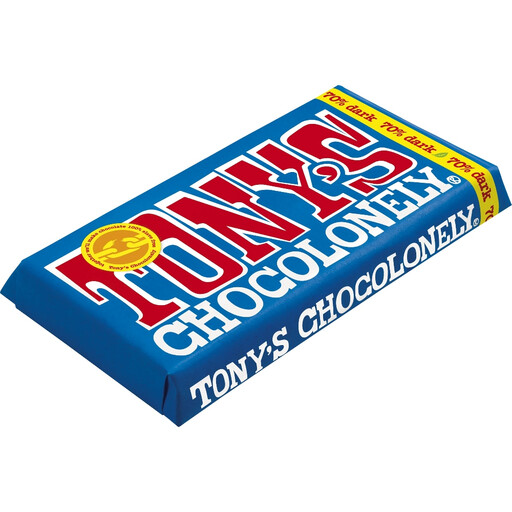
Tony’s Dark Chocolate 180g
A dark chocolate bar to consider when comparing Fairtrade sourcing statements. Read the current pack for its cocoa percentage and the precise scope of its Fairtrade claim, and check the allergen statement if soya, gluten, eggs, milk, nuts or peanuts are a concern.
View on Joybuy
 No image available
Divine Chocolate 70% with Raspberries 90g
A 70% dark chocolate bar with raspberries for a fruit-flavoured treat. Check the current pack for its Fairtrade Mark and ingredient coverage. The product descriptions conflict about milk, so rely on the pack before buying for an allergy or dietary requirement.
View on Joybuy
Frequently asked questions
What is the difference between the two Fairtrade marks on chocolate?
The Fairtrade Foundation says the classic Fairtrade Mark indicates that all ingredients capable of Fairtrade certification are certified. Its Fairtrade Sourced Ingredient Mark identifies a particular Fairtrade-sourced ingredient, which may be cocoa on a chocolate bar; read the wording beside the mark rather than assuming the marks cover the same ingredients.
Does a higher cocoa percentage mean less sugar?
Not by itself: compare the nutrition panels of the particular bars. M&S lists 15.9g sugars per 100g for its Collection 85% bar, Lindt Shop UK lists 29g for Excellence 70%, and Montezuma’s lists 0.6g for Absolute Black 100%. These are different products, so cocoa percentage alone does not settle the wider snack choice.
Should dark chocolate be an everyday after-school snack?
Do not make dark chocolate the routine choice solely because it is Fairtrade or has a high cocoa percentage. NHS Healthier Families favours fruit and vegetables for regular snacks and advises using front-of-pack traffic-light information when comparing packaged foods; chocolate can instead be an occasional treat.
Can a school in England supply dark chocolate as a snack?
Do not use advice about treats at home as permission for a school purchase. England’s Requirements for School Food Regulations 2014 classify chocolate and products containing or coated with chocolate as confectionery. A Department for Education poster for September 2027 standards also lists chocolate among snacks that are not permitted; check the rules and implementation date applicable to the school before ordering.


