What should you check?
Decide what Fairtrade claim you need to communicate, then choose a cocoa level and serving format that fit your guests.
| Priority | What to check | Your needs |
|---|
| Fairtrade claim |
Look for the mark and read which ingredients it covers. The Fairtrade Foundation says its classic black-background Mark covers all ingredients that can be Fairtrade-certified; its Sourced Ingredient Mark identifies a particular Fairtrade-sourced ingredient. |
I want to tell guests exactly what the chocolate’s Fairtrade claim covers, rather than treating a broad ethical-sourcing statement as certification. |
| Cocoa level |
Read the stated cocoa percentage and choose whether a more intense bar needs its own serving label. Cocoa percentage alone says nothing about Fairtrade status. |
For a mixed group, I’d start with a 70–75% option and offer 85% or higher separately to guests who prefer it. |
| Serving format |
Check the weight and number of portions against the guest count. Divine describes its 70% Fairtrade cocoa-and-sugar option as a pack of thirty 35 g bars; a standard bar needs dividing for a sharing plate. |
Individually portioned bars would mean less preparation for a larger gathering. For a small tasting plate, I can divide a standard bar into squares. |
| Allergens |
Read the exact pack’s ingredients and any “may contain” statement, including when the recipe is described as vegan. The Food Standards Agency explains that precautionary labelling communicates possible unintended allergen presence. |
If a guest has an allergy, I need to check the chosen product’s current label rather than assume every dark bar has the same ingredients or handling. |
Brand references for dark chocolate
These references describe particular products or ranges, not a Fairtrade claim for every bar a brand makes.
Divine
Divine describes its pack of thirty 35 g, 70% dark-chocolate bars as made with Fairtrade cocoa and sugar.
- The individual-bar format gives guests defined portions.
- Check the current pack’s allergens and whether thirty bars suit the gathering.
M&S
Marks & Spencer describes a 75% single-origin bar as sourced from Fairtrade cocoa farms and calls its 85% dark bar Fairtrade.
- The stated cocoa percentages help distinguish the two tasting options.
- Check the current pack if you need a particular Fairtrade Mark or ingredient scope.
Lindt
Lindt’s EXCELLENCE Dark 70% product page states its cocoa level and precautionary allergen information.
- The page explicitly distinguishes its vegan recipe from milk-allergy suitability.
- Do not use that product page as evidence of a Fairtrade claim for the bar.
Montezuma’s
Montezuma’s describes its Absolute Black bar as 100% cocoa with no added sugar.
- Its stated cocoa level identifies it as a separate, intense tasting option.
- The brand’s broader cocoa-sourcing statement does not establish a Fairtrade claim for that exact bar.
Hotel Chocolat
Hotel Chocolat’s dark-chocolate range listing includes batons, selectors, slabs and gift-box formats.
- Those formats offer different ways to arrange a sharing plate.
- Check an exact product’s pack before presenting it as Fairtrade.
Green & Black’s
Green & Black’s describes its selection-box range using fair-trade and ethical-sourcing language.
- Its gifting range may be relevant when choosing a presentation format.
- Check the claim on the exact dark-chocolate bar; a range-level description does not establish that bar’s mark or ingredient scope.
Joybuy chocolate options
These Joybuy options are standard bars for dividing into afternoon-tea portions, including a raspberry-flavoured bar and a higher-cocoa choice. Check each current pack’s Fairtrade wording and allergens before serving.
 No image available
Green & Black’s 70% Dark Chocolate 90 g
A standard bar to divide for a tasting plate. Its listing describes Fairtrade ingredients with a mass-balance qualification; check the current pack for the precise claim and its almond, hazelnut and milk precautionary wording.
View on Joybuy
 No image available
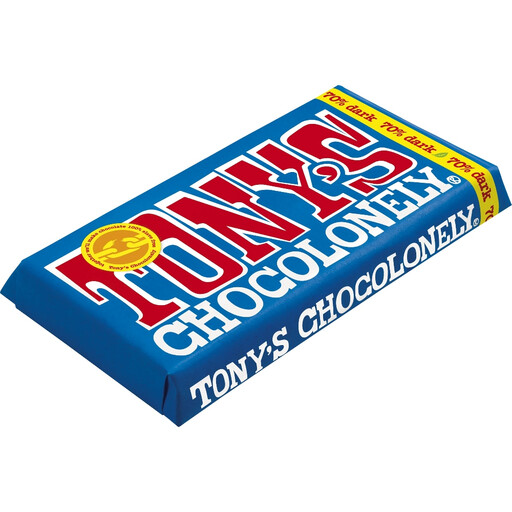
Tony’s Dark Chocolate 180 g
The 180 g bar can be divided for sharing. Its listing makes a Fairtrade-standards ingredient claim; check the current pack for the mark and scope. It lists soya and precautionary allergen information that should be checked against guests’ needs.
View on Joybuy
 No image available
Divine 70% Dark Chocolate with Raspberries 90 g
A fruit-flavoured bar to divide for a tasting plate rather than a plain-chocolate option. Its listing makes a Fairtrade cocoa claim, but the mark’s scope needs checking on the pack. Check the current allergen declaration before serving: the listing’s milk wording is inconsistent.
View on Joybuy
 No image available
Green & Black’s 85% Dark Chocolate 90 g
Use this higher-cocoa bar as a separately labelled tasting choice for guests who prefer a more intense flavour. Its listing describes Fairtrade ingredients with a mass-balance qualification; check the current pack for the exact claim and its almond, hazelnut and milk precautionary wording.
View on Joybuy
Frequently asked questions
What do the two Fairtrade marks mean on chocolate?
The Fairtrade Foundation says its classic black-background Mark indicates that all ingredients capable of Fairtrade certification are Fairtrade-certified. Its Fairtrade Sourced Ingredient Mark identifies one Fairtrade-sourced ingredient, such as cocoa. Read the mark and accompanying wording on the exact pack before describing the chocolate to guests.
Should I serve 70% or 85% dark chocolate at afternoon tea?
For guests with different tastes, a 70–75% bar is a practical starting choice; offer 85% separately to those who prefer a more intense, less-sweet option. Label the cocoa percentages if you put both on a tasting plate. Neither percentage establishes whether the bar is Fairtrade.
Is a vegan-recipe dark bar suitable for someone with a milk allergy?
Not automatically. Lindt says its EXCELLENCE Dark 70% bar is made to a vegan recipe but may contain milk. The Food Standards Agency explains that “may contain” wording communicates possible unintended allergen presence. Check the exact current pack and the guest’s allergy requirements before serving.
Do England’s HFSS rules prohibit dark chocolate at every school tea?
England’s guidance on promotions and placement of certain foods high in fat, sugar or salt is not a blanket rule for every school tea. School food is a separate question: the Department for Education’s guidance concerns food and drink provided in state-funded schools in England, while proposed updated standards for September 2027 remain subject to Parliamentary approval. For a school event, check the current requirements for its nation and setting, how the food is being provided, and the school’s policy.


