Fairtrade-first grocery shoppers
You want the exact dark chocolate bar to carry an explicit Fairtrade claim, rather than relying on a brand’s general ethical-sourcing description.


Start with a bar whose individual listing explicitly states Fairtrade or shows the FAIRTRADE Mark: organic or broader responsible-sourcing claims do not establish Fairtrade status for that bar. Then choose the cocoa strength and flavour you want, and check the delivery option and current pack’s ingredients and allergen advice before eating it.
You want the exact dark chocolate bar to carry an explicit Fairtrade claim, rather than relying on a brand’s general ethical-sourcing description.
You are deciding between stated 70% and 85% cocoa options and want to compare flavours, ingredients and pack information before adding a bar to an order.
You want to check the ingredients and precautionary allergen statement as well as any vegan label. The cited Divine and M&S bars show why vegan wording alone cannot settle a milk or nut allergy question.
Check the Fairtrade claim on the individual bar first, then compare its formulation and whether it fits the delivery order you are placing.
| Priority | What to check | Your needs |
|---|---|---|
| Fairtrade claim | Look for Fairtrade wording or a FAIRTRADE Mark on the exact bar. The Fairtrade Foundation distinguishes the classic mark from the Fairtrade Sourced Ingredient Mark; read which ingredients the claim covers and whether mass balance is stated. | I want to know what the Fairtrade claim applies to, rather than treating organic or responsible-sourcing wording as the same claim. |
| Cocoa and flavour | Compare the stated cocoa percentage, flavour additions and ingredients. The cited listings include plain and flavoured 70% bars and 85% bars; the percentage alone does not tell you which flavour you will prefer. | A plain bar may suit my order, or I might want orange, ginger or raspberry. I can choose the stated cocoa strength without assuming the highest figure is automatically preferable. |
| Ingredients and allergens | Read the current pack’s ingredients and precautionary allergen statement. The Food Standards Agency explains that a “may contain” statement indicates possible unintentional allergen presence; vegan wording does not cancel that warning. | If an ingredient or cross-contact warning matters to me, I need the delivered pack’s information before eating the chocolate, not just a shopping filter. |
| Delivery fit | Check whether the bar can be added to your chosen grocery basket and slot, or requires a separate direct order. Review the pack size and any substitution settings at checkout. | I want the bar to fit the order I am placing, rather than assuming a product listing means it will be in my delivery. |
Brand-wide sustainability information does not establish Fairtrade status for a particular bar. For example, the cited Lindt and Montezuma’s materials describe sourcing approaches without identifying a specific cited dark bar as Fairtrade-certified.
Check Fairtrade wording or the FAIRTRADE Mark on the individual listing, then confirm the claim on the pack.
The cited vegan Divine bars carry precautionary warnings, while M&S describes its vegan 85% bar as unsuitable for people with milk, nut or peanut allergy.
If an allergy or intolerance is relevant, read the delivered pack’s ingredients and allergen statement before eating.
Divine’s cited plain 70% bar uses a direct-order route, while the cited retailer listings offer grocery-order routes. A product page alone does not confirm eligibility for your selected slot.
Check the item in your actual basket, along with the delivery option and substitution settings, before placing the order.
A direct order may require a separate checkout and delivery.
The Fairtrade Foundation explains that mass balance permits mixing during processing while requiring purchases of corresponding Fairtrade ingredient quantities. Tesco’s Green & Black’s 70% listing uses mass-balance wording.
If physical segregation matters to you as well as Fairtrade purchasing, look for an explicit product-level traceability statement rather than inferring it from the Fairtrade claim.
These references describe particular cited bars or ranges; a brand’s presence here does not make every bar in its range Fairtrade.
Divine’s cited plain 70% bar and ginger-and-orange 70% bar state Fairtrade ingredients and vegan suitability.
Tesco’s listing for the Organic 70% Dark Chocolate Bar 90g explicitly identifies Fairtrade cocoa, sugar and vanilla.
M&S describes its cited 100g 85% dark chocolate bar as Fairtrade and made with cocoa beans from Peru.
Lindt describes its cocoa responsible-sourcing programme and offers dark chocolate at several cocoa percentages.
Montezuma’s lists dark bars across several cocoa strengths and describes its supplier-sourcing commitments.
These Joybuy listings cover plain and flavoured dark chocolate with stated Fairtrade information, at different cocoa strengths and pack sizes. Check the individual listing, your delivery options and the delivered pack when choosing.
 No image available
A plain 70% option if you want the listing to identify its Fairtrade ingredients. The stated Fairtrade cocoa, sugar and vanilla use mass balance; the listing warns that the bar may contain nuts and milk. Check the delivery option and current pack before ordering.
 No image available
Consider this stated 85% cocoa bar if you want a different cocoa strength from the Green & Black’s 70% option. Its listing identifies Fairtrade cocoa, sugar and vanilla and warns that it may contain nuts and milk. Check the delivery option and current pack before ordering.
 No image available
This listing describes an 85% Fairtrade dark bar made with Ecuadorian cocoa. It warns of possible cereals containing gluten, milk, nuts and peanuts. Check the delivery option and current pack before ordering.
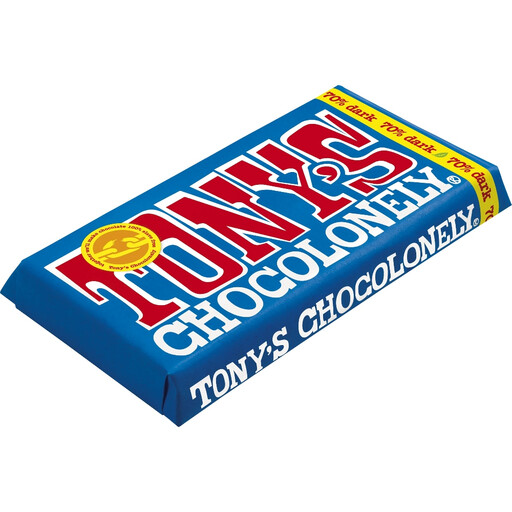 No image available
A plain bar whose listing states a minimum of 70% cocoa solids and says its cocoa mass, sugar and cocoa butter are traded in compliance with Fairtrade Standards. It contains soya and warns of possible cereals containing gluten, eggs, milk, nuts and peanuts. Check the delivery option and current pack before ordering.
 No image available
A flavoured option whose listing states at least 70% cocoa solids, raspberry pieces and Fairtrade cocoa and sugar. Its vegan-friendly wording conflicts with ingredient and allergen text identifying milk: check the current pack, and do not choose it if you need to avoid milk as an ingredient. The listing also warns of possible gluten and nuts. Check the delivery option before ordering.
Check the individual bar’s Fairtrade wording or FAIRTRADE Mark, not just the brand’s sustainability description. The Fairtrade Foundation explains that the classic mark covers ingredients that can be Fairtrade-certified, while the Fairtrade Sourced Ingredient Mark identifies the relevant sourced ingredient.
No. The Fairtrade Foundation says mass balance allows mixing during processing while requiring purchases of corresponding Fairtrade ingredient quantities. If physical segregation matters to you, look for an additional explicit traceability statement on the product.
Choose by the stated cocoa strength, ingredients and flavour you want, rather than treating either percentage as a quality ranking. The cited Divine listings offer plain or flavoured 70% choices, while the cited M&S and Co-op listings identify Fairtrade 85% bars.
No. The cited vegan Divine bars carry precautionary allergen warnings, and M&S says its vegan-labelled 85% bar is unsuitable for people with milk, nut or peanut allergy. Read the current physical pack’s ingredients and allergen advice before eating.
Use the listing to choose a bar, then check its place in your delivery order and read the pack when it arrives. Waitrose, M&S and Co-op caution that product details or availability can change, so an earlier listing should not replace the delivered pack’s ingredient and allergen information.