What matters when choosing?
Check the Fairtrade claim on the exact product first, then choose a cocoa percentage and format that fit the bake. Read allergen information for every chocolate component, including decorations and fillings.
| Priority | What to check | Your needs |
|---|
| Fairtrade claim |
Read the current pack’s mark and wording. The Fairtrade Foundation says its classic mark means all ingredients that can be Fairtrade-certified are certified; check whether a different claim names only particular ingredients. |
I want the Fairtrade claim to apply to the chocolate I am putting in the bake, not merely to a brand’s broader sourcing policy. |
| Cocoa and format |
Match the recipe’s cocoa percentage where possible. Check whether it calls for a bar to chop, cooking chocolate, or couverture for moulding or coating; a cooking designation does not itself confirm Fairtrade status. |
If a recipe specifies 70% dark chocolate, I do not want to swap in an 85% bar without considering the change in flavour. For moulded decorations, I need to check that the chocolate suits that use. |
| Allergens |
Read the current ingredients, suitability wording and any ‘may contain’ statement on each product. The Food Standards Agency explains that precautionary allergen labelling signals possible unintended presence of a regulated allergen. |
When I am sharing a cake or making gifts, I need to check the chocolate, fillings and decorations against the recipients’ allergen requirements. |
Brand and product references
These references concern particular products and claims, not every chocolate made by each brand or its availability on Joybuy.
Divine
Divine lists Fairtrade cocoa mass, sugar, cocoa butter and vanilla for its plain 70% Dark Chocolate 90g bar. It is a bar to consider when Fairtrade ingredients come before a dedicated cooking format.
- The ingredient list makes the Fairtrade claim specific to this plain 70% product.
- The bar is 90g and its label says it may contain gluten, milk and nuts.
M&S
M&S describes its 85% dark bar as Fairtrade and separately sells a dark cooking chocolate for cakes, cookies and desserts. Check claims on each product rather than transferring them between the two.
- The 85% bar provides a stated Fairtrade option for a recipe calling for that cocoa percentage.
- The separate cooking product’s baking use does not establish a Fairtrade claim for it.
Lindt
Lindt presents its COOKING 70% bar for cakes, tarts, brownies and cookies. Choose it for a suitable recipe only after checking the current pack if Fairtrade is essential.
- The product has a stated cooking use and a 70% cocoa designation.
- Its product information identifies soya and warns that it may contain nuts and milk.
Montezuma's
Montezuma's describes its 74% Organic Dark Couverture for melting, moulding, decorating and enrobing. That makes its format relevant to chocolate decorations, independently of any Fairtrade requirement.
- The stated uses address chocolate work beyond mixing chocolate into a batter.
- The product information says it may contain milk, nuts and peanuts; check the exact pack for any Fairtrade claim.
Hotel Chocolat
Hotel Chocolat says it works directly with farmers and pays a premium for high-quality cacao. Those are the brand’s sourcing statements, not a Fairtrade claim for a particular chocolate.
- Its statements give shoppers a specific sourcing approach to examine.
- If Fairtrade is required, look for an explicit claim on the product being considered.
Dark chocolate options on Joybuy
These options include 70% and 85% bars and a dedicated cooking chocolate for Christmas recipes. Check each exact pack’s Fairtrade wording where that claim is essential; a product’s cocoa percentage or baking format does not answer that question.
 No image available
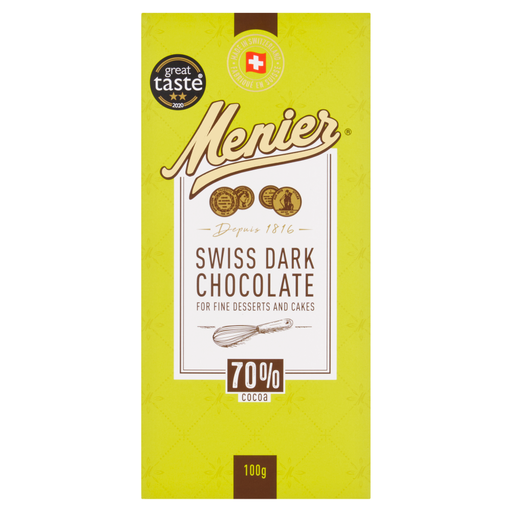
Menier Dark Cooking Chocolate 70% Cocoa 100g
A cooking-chocolate option for a recipe calling for 70% dark chocolate. Check the current pack for a Fairtrade claim if certification matters to your bake, and read its allergen information before sharing.
View on Joybuy
 No image available
Green & Black's Dark Chocolate 70% 90g
A 90g bar to consider when a recipe calls for 70% dark chocolate. Its listing names Fairtrade ingredients with a mass-balance qualification; read the current pack’s mark and wording to understand the claim’s scope. Check its nut and milk warnings when baking for others.
View on Joybuy
 No image available
Green & Black's Dark Chocolate 85% 90g
Consider this 90g bar for a recipe calling for 85% dark chocolate, rather than treating it as a direct swap for 70%. Its listing names Fairtrade ingredients and includes a mass-balance qualification; check the current pack for the claim’s scope and for nut and milk warnings.
View on Joybuy
 No image available
Morrisons The Best 85% Cocoa Ecuador Dark Chocolate 100g
A 100g, 85% cocoa bar for a recipe suited to that percentage. The product description makes a Fairtrade sourcing claim; check the current pack’s mark and wording if the claim is a deciding factor. Read its allergen warnings before using it in shared food.
View on Joybuy
 No image available
Divine Chocolate 70% Dark Chocolate with Raspberries 90g
A 90g raspberry variant to consider only where that flavour suits the recipe; it is not the plain Divine 70% bar discussed above. Check this variant’s current pack for the Fairtrade claim. Its ingredient information identifies milk, so do not rely on vegan-friendly marketing wording when assessing it for someone avoiding milk.
View on Joybuy
Questions about baking with dark chocolate
What does the classic Fairtrade Mark mean on chocolate?
The Fairtrade Foundation says it means all ingredients that can be Fairtrade-certified are Fairtrade-certified. Read the wording on the exact pack: another mark or ingredient-specific claim should not be assumed to cover every ingredient.
Is an ethical-sourcing statement the same as a Fairtrade claim?
No. A brand’s description of direct purchasing or payments to farmers does not establish a Fairtrade claim for a particular dark chocolate. If Fairtrade is essential to the bake, check the current product’s mark or explicit claim.
Can I replace 70% dark chocolate with 85% in a Christmas bake?
Follow the recipe’s specified percentage where possible: 85% and 70% bars are not a like-for-like choice for the intended flavour. If you want to change percentage, use a recipe that explains the substitution rather than assuming the result will be unchanged.
Does vegan dark chocolate suit someone with a milk allergy?
Not automatically. A dark chocolate described as vegan may still have milk in its ingredient or precautionary allergen information. The Food Standards Agency says ‘may contain’ labelling communicates possible unintended allergen presence; check the current pack for every chocolate used.
Do moulded chocolate decorations need tempering?
Tempering is relevant when a recipe calls for moulded pieces or coatings with a firm set and snap. Hotel Chocolat explains that the heating-and-cooling process controls cocoa-butter crystallisation. For chocolate mixed into cake or brownie batter, follow the recipe’s melting instructions instead.


