Hosts making Fairtrade a requirement
If the sourcing claim is central to your purchase, check the mark and wording on the chocolate you will serve. A brand’s wider sourcing programme does not establish that a particular bar is Fairtrade-certified.


Decide first whether the chocolate must carry a Fairtrade claim, and check the exact pack to see which ingredients it covers. Individually wrapped Divine 70% bars give players separate portions, while shareable 75% and 85% M&S bars suit a smaller group choosing between cocoa levels; check every current pack for allergens before serving.
If the sourcing claim is central to your purchase, check the mark and wording on the chocolate you will serve. A brand’s wider sourcing programme does not establish that a particular bar is Fairtrade-certified.
Separate portions may be easier to pass around while players handle cards, dice and pieces. Divine’s 30-pack of 35 g bars is one individually portioned format; a shared bar needs breaking and serving.
Guests who enjoy dark chocolate may still prefer different cocoa levels. Choose with their preferences in mind, and check the current allergen information before offering any bar to the group.
Choose the certification claim and serving format first, then settle on a cocoa level and check the packs for everyone who will eat them.
| Priority | What to check | Your needs |
|---|---|---|
| Fairtrade claim | Read the exact pack’s mark and ingredient wording. The Fairtrade Foundation says the classic Fairtrade Mark covers all ingredients that can be Fairtrade-certified; the Fairtrade Sourced Ingredient Mark identifies a particular Fairtrade-sourced ingredient. | If Fairtrade is essential to my choice, I want to know whether the claim covers the certifiable ingredients or a specified ingredient such as cocoa. |
| Serving format | Check the pack size and whether portions are individually wrapped. Divine lists 30 separate 35 g bars; a shared bar needs to be broken and served. | For a game with several players, separate bars would avoid repeatedly handling one shared bar. For a small tasting, I can set out squares instead. |
| Cocoa level | Compare the stated percentages on the exact products: Divine lists 70%, while M&S lists 75% and 85% dark bars. A percentage does not tell you which flavour every guest will prefer. | I would choose the 85% option for people who already want that cocoa level, rather than make it the only chocolate for a group whose preferences I do not know. |
| Allergens | Read each current pack’s ingredients, allergy exclusions and may-contain wording. A vegan label or a dark-chocolate description does not replace those checks. | Before sharing food with the group, I need to know whether anyone has an allergy and keep the relevant packaging available when serving. |
Lindt, Montezuma’s and Hotel Chocolat describe sourcing or farming initiatives, but those statements do not establish a Fairtrade claim for an individual bar. Fairtrade marks can also describe different ingredient scopes.
If certification matters for your game night, inspect the mark and wording on the exact pack rather than relying on a general brand statement.
M&S says its 75% and 85% bars are unsuitable for people with milk, nut or peanut allergies. Lindt describes its 85% bar as made to a vegan recipe but unsuitable for people with a milk allergy, with further may-contain warnings.
Ask guests about allergies, read each current label and retain the packaging while serving. Check any alternative separately.
The stated 70%, 75% and 85% products give the group different cocoa-level choices; the highest percentage is not a measure of everyone’s preference.
If preferences are unknown, consider offering a choice of cocoa levels rather than relying on one 85% bar.
M&S warns that its online ingredient, dietary and allergen information may change. A different flavour or pack size also needs its own label check.
Before serving, read the purchased pack for its Fairtrade wording, allergens, best-before date and storage instructions.
These brands illustrate different product and sourcing claims; a brand reference is not a certification claim for every chocolate it makes.
Divine describes its business as co-owned by farmers in Ghana’s Kuapa Kokoo cooperative. Its 30 × 35 g 70% dark-chocolate pack states that it uses Fairtrade cocoa and sugar.
M&S describes cocoa from Fairtrade farms for its 75% dark bar and labels its 85% dark bar Fairtrade.
Green & Black's describes Fairtrade chocolate in some gift-range material and lists a Dark 70% bar.
Lindt says its cocoa products are sourced through its Farming Program or other responsible-sourcing standards. That programme is distinct from a Fairtrade claim for a particular bar.
Montezuma's lists dark chocolates including a 74% bar and a 100% cocoa product, alongside flavoured choices.
Hotel Chocolat describes its own cacao-farming initiatives and offers chocolate in gift and multi-piece formats.
These Joybuy dark-chocolate bars cover shared-bar choices at several stated cocoa levels, including a raspberry-flavoured option. Check each purchased pack’s Fairtrade wording and allergens before planning what to serve.
 No image available
A 90 g bar for guests who want an 85% cocoa choice. Before relying on it for a Fairtrade-led gathering, check the pack’s mark and what its claim covers; also read its may-contain warnings for milk and nuts.
 No image available
This 100 g bar offers an 85% cocoa option to share with guests who want that level. Check the pack’s Fairtrade mark and scope, and read its warnings for possible gluten-containing cereals, milk, nuts and peanuts.
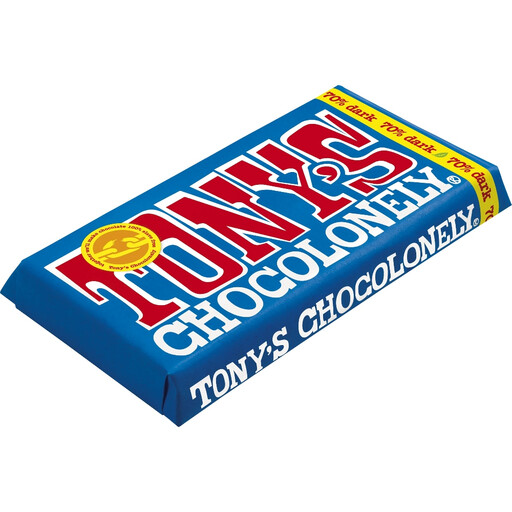 No image available
The 180 g bar is a shared format rather than a pack of stated individual portions. Check its Fairtrade mark and claim scope on the pack; the product information identifies soya and warns of possible gluten-containing cereals, eggs, milk, nuts and peanuts.
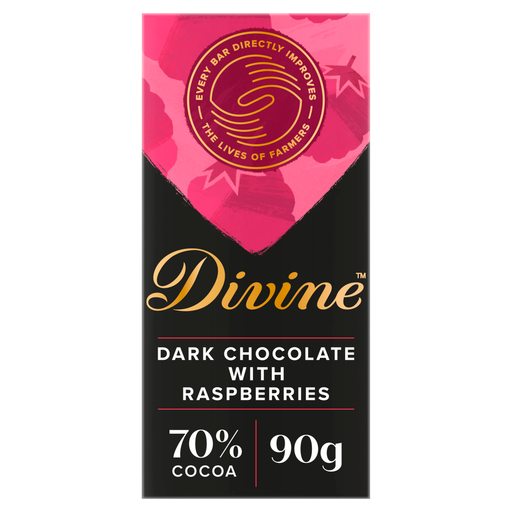 No image available
This 90 g bar gives a small group a raspberry-flavoured 70% choice to share. Its product information describes it as vegan-friendly but also identifies milk, so do not rely on that dietary description: inspect the current ingredients, allergen wording and Fairtrade mark before serving.
 No image available
This 100 g bar offers a 72% cocoa choice for sharing. If Fairtrade certification is essential, check the exact pack’s mark rather than relying on general sourcing wording. Its product information identifies soya and possible milk, nuts, peanuts and gluten-containing cereals.
Read the mark and wording on the exact chocolate pack. The Fairtrade Foundation says the classic Fairtrade Mark means all ingredients that can be Fairtrade-certified are certified, while the Fairtrade Sourced Ingredient Mark identifies a particular Fairtrade-sourced ingredient, such as cocoa.
Choose around 70–75% as one option when guests’ preferences are unknown, and consider an 85% bar for people who already enjoy that cocoa level. Divine lists a 70% product and M&S lists 75% and 85% bars; the percentage describes cocoa content, not how much every guest will like the chocolate.
Not automatically. M&S says its vegan-labelled 75% and 85% bars are unsuitable for people with milk, nut or peanut allergies. Lindt says its 85% bar is made to a vegan recipe but is unsuitable for people with a milk allergy and may contain other allergens. Read the current pack for every product you plan to serve.
Individual bars suit a table where players want separate portions while handling game pieces; Divine lists a pack of 30 separate 35 g bars. A shared bar can work for a smaller group if you are happy to break and serve it. Either way, check allergens before serving.
Follow the storage instructions on each purchased pack. M&S instructs customers to keep its cited bars in a cool, dry place away from sunlight; Hotel Chocolat’s cited product information also specifies a cool, dry place away from strong odours.