What should you check before buying?
Start with the sourcing claim if Fairtrade is a requirement, then choose a serving format and check the label for each guest’s needs.
| Priority |
What to check |
Your needs |
| Fairtrade claim |
Read the mark and wording on the exact pack. The Fairtrade Foundation says its classic black-background Mark covers all ingredients that can be Fairtrade-certified; an ingredient-specific mark identifies the Fairtrade-sourced ingredient. |
I want to know whether the whole eligible ingredient mix or a named ingredient, such as cocoa, carries the claim. |
| Serving format |
Check the number and size of portions and whether small bars are individually wrapped. A larger bar needs to be broken and served. |
Guests will help themselves, so defined portions matter; for a smaller dessert board, I can portion a bar before serving. |
| Cocoa percentage |
Compare the stated cocoa percentages and flavours. A percentage alone does not establish which bar guests will prefer. |
I’m choosing for mixed tastes, so I would rather make a very high-cocoa bar an optional tasting choice than the only chocolate on the table. |
| Allergens |
Read each current pack’s ingredients and precautionary allergen wording. Keep that information with the chocolate when serving pieces from an opened bar. |
Someone attending has an allergy, and I need to check the exact product before putting it out. |
Which brands are relevant?
These brand references describe particular ranges or claims, not a guarantee that every dark-chocolate product from a brand carries the same mark.
Divine
Divine lists a 70% dark bar made with Fairtrade ingredients and a case of 160 smaller 12.5g dark bars.
- The 90g bar and small-bar case give hosts different ways to portion chocolate.
- Check the mark, allergen statement and wrapping on the particular pack you plan to serve.
M&S
Marks & Spencer says its ChocMarks range is made with Fairtrade cocoa and also lists a 75% single-origin dark bar.
- A named Fairtrade-cocoa range gives shoppers a specific claim to look for.
- Check the 75% bar’s own pack rather than assuming a claim about the ChocMarks range applies to it.
Montezuma’s
Montezuma’s lists dark bars including 74% cocoa and flavoured options.
- Its listed flavours offer options for a tasting table.
- The company’s ethical-sourcing statements do not establish a Fairtrade claim for each dark bar; check the chosen pack.
Lindt
Lindt lists EXCELLENCE dark bars at 70% and 99% cocoa and describes its own cocoa-sourcing programme.
- The stated percentages let hosts select distinct cocoa-intensity options.
- Lindt’s sourcing programme is not a Fairtrade claim for these bars. Its 99% bar is not suitable for people with a milk allergy, according to Lindt.
Hotel Chocolat
Hotel Chocolat lists 70% and 85% dark-chocolate batons and boxed selections.
- Batons and boxes offer alternatives to breaking up a standard bar.
- Check the exact product for a Fairtrade claim if that is a requirement.
Joybuy bars for a dessert table
These dark-chocolate bars suit a garden-party table where the host portions and serves pieces. Check each current pack’s Fairtrade wording, allergens and packaging before choosing it for a particular guest group.
 Image unavailable
Green & Black’s Dark 70% Chocolate 90g
This 90g, 70% dark-chocolate bar is an option for a host-portioned dessert board. Check the pack’s precise Fairtrade wording and its milk and nut allergen statement before serving; confirm the packaging if sealed individual portions are needed.
View on Joybuy
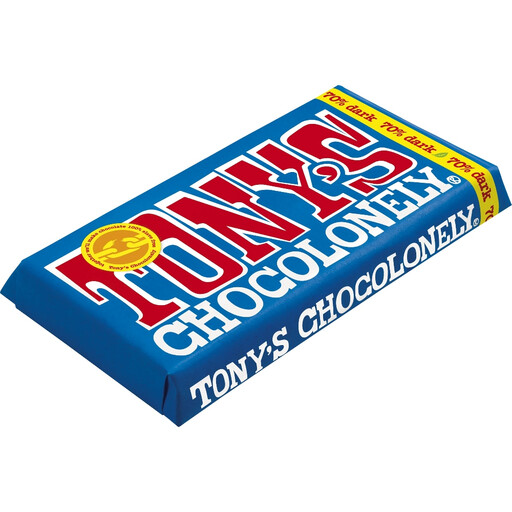 Image unavailable
Tony’s Dark Chocolate 180g
The 180g bar can be broken into pieces for a host-served table. Check its exact Fairtrade claim and current allergen statement on the pack, and confirm the packaging if guests need individually sealed portions.
View on Joybuy
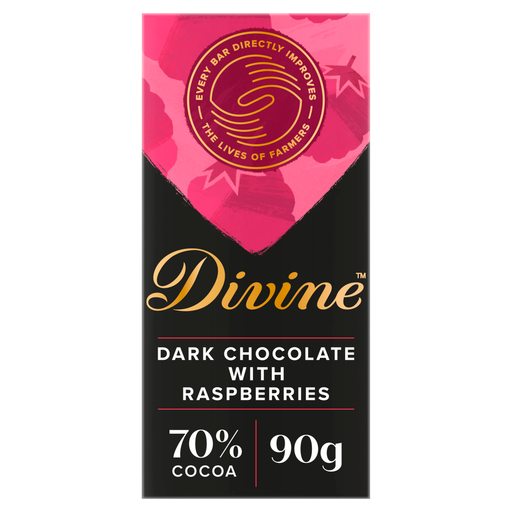 Image unavailable
Divine 70% Dark Chocolate with Raspberries 90g
This 90g raspberry dark-chocolate bar offers a flavoured option for a host-portioned table. Check its exact Fairtrade wording and current allergens on the pack. Do not rely on the listing’s vegan-friendly wording without checking the label: the same listing also identifies milk.
View on Joybuy
Garden-party questions
How can I check a dark chocolate’s Fairtrade claim?
Read the mark and wording on the exact pack. The Fairtrade Foundation says its classic black-background Mark means all ingredients that can be Fairtrade-certified are Fairtrade-certified; an ingredient-specific mark identifies a particular Fairtrade-sourced ingredient. General responsible-sourcing wording is not the same claim.
Should I use mini bars or a shareable bar?
Choose small bars if defined portions matter for self-service, but confirm whether each one is separately wrapped if guests need sealed portions. Divine lists a case of 160 bars at 12.5g each. For a smaller, host-served dessert board, a shareable bar can be broken into pieces and served with clean utensils.
Do I still need to check allergens on dark chocolate?
Yes. Dark chocolate is not automatically suitable for guests with allergies: Lindt says its EXCELLENCE 99% bar is not suitable for people with a milk allergy, despite being made to a vegan recipe. Check each actual pack before serving and keep its ingredient information available.
Do HFSS promotion rules prevent chocolate being served at a private garden party?
England’s Department of Health & Social Care guidance addresses promotion and placement of certain in-scope foods in retail stores and their online equivalents; it is not a rule about serving chocolate at a private party. School-food requirements have a separate scope.
What if the garden party is run by a school in England?
Check the event arrangements against the school’s catering requirements. Department for Education guidance on school food in England addresses food and drink provided in state-funded schools, and its practical guide lists confectionery and chocolate among items covered across the school day. Do not apply private-party assumptions to school-provided food.


