Who is this for?

Bakers prioritising Fairtrade sourcing

If Fairtrade is a requirement for your biscuits, check the mark on the exact chocolate you buy. The Fairtrade Foundation distinguishes its classic mark, which covers ingredients that can be Fairtrade-certified, from its Sourced Ingredient Mark, which names the Fairtrade-sourced ingredient.

Bakers choosing a chocolate format

A cooking chocolate is expressly sold for kitchen use. An ordinary Fairtrade dark bar is another option when your recipe calls for chopped chocolate and you are willing to cut it into pieces.

Bakers checking for allergens

Check the physical pack against everyone’s allergy requirements before adding chocolate to shared biscuits. Fairtrade sourcing, dark chocolate and a vegan recipe do not replace product-specific ingredient and precautionary allergen information.

What should you check?

Choose the sourcing claim first, then match the chocolate’s format and cocoa percentage to the recipe, and check the pack you will use.

Priority What to check Your needs
Fairtrade claim Look for the mark on the current pack. The Fairtrade Foundation says its classic mark covers all ingredients that can be Fairtrade-certified; its Sourced Ingredient Mark identifies the named Fairtrade ingredient. Read any product-specific sourcing statement alongside the mark. I want to know whether the Fairtrade claim covers eligible ingredients generally or a named ingredient such as cocoa.
Recipe fit Check whether the recipe calls for chopped pieces or melted chocolate, and compare its stated cocoa percentage with the chocolate’s label. Tesco lists Green & Black’s 70% cooking chocolate as a cooking product; Divine lists a 70% dark bar. If I am chopping chocolate into biscuit dough, a bar is workable. If the recipe specifies cooking chocolate, I want to check that format rather than choosing by cocoa percentage alone.
Ingredients and allergens Read the ingredients and precautionary statements on the pack being used. The Food Standards Agency explains that “may contain” information communicates possible unintended allergen presence. Before baking for someone with an allergy, I need to check this exact product and pack—not rely on its colour, Fairtrade claim or a different bar from the same brand.

Common buying mistakes

  • Treating every sourcing claim as Fairtrade

    Lindt describes a Farming Program built on Rainforest Alliance certification. That is a different claim from a Fairtrade Mark, so the two should not be treated as interchangeable.

    When Fairtrade is a requirement, check the exact chocolate for the mark and whether it identifies all eligible ingredients or a sourced ingredient.

  • Choosing couverture for its format alone

    Montezuma’s describes its 74% organic dark couverture as suitable for melting and baking. Its baking format does not, by itself, establish Fairtrade certification for that product.

    If both couverture and Fairtrade sourcing matter, check both claims on the exact pack before choosing it.

  • Assuming dark or vegan-recipe chocolate meets allergy requirements

    The Food Standards Agency explains that precautionary allergen statements indicate possible unintended presence. Relevant dark chocolates carry different milk, nut, peanut or gluten warnings.

    Read the ingredients and “may contain” statements on the pack you will use, including when you have bought the brand before.

  • Relying on an older ingredient listing

    A previously checked listing or wrapper may not describe the product now in your kitchen. Changes to ingredients or allergen information matter when choosing chocolate for a particular bake.

    Use online details to narrow your choice, then check the purchased pack for its Fairtrade marking, cocoa percentage, ingredients and allergens.

Brand and product references

Green & Black’s

Tesco lists Green & Black’s Organic Cooking Chocolate as a 150g cooking chocolate with at least 70% cocoa solids.

  • The listed product names Fairtrade cocoa, sugar and vanilla, and is expressly sold for cooking.
  • Tesco says those Fairtrade ingredients may be mixed with non-certified equivalents on a mass-balance basis. The product may contain nuts and milk.

Divine

Divine’s 70% dark chocolate is a Fairtrade bar option when a biscuit recipe calls for chocolate that can be chopped.

  • Divine lists Fairtrade cocoa mass, sugar, cocoa butter and vanilla for the reviewed bar.
  • It is a bar rather than a dedicated cooking chocolate and may contain milk, gluten and nuts.

M&S

M&S lists Fairtrade dark bars at 75% and 85% cocoa. The 75% Single Origin bar is an option to consider where a chopped bar suits the recipe.

  • The listed ingredients for the 75% bar are cocoa mass, cane sugar and cocoa butter.
  • M&S says the reviewed products are not suitable for people with milk, nut or peanut allergies; check the current pack.

Montezuma’s

Montezuma’s sells a 74% organic dark couverture described for melting and baking.

  • Its couverture format may be relevant when the recipe calls for melted chocolate.
  • Do not infer a Fairtrade claim from “organic” or “couverture”; check the exact pack if Fairtrade is required. The product may contain milk, nuts and peanuts.

Lindt

Lindt lists an Excellence 85% dark bar and describes a separate cocoa-sourcing programme built on Rainforest Alliance certification.

  • The reviewed bar states at least 85% cocoa solids, a figure to compare with the recipe’s requirements.
  • The programme is not a Fairtrade claim for this bar. Lindt says the bar is made to a vegan recipe but is not suitable for people with a milk allergy.

Hotel Chocolat

Hotel Chocolat discusses using dark chocolate in baking and how ingredients affect flavour and texture.

  • Its baking guidance can help frame a choice between recipe requirements and chocolate flavour.
  • For a Fairtrade-focused bake, look for a Fairtrade claim on the particular product rather than inferring one from the brand’s dark-chocolate range.

Dark chocolate options on Joybuy

These dark chocolate bars are options to consider for biscuits made with chopped chocolate. Check each current pack’s Fairtrade marking, recipe fit and allergens before using it.

Green & Black’s Dark Chocolate 70% 90g

Green & Black’s Dark Chocolate 70% 90g

A bar to consider when the biscuit recipe calls for chopped 70% dark chocolate. Its product information names Fairtrade cocoa, sugar and vanilla and describes mass-balance mixing; check the current pack for the Fairtrade Mark and allergen statements.

Joybuy
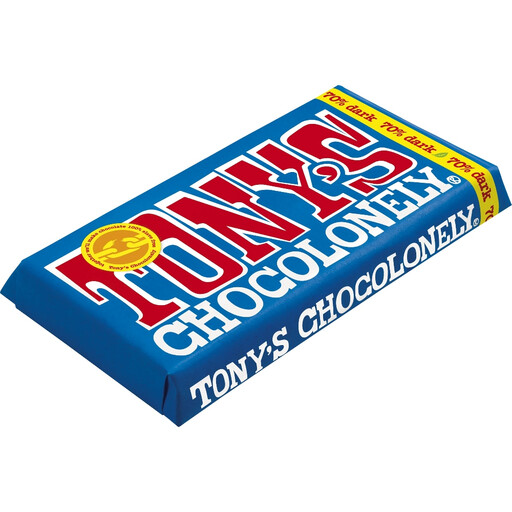
Tony’s Dark Chocolate 180g

Tony’s Dark Chocolate 180g

A dark bar option for biscuits calling for chopped chocolate. Check the current pack for its cocoa percentage, Fairtrade Mark type and allergen information, including the soya declaration and precautionary statements.

Joybuy
Green & Black’s Dark Chocolate 85% 90g

Green & Black’s Dark Chocolate 85% 90g

Consider this bar when the recipe calls for 85% dark chocolate or you specifically want that cocoa percentage. Its product information names Fairtrade cocoa, sugar and vanilla and describes mass-balance mixing; check the current pack for the mark and allergen statements.

Joybuy

Frequently asked questions

How can I identify a Fairtrade dark chocolate?

Look for the Fairtrade Mark on the current pack and read which mark is used. The Fairtrade Foundation says the classic mark covers ingredients that can be Fairtrade-certified, while the Fairtrade Sourced Ingredient Mark names the ingredient sourced on Fairtrade terms. An organic or other sustainability claim is not a substitute for checking that mark.

Can I use an ordinary Fairtrade bar in biscuits?

Yes, if the recipe calls for chopped or melted dark chocolate and the bar’s cocoa percentage and ingredients suit it. Divine’s reviewed 70% bar and M&S’s reviewed 75% bar are Fairtrade examples, but neither is presented as a dedicated cooking chocolate.

Should I choose cooking chocolate or couverture?

Choose by the recipe’s required format as well as its sourcing requirement. Tesco lists Green & Black’s 70% Fairtrade chocolate as a cooking product; Montezuma’s describes its 74% couverture for melting and baking, but its baking format alone does not establish a Fairtrade claim for that product.

Does Fairtrade dark chocolate meet allergy requirements?

Fairtrade certification does not replace an allergen check. The reviewed Green & Black’s cooking chocolate may contain nuts and milk, Divine’s 70% bar may contain milk, gluten and nuts, and M&S says its reviewed dark bars are not suitable for people with milk, nut or peanut allergies. Read the pack used for the bake.