Fairtrade-first gift shoppers
For a stocking filler or Christmas gift, the Fairtrade claim needs to apply to the chocolate being bought, not just to a brand’s general sourcing approach. The format still needs to suit the recipient.


For a festive Fairtrade dark-chocolate gift, Divine Chocolate describes its 70% dark coins as 100% Fairtrade; for a higher-cocoa bar, M&S describes its Collection 85% bar as Fairtrade. Check the exact pack’s Fairtrade wording, cocoa percentage and allergen warnings before buying, particularly for a recipient with an allergy.
For a stocking filler or Christmas gift, the Fairtrade claim needs to apply to the chocolate being bought, not just to a brand’s general sourcing approach. The format still needs to suit the recipient.
If the recipient prefers a higher cocoa percentage, compare the figure on the exact product. M&S describes its Collection dark bar as Fairtrade and 85% cocoa; a 70% festive format is a different choice.
Read the current ingredients and precautionary allergen statements for the exact product. A dark chocolate or vegan description does not override a milk-allergy warning.
Choose the format and cocoa percentage the recipient would want, then confirm the Fairtrade claim and allergen information on that specific item.
| Priority | What to check | Your needs |
|---|---|---|
| Fairtrade claim | Look for the mark or explicit wording on the exact pack. The Fairtrade Foundation says the classic FAIRTRADE Mark covers all ingredients that can be Fairtrade-certified; if a claim names a particular ingredient, check its scope. | I want to know what is Fairtrade-sourced in the chocolate I’m buying, rather than relying on a general responsible-sourcing message. |
| Cocoa and format | Compare the stated cocoa percentage and choose between a bar, coins and an advent calendar. Divine Chocolate’s dark coins are 70% cocoa; M&S describes its Collection Fairtrade bar as 85%. | For a stocking filler, I might choose coins. If the recipient prefers a higher-cocoa bar, the 85% format is worth considering instead. |
| Allergens | Read the current ingredients, “may contain” warnings and any “not suitable for” statement. Check these even when a product is described as dark or vegan. | I’m buying for someone with an allergy, so the exact product’s warning matters more than its general dietary description. |
Brand sourcing programmes and product-specific Fairtrade claims do not necessarily describe the same thing. The Fairtrade Foundation says the classic FAIRTRADE Mark covers all ingredients that can be Fairtrade-certified.
Check the exact pack or product page. If a claim names a Fairtrade-sourced ingredient, read which ingredient it covers.
Some dark-chocolate products described as vegan carry milk-related warnings. Divine Chocolate says its dark advent calendar may contain milk, while M&S says its 85% dark bar is not suitable for people with a milk allergy.
Use the current label’s ingredients and precautionary statements when checking suitability for the recipient.
A 70% coin or advent format serves a different gifting purpose from an 85% bar. Certification alone does not tell you which cocoa percentage or presentation the recipient prefers.
Choose the format first, then compare the cocoa percentage with what the recipient usually likes.
M&S notes that product information can change and availability can vary by store. An earlier description may not reflect the pack in hand.
Recheck the label and allergen statement for the exact bar before buying, and confirm local availability if you plan to collect it.
A brand’s sourcing position is useful context, but check Fairtrade and allergy claims against the particular chocolate you intend to buy.
Divine Chocolate offers Christmas dark-chocolate formats, including 70% coins and a 70% advent calendar.
M&S describes its Collection 85% dark chocolate as a Fairtrade bar made with cocoa from Peru, rather than a dedicated festive format.
Cocoa Life describes a Fairtrade partnership involving Green & Black’s and sourcing ingredients that can be Fairtrade on Fairtrade terms.
Lindt describes sourcing through its Farming Program or other responsible-sourcing standards; that is not a product-specific Fairtrade claim.
Montezuma’s lists an organic dark chocolate advent calendar containing at least 74% cocoa solids.
Hotel Chocolat lists Christmas chocolate formats including advent calendars and gift boxes.
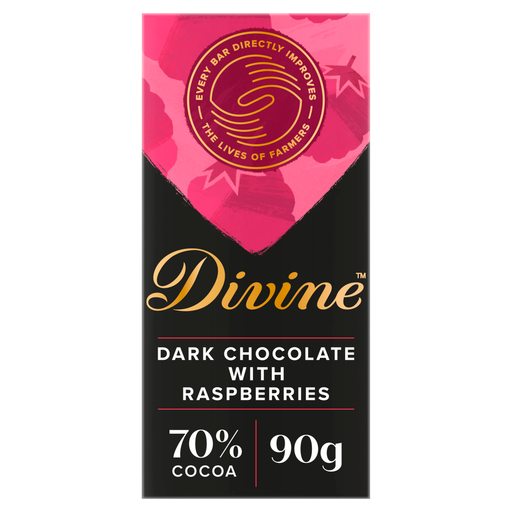
This Joybuy option is a raspberry dark-chocolate bar for a Christmas food shop, rather than coins or an advent calendar.
 No image available
Consider this 90 g bar if the recipient wants dark chocolate with raspberries rather than a festive-shaped treat. Its product information describes the cocoa and sugar as Fairtrade; check the current pack for the mark and the scope of the claim. The listing calls the bar vegan-friendly but also declares milk in its ingredients and allergen information, so do not rely on that description for someone avoiding milk. It may contain gluten and nuts.
Do not assume it does. The Fairtrade Foundation says the classic FAIRTRADE Mark covers all ingredients that can be Fairtrade-certified. If a chocolate pack instead names a Fairtrade-sourced ingredient, check which ingredient the claim covers.
Not automatically. Check the exact product’s allergy information: Divine Chocolate says its dark advent calendar may contain milk, and M&S says its vegan 85% dark bar is not suitable for people with a milk allergy.
Ask for allergen information before choosing it. The Food Standards Agency says UK food businesses must provide allergen information for both prepacked and non-prepacked food and drink.
No: a responsible-sourcing programme is not itself a Fairtrade claim for every product. If Fairtrade matters to your choice, look for the mark or explicit wording on the exact chocolate you plan to buy.