What should you check?
Choose the Fairtrade claim that meets your requirement, then consider flavour and the guests who will eat the chocolate. Treat tea-pairing suggestions as ideas to try, not fixed rules.
| Priority |
What to check |
Your needs |
| Fairtrade scope |
Read the exact pack’s mark and wording. The Fairtrade Foundation says the classic FAIRTRADE Mark covers all certifiable ingredients; an ingredient-specific mark identifies the named ingredient. |
I want to know whether the claim covers the bar’s certifiable ingredients or specifically its cocoa. A general responsible-sourcing statement would not answer that question. |
| Cocoa and flavour |
Compare the stated cocoa percentage with the maker’s flavour description. Divine describes its 70% bar as subtly sweet; M&S describes its 75% bar with fruity notes and its 85% bar as intense. |
For a table with mixed preferences, I would start with the flavour description most guests are likely to welcome and put a more intense bar out separately. |
| Allergens |
Read the current ingredient list and any “may contain” statement on the exact bar. Check milk and other relevant allergens even if the chocolate is described as dark or vegan. |
I need an option each guest can eat, rather than assuming that one dark bar suits everyone. |
| Tea pairing |
Consider the tea as well as the chocolate. Lindt suggests its 78% chocolate with English Breakfast tea, while Whittard suggests dark chocolate with Earl Grey; these are pairing suggestions, not taste-test results. |
If I am serving more than one tea, I can let guests try the chocolate alongside each and choose the combination they prefer. |
Dark chocolate options on Joybuy
These bars offer 70% and 85% dark-chocolate options for a cream tea, including a raspberry variant. Check each pack’s Fairtrade wording and allergen information against your guests’ needs.
 No image available
Green & Black’s Dark 70% Chocolate 90g
A 70% dark-chocolate option to put alongside the tea. Check the current pack’s Fairtrade wording and its warnings concerning almonds, hazelnuts and milk before serving.
View on Joybuy
 No image available
Green & Black’s Dark 85% Chocolate 90g
Consider this 85% bar for guests who ask for a higher-cocoa option, rather than assuming everyone wants the same intensity. Check the pack’s Fairtrade wording and its warnings concerning almonds, hazelnuts and milk.
View on Joybuy
 No image available
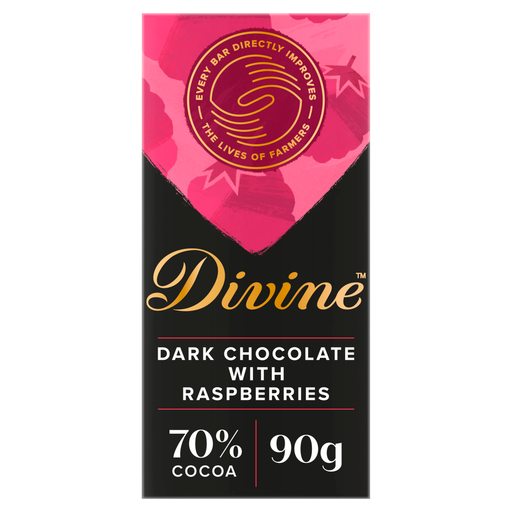
Divine Chocolate 70% Dark Chocolate with Raspberries 90g
The raspberry variant offers a different choice from plain dark chocolate at a cream tea. Its milk ingredient information conflicts with vegan wording, so check the current pack and do not assume it suits a vegan guest or someone with a milk allergy; also check its gluten and nut warnings.
View on Joybuy
Questions about serving dark chocolate
Does Fairtrade cocoa mean the whole chocolate bar is Fairtrade?
Not necessarily. The Fairtrade Foundation says its classic FAIRTRADE Mark means all ingredients that can be Fairtrade-certified are certified, while an ingredient-specific mark identifies the named Fairtrade-sourced ingredient. Read the wording on the exact pack before describing its scope.
Which cocoa percentage should I start with for a cream tea?
Divine’s 70% bar is a reasonable starting option for mixed preferences because Divine describes bold cocoa flavour with smooth, subtle sweetness. If guests prefer a different profile, M&S describes fruity notes for its 75% bar and an intense profile for its 85% bar.
What tea can I serve with dark chocolate?
English Breakfast or Earl Grey can be starting points for a tasting choice. Lindt suggests its 78% dark chocolate with English Breakfast tea, and Whittard suggests dark chocolate with Earl Grey; neither pairing has to suit every guest.
Is vegan dark chocolate suitable for someone with a milk allergy?
Do not assume so. Check the exact current pack for milk in the ingredients and precautionary allergen statements; a vegan description alone does not establish milk-allergy suitability.
Should I read the label again if I have bought the bar before?
Yes. Ingredients and allergen information can change, so use the current physical pack when deciding whether to serve the bar to a guest with a dietary restriction.


