Fairtrade-first Easter shoppers
If Fairtrade certification matters to you, look for the mark and read any ingredient-specific sourcing wording on the product you are buying. A broad ethical-sourcing statement answers a different question.


If Fairtrade is the deciding factor in your Easter food shop, check the mark and sourcing wording on the exact dark-chocolate pack rather than relying on a general ethical-sourcing claim. Divine lists Fairtrade 70% bars in single-bar and individually portioned formats, while M&S lists Fairtrade-cocoa 75% and 85% bars; choose the format and cocoa percentage for your occasion, then check the current pack for allergens and the Easter range for seasonal options.
If Fairtrade certification matters to you, look for the mark and read any ingredient-specific sourcing wording on the product you are buying. A broad ethical-sourcing statement answers a different question.
A single bar, a higher-cocoa option and individually portioned bars serve different gifting and sharing plans. Decide who will receive the chocolate before choosing the format.
A vegan description does not establish allergy suitability. Check the ingredients, precautionary warnings and suitability statement on each current pack, including any Easter-specific product.
Start with the Fairtrade wording on the exact product, then narrow the choice by cocoa percentage, format and the recipient’s ingredient requirements.
| Priority | What to check | Your needs |
|---|---|---|
| Fairtrade status | Look for a FAIRTRADE Mark on the exact pack. Fairtrade International says a mark with an arrow directs shoppers to back-of-pack information about ingredients and sourcing; read which ingredient is named on an ingredient-specific mark. | I want evidence for this chocolate’s Fairtrade claim, not just a general statement about responsible sourcing. |
| Cocoa and format | Compare the stated cocoa percentage and pack size. Divine lists a 70% bar and a 30 × 35g pack; M&S lists Fairtrade-cocoa bars at 75% and 85%. | For a basket or several small treats, individually sized bars could be useful. For someone with a known high-cocoa preference, I can check the 75% and 85% options. |
| Ingredients and allergens | Read the current ingredients, “may contain” warnings and product-specific suitability statement. The reviewed Divine 70% bars warn of possible milk, gluten and nuts; the reviewed M&S bars say they are unsuitable for milk, nut and peanut allergies. | A vegan label alone would not answer my allergy question, particularly if I am choosing chocolate for someone else. |
| Easter format | Check the exact seasonal product, its Fairtrade wording and stock at your chosen retailer. M&S says its chocolate and Easter eggs use Fairtrade cocoa, but a dark-bar listing does not establish the details of a particular egg. | If an Easter egg or shaped chocolate matters more than a bar, I need to check that product rather than assume the year-round bar’s details carry over. |
Montezuma’s describes certified cocoa, and Lindt describes its own sourcing programme and other standards. Neither statement, on its own, establishes a Fairtrade mark on an individual dark-chocolate product.
If Fairtrade is your requirement, check the exact pack for the mark and any named Fairtrade ingredient.
A 70% bar and an 85% bar give the recipient different cocoa-percentage choices; the higher number does not make a better gift for everyone.
Use a known preference to choose the percentage, and consider individually portioned bars if you are putting together several treats.
The reviewed vegan-labelled Divine 70% products carry “may contain” warnings, while the reviewed M&S bars exclude suitability for specified allergies. Recipe descriptions and allergy statements need separate attention.
Read the current pack for each product, especially when choosing a filled or nut-containing Easter variation.
An all-year bar listing does not establish the ingredients, certification wording or availability of a seasonal shape or gift format.
Check the exact Easter product and its current pack near the time you shop; choose a bar if that format suits the occasion.
These brand examples show what to check on specific products; a brand’s inclusion does not establish Fairtrade status across its range.
Divine lists a Fairtrade 70% dark 90g bar and a 30 × 35g pack for individually sized portions.
M&S lists dark bars made with Fairtrade cocoa at 75% and 85% and says its chocolate and Easter eggs use Fairtrade cocoa.
A Green & Black’s listing identifies a 70% dark 90g bar in a bulk case.
Montezuma’s lists organic dark options including a 74% bar and 100% cocoa products.
Hotel Chocolat’s dark-chocolate collection lists 70%, 80% and 85% formats, including batons and a fruit-and-nut selector.
Lindt lists EXCELLENCE dark bars at 70%, 85% and 100% cocoa and describes its own cocoa-sourcing programme.
These bars offer 70% and 85% cocoa choices for an Easter basket, gift or shared treat. Check each current pack’s Fairtrade wording and allergen information before choosing it for a Fairtrade-led shop.
 No image available
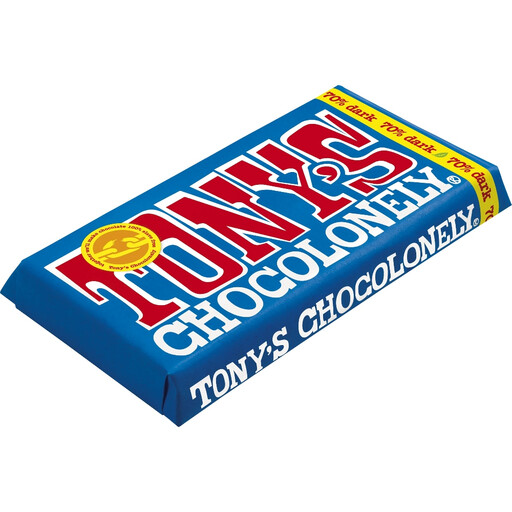
A 180g bar to consider when a single bar suits your Easter shop. The listing describes at least 70% cocoa and says its cocoa mass, sugar and cocoa butter are traded in compliance with Fairtrade Standards; check the mark and wording on the current pack. The listing warns that it may contain gluten, eggs, milk, peanuts and nuts.
 No image available
A 90g bar for someone who prefers an 85% cocoa option. Its listing describes organic ingredients and Fairtrade cocoa, sugar and vanilla, with a mass-balance qualification that permits certified and non-certified ingredients to be mixed; read the exact pack’s mark and wording. The listing says it may contain almonds, hazelnuts, milk and nuts.
 No image available
A 90g fruit variation for a basket or individual treat. The listing states at least 70% cocoa, 3% freeze-dried raspberry pieces and a Fairtrade sourcing claim; check the current pack’s mark. Its vegan-friendly wording conflicts with ingredient and allergen information identifying milk, so do not assume vegan or milk-allergy suitability. The listing also warns that it may contain gluten and nuts.
No image available
A 100g Ecuador dark bar to consider for a known 85% cocoa preference. The product description makes a Fairtrade sourcing claim, but confirm the mark or named Fairtrade ingredient on the exact pack before treating it as a Fairtrade choice. The listing says it may contain gluten, milk, nuts and peanuts.
Look for a FAIRTRADE Mark on the exact pack. Fairtrade International advises shoppers to read the back-of-pack sourcing information when the mark has an arrow; if a mark names a Fairtrade-sourced ingredient, check which ingredient it identifies. A general “ethical” or “responsibly sourced” claim is not, by itself, a Fairtrade certification claim.
Not necessarily. Divine’s reviewed vegan-labelled 70% products warn that they may contain milk, gluten and nuts, while the reviewed M&S 75% and 85% bars say they are unsuitable for people with milk, nut or peanut allergies. Check the current pack of the exact chocolate you plan to give or serve.
For food businesses producing prepacked-for-direct-sale food in England, Wales and Northern Ireland, the Food Standards Agency says the label must give the food’s name and a full ingredients list with allergenic ingredients emphasised. If you are buying Easter chocolate packed this way, read that label as well as any precautionary allergen statements when assessing the exact product.