What should you check?
Start with the claim on the exact product, then choose a portion format and cocoa percentage that suit the occasion. Check the current pack for ingredients and allergens before sharing.
| Priority |
What to check |
Your needs |
| Fairtrade claim |
Check the mark and the exact bar's ingredient or sourcing statement. The Fairtrade Foundation distinguishes its classic mark, covering all certifiable ingredients, from claims about a particular sourced ingredient. |
I want to know whether the claim covers the ingredients that matter to me, rather than assuming every ethical-sourcing statement means Fairtrade certification. |
| Portion format |
Compare separate small bars with a bar you would divide yourself. Divine lists 35g bars in a pack of 30 and 12.5g bars in a pack of 160; its 70% dark chocolate also comes as a 90g bar. |
A separate bar would make portions straightforward for each player. If we are sharing, I am content to break up a larger bar instead. |
| Cocoa and flavour |
Read the cocoa percentage and ingredients on the chosen variant. Product information identifies 70% options from Divine and Green & Black's, and 75% and 85% dark bars from M&S. |
For a gaming session, I would choose the flavour I enjoy rather than assume a higher cocoa percentage makes a better snack. |
| Allergens |
Read the current label for the exact bar, including any ‘may contain’ wording. The cited Divine dark products warn of possible milk, gluten and nuts; the cited M&S bars state they are unsuitable for people with milk, nut or peanut allergies. |
If I am sharing with someone who has an allergy, a vegan description alone is not enough to settle whether that bar is suitable. |
| School setting |
For food provided during the school day in England, follow the Department for Education's School Food Standards: chocolate and chocolate-coated products must not be served. |
If I am organising school-provided snacks in England, I need a permitted non-chocolate option instead. Rules elsewhere in the UK need checking separately. |
Brand references for this choice
A brand's wider sourcing approach is not a substitute for checking the claim on the particular bar. These examples describe product ranges and statements, not Joybuy availability.
Divine
Divine's 70% dark chocolate product information identifies Fairtrade ingredients, with separate 12.5g and 35g bars and a 90g bar among the cited formats.
- The 35g product page identifies Fairtrade cocoa and sugar and a pack of 30 bars.
- The smaller cited bars are sold in multipacks on Divine's site. Check the current allergen statement; the cited dark products warn of possible milk, gluten and nuts.
Green & Black's
The cited Organic Dark 70% 90g bar lists cocoa, sugar and vanilla as traded in compliance with Fairtrade Standards.
- Its product listing states a minimum of 70% cocoa solids and identifies the Fairtrade-related ingredients.
- The cited listing warns that the bar may contain nuts and milk; check the label for the exact variant.
M&S
M&S product pages describe a Fairtrade 85% dark bar and a 75% single-origin bar made with cocoa from Fairtrade farms.
- The two cited bars offer different stated cocoa percentages.
- The cited products are not suitable for people with milk, nut or peanut allergies according to their product information. Check the current pack and local product information.
Lindt
Lindt describes its Farming Program and other Responsible Sourcing Standards for cocoa; that company-level statement is distinct from a Fairtrade claim for an individual dark bar.
- Its UK sustainability information explains the company's cocoa-sourcing approach.
- If Fairtrade certification is essential, check the particular product's pack rather than relying on the company-wide statement.
Montezuma's
Montezuma's lists plain and flavoured dark chocolates, including bars with different cocoa percentages.
- The range information provides options to compare by cocoa content and flavour.
- Check the exact bar for a Fairtrade mark or ingredient claim if Fairtrade is a requirement; a general ethical-sourcing description does not establish it.
Hotel Chocolat
Hotel Chocolat lists dark chocolate in formats including batons and other selections, which may matter when choosing something to divide or offer to a group.
- The cited range lists dark products with stated cocoa percentages.
- Check the chosen product's pack for a Fairtrade claim; the range description alone does not establish one.
Joybuy product options
These are larger dark chocolate bars to divide or share during a gaming session, rather than separate small bars. Fairtrade wording varies by listing, so check the current pack of the exact variant if that claim determines your choice.
 No image available
Green & Black's Dark 85% 90g
A 90g bar to divide yourself if you want the listed 85% cocoa profile. The listing names Fairtrade cocoa, sugar and vanilla, with possible mixing with non-certified ingredients on a mass-balance basis; check the pack for the exact claim. It lists almonds, hazelnuts and milk as possible allergens.
View on Joybuy
 No image available
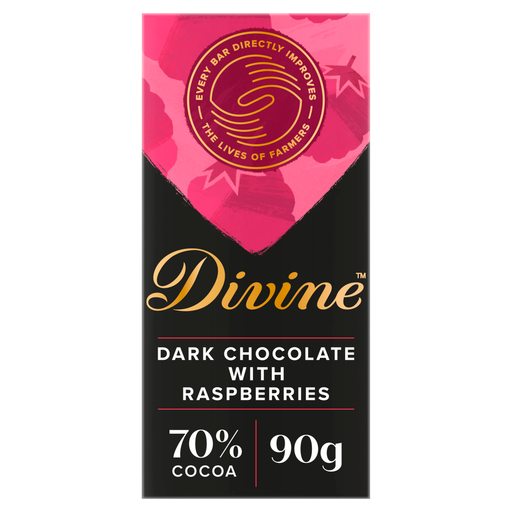
Divine 70% Dark Chocolate with Raspberries 90g
A 90g bar to divide if you want 70% dark chocolate with the listed freeze-dried raspberry pieces. Its listing claims Fairtrade cocoa and sugar, so check the current pack for the exact claim. The listing's vegan-friendly wording conflicts with its milk information; do not rely on that description for dietary or allergy suitability. Check the pack's milk, gluten and nut statements.
View on Joybuy
 No image available
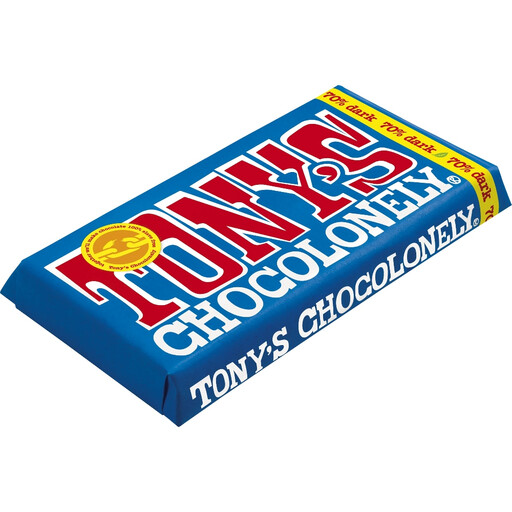
Tony's Dark Chocolate 180g
A larger bar to divide for a group or across breaks. The listing states at least 70% cocoa solids, 180g and six servings, and says its cocoa mass, sugar and cocoa butter are traded in compliance with Fairtrade Standards; check the current pack for the exact wording. It lists soya and warns of possible gluten, eggs, milk, peanuts and nuts.
View on Joybuy
Questions about Fairtrade dark chocolate
How can I check whether a dark chocolate bar is Fairtrade?
Check the mark and ingredient or sourcing wording on the exact product's current pack. The Fairtrade Foundation says its classic black-background mark means all ingredients that can be Fairtrade-certified are certified; a claim about one Fairtrade-sourced ingredient has a narrower meaning. A general ethical-sourcing statement is not the same check.
Is responsibly sourced cocoa the same as Fairtrade chocolate?
No: a cocoa-sourcing programme does not, by itself, establish a Fairtrade claim for a particular bar. Lindt, for example, describes its Farming Program and other Responsible Sourcing Standards. If Fairtrade is essential to your choice, check the exact chocolate's mark or product-specific wording.
Can a school in England provide dark chocolate during the school day?
No, not as food provided during the school day under England's School Food Standards. The Department for Education's practical guide says chocolate and chocolate-coated products must not be served across the whole school day. This England-specific rule should not be applied to schools in other UK nations without checking their guidance.
Does a vegan dark chocolate description settle milk or nut allergy suitability?
No. The cited Divine dark products warn of possible milk, gluten and nuts, while the cited M&S vegan dark bars state they are unsuitable for people with milk, nut or peanut allergies. Read the current allergen statement for the exact bar before choosing it for someone with an allergy.


