Fairtrade-focused weekly shoppers
You want to understand what the mark or ingredient claim covers before choosing a bar to buy regularly.


If Fairtrade is central to your weekly-shop choice, check the mark and its accompanying wording on the bar rather than treating any ethical-sourcing claim as equivalent. The Fairtrade Foundation says the classic FAIRTRADE Mark covers all ingredients that can be Fairtrade-certified; a claim about Fairtrade cocoa alone has a narrower stated scope. Then choose a cocoa percentage you enjoy and check the current pack for ingredients and allergens, particularly when buying the same bar again.
The right bar depends on what you want its Fairtrade claim to cover, as well as taste and dietary requirements.
You want to understand what the mark or ingredient claim covers before choosing a bar to buy regularly.
You are comparing dark bars with different stated cocoa percentages and want one whose flavour suits a regular purchase.
You need to read the exact bar’s ingredients and allergen statements rather than treating a vegan description as an allergy-suitability statement.
Start with the claim on the individual bar, then compare its cocoa percentage and current pack information. For a repeat purchase, consider whether it fits your usual shopping trip.
| Priority | What to check | Your needs |
|---|---|---|
| Fairtrade claim | Look at the mark and the wording beside it. The Fairtrade Foundation says the classic FAIRTRADE Mark covers all ingredients that can be Fairtrade-certified; check whether another claim names only cocoa. | I want to know whether the claim applies to every eligible ingredient or to a particular ingredient before putting the bar in my basket. |
| Cocoa and flavour | Compare the stated cocoa percentages and ingredients on the bars you are considering. Cocoa level is not the only influence on flavour: Hotel Chocolat also identifies sugar and cocoa butter as factors. | A higher cocoa percentage is worth considering only if I enjoy that bar’s flavour enough to buy it regularly. |
| Allergens | Read the current ingredient list, allergen declaration and any precautionary wording. The Food Standards Agency says precautionary allergen labelling communicates possible unintended allergen presence. | If I need to avoid an allergen, a vegan description or a dark-chocolate label is not enough for me to judge suitability. |
| Repeat purchase | Check the bar’s pack information and whether it is available through your usual shopping route. Marks & Spencer advises customers to read the product label because product information can change. | I would rather choose a bar I can check and pick up as part of my normal weekly shop. |
A company sourcing programme or an organic claim does not, on its own, tell you whether a particular bar carries a Fairtrade mark.
If Fairtrade is essential to your choice, inspect the individual bar’s mark and check whether its wording covers all eligible ingredients or names one ingredient.
Lindt describes its EXCELLENCE Dark 70% bar as made to a vegan recipe but says it is not suitable for people with a milk allergy.
Check the current pack’s ingredients, allergen declaration and any ‘may contain’ statement for the exact bar.
A percentage cannot tell you everything about a bar’s flavour; Hotel Chocolat notes that sugar and cocoa butter also influence it.
Compare bars in a cocoa range you enjoy, then use their Fairtrade wording and ingredients to narrow the choice.
These examples show why a brand’s wider sourcing approach and a particular bar’s label should be considered separately.
Divine says its 70% Dark Chocolate 90 g bar uses Fairtrade ingredients and that every ingredient available on Fairtrade terms is sourced that way.
Marks & Spencer describes cocoa from Fairtrade cocoa farms in its 75% Single Origin bar and calls its 85% dark bar Fairtrade.
Lindt describes its own cocoa-sourcing programme; that company-wide account is different from a Fairtrade claim on an individual bar.
Montezuma's lists a FitzRoy 74% bar made with organic cocoa mass, cane sugar, cocoa butter and vanilla.
Hotel Chocolat lists dark-chocolate formats at several cocoa percentages and describes direct work with farmers as part of its own sourcing approach.
These bars cover conventional dark chocolate and one dark-milk alternative. Compare each product’s current pack wording if the scope of its Fairtrade claim matters to your weekly shop.
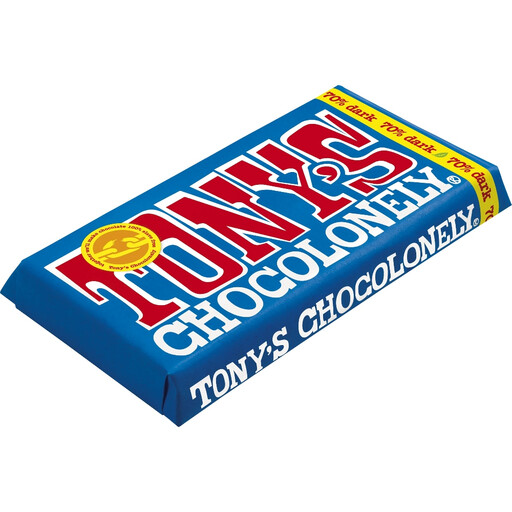 No image available
A dark chocolate bar to consider if you want a larger format for your weekly shop. Check the pack for the Fairtrade mark, the ingredients covered by its wording and the current allergen statement.
 No image available
The stated 85% cocoa content makes this an option if you prefer that percentage. If Fairtrade sourcing is decisive, check the current pack for the mark, any mass-balance wording and the ingredients the claim names; also read its allergen statement.
No image available
Consider this raspberry variant if you want fruit with a stated 70% dark bar. Check this variant’s own Fairtrade wording rather than applying claims from Divine’s plain 70% bar, and read its current ingredients and allergen statement before relying on a vegan description.
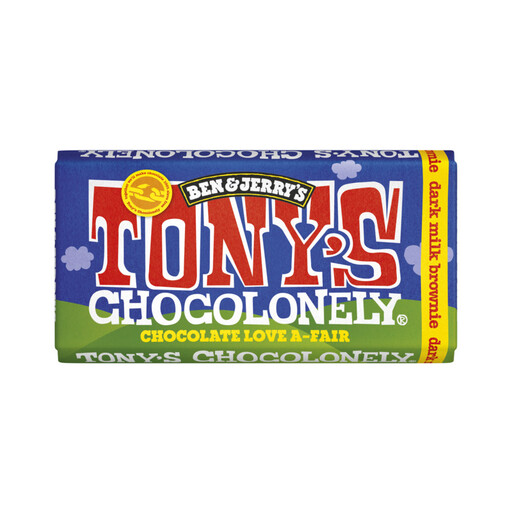 No image available
This is a dark-milk chocolate option, not a conventional dark bar. If a Fairtrade claim is important, check the pack for the mark and whether its wording covers cocoa alone or other ingredients; read the current allergen declaration too.
Not every ingredient can be Fairtrade-certified. The Fairtrade Foundation says the classic FAIRTRADE Mark means all ingredients that can be certified are Fairtrade-certified. If a claim names a particular ingredient, such as cocoa, read its accompanying wording rather than assuming it covers the whole recipe.
Check which ingredient the mass-balance wording applies to. Under mass balance, certified and non-certified material can be mixed during processing, so the wording should not be read as a promise that the physical cocoa in an individual bar was kept separate.
Not necessarily. Lindt says its EXCELLENCE Dark 70% bar is made to a vegan recipe but is not suitable for people with a milk allergy because it is manufactured in a facility that uses milk. Read the exact bar’s current allergen information rather than relying on a vegan description.
The Food Standards Agency explains that precautionary allergen labelling communicates possible unintended presence of a regulated allergen. Check the current statement for the exact product if an allergen affects your choice.
Use a listing to shortlist bars, but check the current pack for ingredients, Fairtrade wording and allergens. Marks & Spencer advises customers to read product labels because product information can change.