For an at-home half term snack, check the Fairtrade claim on the specific chocolate, then choose a cocoa percentage and pack format that suit the people eating it. Divine’s 70% 35g multipack offers individually sized bars for sharing, while the M&S 75% and 85% bars are single-bar options for people who prefer a stronger cocoa taste. Check the current pack for allergens before serving; organic labels and brand sourcing programmes do not, by themselves, establish a Fairtrade claim.
Who is choosing?
Parents planning at-home half term treats
A pack of individually sized bars can be convenient for several snack occasions; a single bar leaves you to divide portions. Check the Fairtrade wording, cocoa percentage and current allergen label for the people who will eat it.
People choosing by cocoa taste
Divine lists a 70% multipack, while M&S lists 75% and 85% bars made with Fairtrade-described cocoa. Choose the cocoa level for the eater’s taste rather than treating a higher percentage as an automatic improvement.
School food planners in England
An at-home choice is not a school catering decision. The Department for Education’s guidance on food in state-funded schools in England and its school food standards practical guide place restrictions on chocolate and confectionery across the school day.
What should you check?
Start with the claim on the particular product, then match its cocoa level and format to the snack occasion. Read the physical pack before serving it to anyone with an allergy.
| Priority | What to check | Your needs |
|---|
| Fairtrade claim |
Look for the mark and product-specific wording. The Fairtrade Foundation says its classic Mark covers all ingredients that can be Fairtrade-certified; its Sourced Ingredient Mark identifies a particular Fairtrade-sourced ingredient. |
I want to know whether the claim covers certifiable ingredients generally or a named ingredient such as cocoa, rather than relying on a brand’s broader sourcing statement. |
| Cocoa and format |
Compare the stated cocoa percentage and whether the pack contains individual bars or one bar. Divine lists 30 × 35g bars at 70%; the researched M&S options are 100g bars at 75% and 85%. |
For several snack occasions, individually sized bars would be useful. If I’m choosing one bar, I can select a cocoa level that the eater already enjoys. |
| Allergens |
Read the current ingredients, suitability statement and any “may contain” warning. The researched Divine and M&S products carry milk, nut or other relevant allergen warnings. |
Before offering chocolate to a child or group, I need to check the actual pack against each eater’s requirements; a vegan description is not a substitute for that check. |
| Serving setting |
Distinguish an ordinary snack at home from food provided in a school. For provision in England’s state-funded schools, check the Department for Education’s applicable school food guidance. |
I’m buying for home, or I need to confirm the rules and venue policy before supplying chocolate in an organised setting. |
Common buying mistakes
-
Equating responsible sourcing with Fairtrade
An organic claim or a brand’s cocoa programme does not establish which, if any, Fairtrade claim applies to a particular bar. The Fairtrade Foundation also distinguishes its classic Mark from its Sourced Ingredient Mark.
Check the exact product page and pack for the mark or explicit Fairtrade wording, including which ingredients it covers.
-
Choosing the highest cocoa percentage for everyone
The researched options span 70% to 85% cocoa. A stronger cocoa taste may appeal to an established dark-chocolate eater but will not suit every snack occasion.
Choose by the eater’s taste as well as the format: Divine’s 70% option comes in individual 35g bars, while the researched M&S 75% and 85% options are single 100g bars.
-
Using a vegan description instead of the allergen label
The researched M&S vegan bars are labelled unsuitable for people with a milk allergy. The Food Standards Agency explains that “may contain” statements communicate possible unintended allergen presence.
Check the current physical pack’s ingredients, allergen declaration and precautionary statements before serving.
-
Applying a home-snack choice to school catering
Department for Education guidance concerns food provided in state-funded schools in England; its practical guide restricts chocolate and confectionery across the school day. Wales, Scotland and Northern Ireland have separate school food frameworks.
For school or holiday-club provision, confirm the applicable national rules and the venue’s policy before purchasing.
Brand references for this choice
These examples illustrate product claims and formats to compare; a brand’s inclusion does not establish the Fairtrade status of every item it makes.
Divine
Divine lists a 70% dark chocolate bar and a 30-pack of individual 35g bars made with Fairtrade-described ingredients.
- The 35g format gives a group individually sized bars.
- The checked products carry precautionary milk, gluten and nut warnings; read the current pack.
M&S
M&S describes its researched 75% and 85% dark chocolate bars using Fairtrade cocoa or cocoa from Fairtrade farms.
- The two 100g bars offer different stated cocoa percentages for a taste-based choice.
- M&S labels both checked bars unsuitable for people with milk, nut or peanut allergies.
Lindt
Lindt lists an EXCELLENCE 90% dark bar and describes its Farming Program and other responsible sourcing standards.
- The checked 90% bar is an option to compare by cocoa percentage.
- The sourcing programme does not establish a Fairtrade claim for that bar; its product page also lists possible nut, milk and soya allergens.
Montezuma’s
Montezuma’s lists a FitzRoy Organic 74% dark bar. Its company sourcing statement says its cocoa is certified without naming a Fairtrade scheme there.
- The checked bar states its cocoa percentage and organic status.
- Neither organic nor vegan wording removes the bar’s precautionary milk, nut and peanut warning or confirms a Fairtrade claim.
Hotel Chocolat
Hotel Chocolat lists dark chocolate in several formats and cocoa percentages, including 70% and 85% products.
- Its range offers different formats to check for the intended snack occasion.
- Hotel Chocolat’s statements about its estate and farmer relationships do not establish that a chosen product is Fairtrade-certified.
Dark chocolate on Joybuy
These bars offer different formats and cocoa styles for at-home half term snacks. Check each current pack’s Fairtrade wording and allergen information; the dark milk bar is a different style from the higher-cocoa dark bars.
 No image available
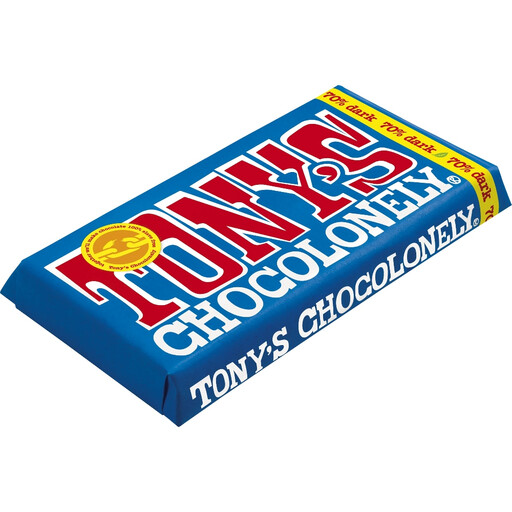
Tony’s Dark Chocolate 180g
A single 180g bar to divide for an at-home snack. Check the pack for the precise Fairtrade claim; the product information lists soya and possible gluten, egg, milk, peanut and tree-nut allergens.
View on Joybuy
 No image available
Divine 70% Dark Chocolate with Raspberries 90g
A raspberry-flavoured single bar for someone who prefers that combination. Check the current pack for its Fairtrade wording and allergens: the product information gives conflicting milk and vegan descriptions and lists possible gluten and nuts.
View on Joybuy
 No image available
Green & Black’s Dark Chocolate 70% 90g
A single 70% bar for an at-home snack. Its Fairtrade ingredient wording carries a mass-balance qualification, so check the current pack for the precise claim; it may contain almonds, hazelnuts and milk.
View on Joybuy
 No image available
Green & Black’s Dark Chocolate 85% 90g
An 85% bar to consider for someone who already enjoys a stronger cocoa taste. Check the current pack for its mass-balance-qualified Fairtrade wording and possible nut and milk allergens.
View on Joybuy
 No image available
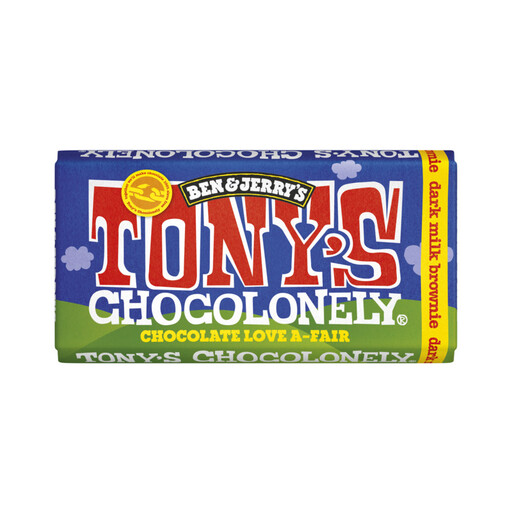
Tony’s Chocolonely Ben & Jerry’s Dark Milk Fudge Brownie 180 g
This dark milk chocolate bar is a different choice from a higher-cocoa dark bar. Check the current pack for the exact Fairtrade claim: the product information lists milk, soya and wheat, with possible egg, nut and peanut allergens.
View on Joybuy
Frequently asked questions
What do the two Fairtrade marks mean on chocolate?
The Fairtrade Foundation says its classic Mark means that all ingredients capable of Fairtrade certification are Fairtrade-certified. Its Fairtrade Sourced Ingredient Mark identifies a particular Fairtrade-sourced ingredient, such as cocoa. Read the mark and wording on the specific pack to understand the claim.
Is vegan dark chocolate suitable for someone with a milk allergy?
Not necessarily: M&S labels its checked vegan 75% and 85% bars unsuitable for people with a milk allergy. The Food Standards Agency explains that precautionary allergen statements flag possible unintended presence, so use the current pack’s allergen information rather than a vegan description alone.
Can chocolate be provided as a school snack in England?
Do not apply an at-home snack choice to school provision. The Department for Education’s guidance on food in state-funded schools in England, updated in September 2026, sets out the applicable legal requirements; its school food standards practical guide restricts chocolate and confectionery across the whole school day. An ordinary at-home half term snack is a different setting.
Do England’s school food rules apply throughout the UK?
No: England’s guidance should not be treated as a UK-wide rule. Welsh Government, Scottish Government and the Department of Education in Northern Ireland publish separate school food frameworks. Before buying for an organised setting, confirm the applicable national guidance and the venue’s policy.


