Organisers with a Fairtrade requirement
Check the claim on the exact product, then choose a format you can count and distribute. Divine Chocolate lists both small individually sized 70% bars and larger 35g bars with Fairtrade ingredient statements.


If Fairtrade is a requirement for work-meeting refreshments, check the exact chocolate product for a Fairtrade Mark or product-specific Fairtrade wording; broader responsible-sourcing claims are not interchangeable with certification. Individually wrapped bars make quantities easier to plan for an unattended table, while share bars suit a meeting where someone can portion and serve them. Choose cocoa intensity with attendees’ preferences in mind, and check the current pack’s ingredients and allergen information before serving.
Check the claim on the exact product, then choose a format you can count and distribute. Divine Chocolate lists both small individually sized 70% bars and larger 35g bars with Fairtrade ingredient statements.
Consider a 70–75% cocoa option when preferences are unknown, and reserve an 85% bar for people who ask for a more intense dark-chocolate flavour. This is a serving choice, not a quality ranking.
Keep the current packaging available and check both ingredients and precautionary statements. A dark or vegan-labelled bar can still carry a milk or nut allergy warning.
Set the Fairtrade requirement first, then decide whether attendees will take a sealed portion or be served from a larger bar.
| Priority | What to check | Your needs |
|---|---|---|
| Fairtrade status | Check the mark or product-specific wording on the exact pack. The Fairtrade Foundation distinguishes its classic black-background Mark, covering all ingredients that can be Fairtrade-certified, from the white-background Fairtrade Sourced Ingredient mark, which identifies a named ingredient. | If Fairtrade is in the meeting brief, I need to know which claim applies to the chocolate being served; a general ethical-sourcing statement will not answer that question. |
| Portion format | Compare the number and size of sealed bars with the preparation needed for a share bar. Divine Chocolate lists 160 × 12.5g bars and 30 × 35g bars; a larger bar needs portioning before or during service. | For an unattended table, I would rather count out individual bars. If someone is hosting and serving, a share bar could work. |
| Cocoa flavour | Compare the stated cocoa percentages and any flavour additions. The reviewed Fairtrade options include Divine 70% bars and M&S 75% and 85% bars; cocoa percentage alone does not establish which everyone will prefer. | When the group’s tastes are unknown, I would offer a less intense dark-chocolate option before choosing 85% for the whole meeting. |
| Allergen information | Read the current ingredients, allergy suitability statement and any “may contain” wording. Divine’s 35g 70% bars list possible milk, gluten and nuts; M&S says its reviewed 75% and 85% bars are unsuitable for people with milk, nut or peanut allergies. | I need attendees to be able to check the packaging for themselves, rather than assuming that “dark” or “vegan” settles an allergy question. |
A brand-wide cocoa programme does not establish the Fairtrade status of a particular bar. The Fairtrade Foundation’s two marks also communicate different ingredient scopes.
Check the exact product’s current pack or product-specific Fairtrade statement against the meeting brief.
An 85% bar offers a more intense cocoa option than the reviewed 70–75% choices, which matters when attendees’ preferences are unknown.
Consider a 70–75% option for a mixed group and add 85% when people have expressed a preference for it.
M&S states that its reviewed vegan-labelled dark bars are not suitable for people with a milk allergy. Allergen and precautionary statements need to be checked separately from dietary wording.
Read the current pack and make its ingredient and allergen information available when serving.
A share bar needs breaking and serving, whereas sealed smaller bars can be counted out in advance.
Choose individual bars when predictable, self-service portions matter; use share bars where someone can manage serving.
Brand ranges differ by product: check the Fairtrade wording and allergy information on the particular bar, not just the brand name.
Divine Chocolate lists 70% dark chocolate in individually sized meeting-friendly packs with explicit Fairtrade ingredient wording.
M&S product pages describe Fairtrade cocoa in reviewed 75% and 85% dark share bars.
Green & Black’s lists a bulk box of 15 Dark 70% 90g bars, a format to consider when planning meeting quantities.
Lindt lists an Excellence 85% dark bar for a group that specifically wants a higher-cocoa flavour.
Montezuma’s lists a FitzRoy 74% dark bar for buyers considering a different cocoa percentage.
Hotel Chocolat’s dark-chocolate range includes products labelled 70%, 80% and 85% cocoa.
These Joybuy options are larger dark-chocolate bars to consider when someone can portion and serve refreshments. Check each current pack’s Fairtrade claim and allergen information before choosing it for the meeting.
 No image available
A 90g bar for a hosted meeting where portions can be served. The listing describes Fairtrade ingredients with a mass-balance qualification; confirm the claim on the current pack, along with its allergen statements.
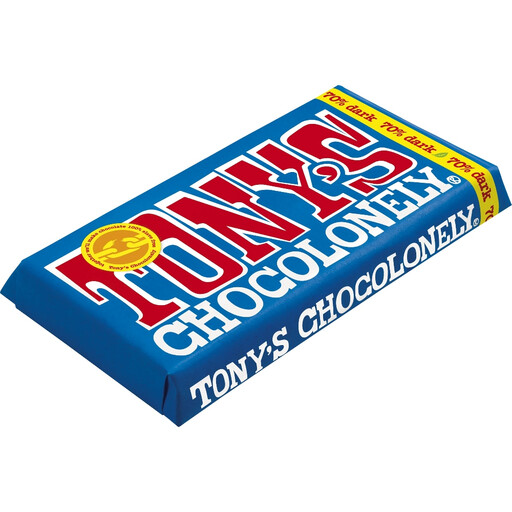 No image available
This 180g bar needs portioning for meeting service. Its listing describes ingredients traded in compliance with Fairtrade Standards; check the current pack for the applicable claim and for allergen information, including its soya declaration.
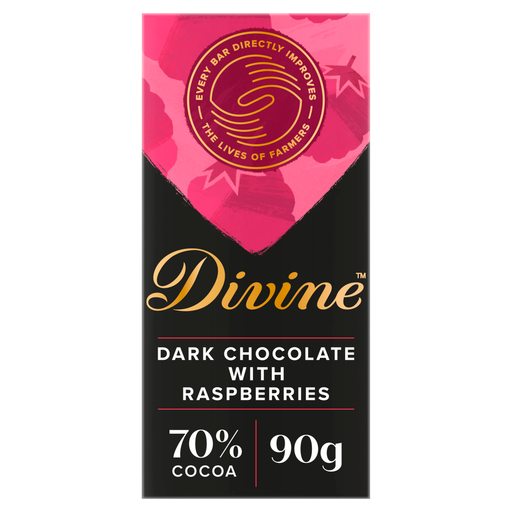 No image available
A raspberry-flavoured 90g bar for a hosted meeting where portions can be served. The product information identifies milk despite vegan-friendly marketing wording; check the current ingredients and allergen statement rather than relying on that wording, and confirm the Fairtrade claim on the pack.
 No image available
This 90g share bar is a choice for attendees who prefer a more intense cocoa flavour; it needs portioning for service. Confirm the current pack’s Fairtrade claim and check its milk and nut precautionary statements.
Check the exact current pack for its Fairtrade Mark or product-specific wording. The Fairtrade Foundation says its classic black-background Mark covers all ingredients that can be Fairtrade-certified, while its white-background Fairtrade Sourced Ingredient mark identifies a named Fairtrade-sourced ingredient. General responsible-sourcing wording does not establish either claim.
If attendees’ tastes are unknown, consider a 70–75% dark-chocolate option before choosing 85% for everyone. An 85% bar is a more deliberate choice for people who prefer an intense cocoa flavour; the percentage is not a quality or health ranking.
Not necessarily. Divine’s reviewed 35g 70% bar lists possible milk, gluten and nuts, while M&S says its reviewed vegan-labelled 75% and 85% bars are unsuitable for people with milk, nut or peanut allergies. Check the current packaging for every product served.
GOV.UK guidance for food business operators in England, Northern Ireland and Wales requires allergen information for prepacked and non-prepacked food and drink. Whether a particular organiser is a food business operator depends on the circumstances; seek appropriate compliance advice if that is unclear. In any case, keep the chocolate packaging available so attendees can read its ingredients and warnings.
Use it to shortlist products, then check the current on-pack information before serving. M&S advises reading the label because online product information can change.