Night-shift workers planning a break-time treat
You want to check a bar’s Fairtrade credentials and pack a defined portion, while keeping meals and sleep planning separate from the snack.


For a night-shift treat, check the Fairtrade wording or mark on the exact bar, then choose a format you can portion for a break. Cocoa percentage does not establish Fairtrade status, and a standard bar needs dividing if you want a defined serving; chocolate is not a substitute for a meal or sleep planning.
You want to check a bar’s Fairtrade credentials and pack a defined portion, while keeping meals and sleep planning separate from the snack.
You need to know what the mark or product wording covers, rather than treating general ethical-sourcing language as the same claim.
If chocolate is being considered for food provided to pupils, check the applicable school-food rules before considering its sourcing credentials.
Start with the sourcing claim on the exact bar, then compare its format, cocoa percentage and label information against how you intend to use it.
| Priority | What to check | Your needs |
|---|---|---|
| Fairtrade claim | Look for the mark and read what it covers on the exact wrapper. The Fairtrade Foundation says the classic FAIRTRADE Mark covers all ingredients that can be Fairtrade-certified; a claim about Fairtrade cocoa alone has a narrower scope. | Fairtrade certification matters to me, so I want to know whether the claim covers the bar’s certifiable ingredients or a named ingredient. |
| Break portion | Check the bar weight and whether it comes in individual units. A nutrition panel’s reference portion does not mean the bar is separately packed into those portions. | I want to pack a defined amount for my break rather than decide how much of a larger bar to eat during the shift. |
| Cocoa and sugar | Compare cocoa percentages for the type of bar you prefer, and compare sugars on the same per 100g basis. Check Fairtrade status separately: cocoa percentage cannot establish it. | A more cocoa-forward bar appeals to me, but I also want to read its nutrition panel rather than assume a percentage tells me its sugar content. |
| Shift routine | Plan chocolate as a treat for a break, not as a way to manage fatigue. Keep meal and sleep arrangements separate from this purchase. | My break snack needs to fit the shift without taking the place of a meal or a sleep routine. |
| Allergens | Read the current pack’s ingredients and allergen statement, including any precautionary wording. A vegan-recipe description does not, by itself, settle milk-allergy suitability. | If I avoid particular ingredients, I need the label for the exact bar and variant I will eat. |
A farmer programme or sustainability claim does not tell you what, if anything, is Fairtrade-certified in the particular bar.
Read the current wrapper for the mark type and any named Fairtrade ingredient. The Fairtrade Foundation distinguishes a claim covering all certifiable ingredients from one concerning a specific sourced ingredient.
A confectionery snack does not replace sleep planning or a meal, even when it is convenient to carry to work.
Pack a chosen portion for a break and make separate arrangements for meals and sleep.
A higher cocoa percentage does not establish the bar’s Fairtrade status or its sugar content. Bars of different weights also make whole-bar comparisons misleading.
Check sourcing wording independently, compare nutrition per 100g and divide a standard bar before work if you want a defined portion.
The Department for Education’s school-food standards concern food provided to pupils in state-funded schools in England. The school-food regulations classify chocolate as confectionery, which the Department says is not permitted during the school day; that does not establish a rule for workplace snacks or every UK school system.
For pupil food provision in an English state-funded school, do not select chocolate as a school-day snack. Check the rules applicable to other settings separately.
These examples concern particular products or sourcing approaches, not every bar sold under each brand name. Check the current pack when certification or allergens determine your choice.
Divine Chocolate’s product page lists Fairtrade cocoa mass, sugar, cocoa butter and vanilla for its 70% Dark Chocolate 90g bar. Divine also describes its business as farmer co-owned.
Marks & Spencer identifies Fairtrade cocoa farms on its 75% dark-chocolate product page and describes its 85% dark bar as Fairtrade.
Lindt’s UK page identifies an Excellence 70% dark-chocolate bar, but a cocoa percentage or broader sourcing description should not be read as a Fairtrade claim for that bar.
Hotel Chocolat describes a direct grower-support approach through its gentle-farming programme. That programme describes sourcing activity rather than the Fairtrade status of a particular dark-chocolate bar.
These standard dark-chocolate bars can be considered for a planned night-shift break. Their product wording varies, so check the exact wrapper for the Fairtrade claim and mark type before making certification the deciding factor.
 No image available
A 90g bar to divide before work if you want a defined break portion. The product information states 85% cocoa and 14g sugars per 100g, and describes Fairtrade ingredients sourced on a mass-balance basis; check the current wrapper for the mark type. It also lists possible milk and nut traces.
 No image available
This 100g bar has a 20g nutrition reference portion for planning a break; that does not mean it is individually packed. The product information states 85% cocoa and 13.8g sugars per 100g. Its description makes a Fairtrade sourcing claim, so check the current wrapper for what that claim covers; also check the allergen statement if gluten, milk, nuts or peanuts matter to you.
 No image available
This 90g standard bar can be divided before a shift for a chosen break portion. The product information states 70% cocoa and 29g sugars per 100g, and names Fairtrade cocoa, sugar and vanilla with mass-balance sourcing; check the current wrapper for its mark type. Possible milk and nut traces are listed.
 No image available
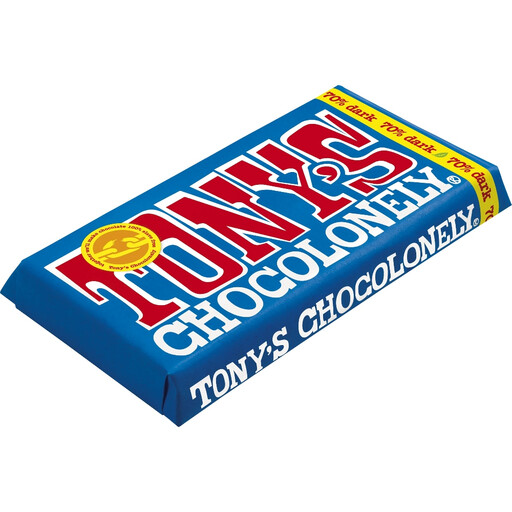
The 180g bar calls for dividing in advance if you want a smaller break portion. Its product information states at least 70% cocoa and 27.1g sugars per 100g, and says cocoa mass, sugar and cocoa butter are traded in compliance with Fairtrade Standards; check the wrapper for the exact mark. Soya is listed, with precautionary wording for gluten, eggs, milk, peanuts and nuts.
 No image available
This 90g fruit-accented bar can be divided for a planned break. Its product information states at least 70% cocoa, 3% freeze-dried raspberry and 27.0g sugars per 100g. The description claims Fairtrade cocoa and sugar; check the current wrapper for this raspberry variant’s mark. Its ingredient and allergen information identifies milk despite vegan-friendly wording, and it lists possible gluten and nut traces.
Not necessarily every ingredient: the Fairtrade Foundation says the classic FAIRTRADE Mark means all ingredients that can be Fairtrade-certified are certified. If the pack names a particular Fairtrade-sourced ingredient, such as cocoa, read the adjacent wording to see the scope of that claim.
No. Cocoa percentage describes the recipe, not its certification. Check the sourcing mark or wording on the exact bar separately, even when comparing cocoa percentages and nutrition figures.
Not as food provided to pupils in state-funded schools under the current English school-food standards. The school-food regulations classify chocolate as confectionery, and the Department for Education says confectionery is not permitted during the school day. This does not establish the rules for personally brought food, workplaces or schools elsewhere in the UK.
No. Lindt says its identified Excellence 70% bar is made to a vegan recipe but is not suitable for people with milk allergy; the identified M&S 75% and 85% bars are also described as unsuitable for people with milk or nut allergy. Read the current label for the particular bar and variant.