Office snack organisers prioritising Fairtrade
Look for explicit Fairtrade wording or a FAIRTRADE Mark on the individual product. A brand’s broader sourcing programme does not establish the certification of every bar it makes.


For a Fairtrade-specific office tin, choose chocolate with an explicit Fairtrade mark or product-level statement rather than relying on general ethical-sourcing claims. Individually wrapped Divine 70% mini bars keep portions identifiable; if you use broken bars instead, keep their packaging beside the tin and offer a clearly labelled 85% option separately when colleagues have different cocoa preferences. Check each current pack’s allergen information before sharing.
The right format depends on whether Fairtrade status, different cocoa preferences or access to allergen information is the main concern.
Look for explicit Fairtrade wording or a FAIRTRADE Mark on the individual product. A brand’s broader sourcing programme does not establish the certification of every bar it makes.
Consider a 70–75% dark option alongside a separately labelled 85% bar for colleagues who prefer a higher cocoa percentage. Do not assume one cocoa level suits the whole office.
Keep current packaging available so people can read ingredients and allergen warnings. A vegan recipe alone does not establish suitability for someone with a milk allergy.
Start with the Fairtrade claim on the particular product, then choose a format and cocoa level that colleagues can identify when they reach into the tin.
| Priority | What to check | Your needs |
|---|---|---|
| Fairtrade status | Read the current product’s mark or Fairtrade wording. The Fairtrade Foundation says its classic mark covers ingredients that can be Fairtrade certified; a Fairtrade Sourced Ingredient mark identifies a particular ingredient. | I want the chocolate in the tin to meet a Fairtrade requirement, not merely carry a general responsible-sourcing claim. |
| Cocoa percentage | Check the percentage on each bar and label different varieties separately. The cited product examples include Fairtrade bars at 70%, 75% and 85% cocoa; percentage alone does not describe every aspect of flavour. | For mixed preferences, I’d put out a 70–75% option and make an 85% bar easy to distinguish for colleagues who want it. |
| Portion format | Decide between wrapped pieces and bars broken into a tin. Divine describes its 70% Fairtrade mini-bar pack as 100 portions of 4.2g each; loose bar pieces need their original packaging kept nearby. | If the tin is refilled often, individually wrapped pieces would help me keep portions identifiable. With bars, I can keep each variety separate. |
| Ingredients and allergens | Read the current pack for ingredients and allergen or cross-contact statements. Check again when changing products or refilling: Marks & Spencer advises that its product information can change. | Colleagues need to be able to identify a piece and consult its packaging before taking it. I would not treat a vegan label as a milk-allergy assurance. |
Lindt describes a cocoa programme built on Rainforest Alliance certification, while Hotel Chocolat describes its own work with farmers. Neither statement, on its own, identifies a particular dark bar as Fairtrade.
For a Fairtrade-specific tin, check the mark or Fairtrade wording on each product rather than relying on a brand-level description.
A recipe described as vegan can still have a milk cross-contact warning. Lindt says its Excellence 85% bar is made to a vegan recipe but is not suitable for people with a milk allergy.
Use the current allergen statement for the exact bar when deciding whether to share it.
Once wrappers are removed, a colleague may be unable to tell which piece matches which ingredients, cocoa percentage or allergen warning.
Keep the original packs beside the tin and identify separate varieties, or choose individually wrapped pieces when per-piece identification matters.
These examples show why the Fairtrade claim and allergen information need checking at product level, even when a brand is familiar.
Divine describes a pack of 100 Fairtrade 70% dark mini bars, each weighing 4.2g.
Marks & Spencer identifies Fairtrade dark bars at 75% and 85% cocoa, offering two labelled cocoa levels.
A retailer lists Green & Black's 70% organic dark bar as Fairtrade.
Montezuma's describes its FitzRoy 74% dark bar as organic and vegan.
Lindt offers Excellence bars at 85% and 90% cocoa and describes its cocoa programme as built on Rainforest Alliance certification.
Hotel Chocolat describes working directly with cacao farmers as part of its sourcing approach.
These bars offer cocoa levels and formats to consider for a shared tin. Check each exact pack for Fairtrade wording and allergens; the Fairtrade status of one variety does not establish that of another.
 No image available
This Fairtrade 70% bar is an option when the office wants dark chocolate that can be divided into pieces.
Keep its packaging with the tin so colleagues can check current ingredients and warnings, including any for nuts or milk.
 No image available
The raspberry variety offers a different flavour alongside a plain dark bar, provided each is clearly identified.
Check this exact pack for Fairtrade wording and current ingredients before adding it to a Fairtrade-only tin. Do not rely on a vegan description to assess milk-allergy suitability.
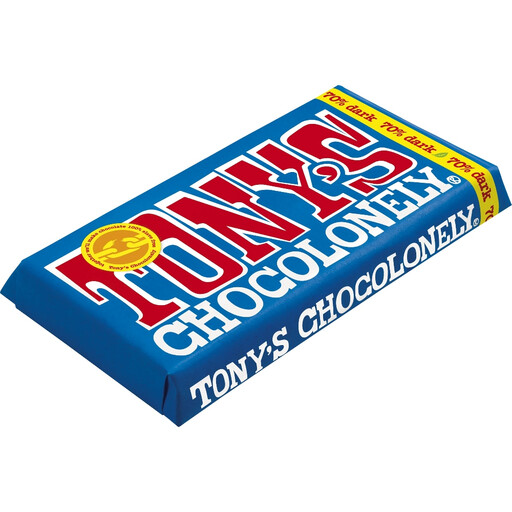 No image available
This 180g bar could be divided for a shared tin if its loose pieces remain identifiable.
Check the exact pack’s cocoa percentage, Fairtrade wording and allergen information before including it in a Fairtrade-specific selection.
 No image available
Offer this 85% bar as a separately labelled choice for colleagues who prefer a higher cocoa percentage.
Check Fairtrade wording on this exact variant rather than relying on the 70% bar’s status. Keep its current packaging available for allergen checks, including warnings concerning nuts and milk.
Check the current pack or product page for an explicit Fairtrade claim or mark. The Fairtrade Foundation says its classic FAIRTRADE Mark covers ingredients that can be Fairtrade certified, while a Fairtrade Sourced Ingredient mark identifies a particular ingredient; read which claim applies to the bar you are buying.
Not necessarily: a vegan recipe does not rule out milk cross-contact. Lindt says its Excellence 85% bar is made to a vegan recipe but is not suitable for someone with a milk allergy. Check the current allergen statement on every product before sharing it.
Yes, but keep each variety identifiable and its original packaging beside the tin. Marks & Spencer advises reading the current label because ingredient and allergen information can change; that information is harder to match to a piece once different bars are mixed together.
An 85% bar makes sense as a labelled option if colleagues want that cocoa level, rather than assuming it suits everyone. Fairtrade 70% and 75% bars provide other identifiable choices for a group with different preferences; keep each product’s packaging available for ingredient and allergen checks.