Office managers stocking shared snacks
Separate bars may make distribution simpler when colleagues help themselves. Keep current product information available so they can check ingredients and allergen statements before eating.


If your office requires Fairtrade-certified dark chocolate, check the mark on the exact product: the Fairtrade Foundation says the classic Fairtrade Mark and the Fairtrade Sourced Ingredient mark indicate different ingredient coverage. For shared snacks, separate bars can be easier to distribute, while a larger bar calls for a way to keep its current ingredient and allergen information beside the food. A brand’s own cocoa-sourcing programme is not a substitute for a Fairtrade mark when certification is the purchasing requirement.
Separate bars may make distribution simpler when colleagues help themselves. Keep current product information available so they can check ingredients and allergen statements before eating.
Check the exact product and its Fairtrade mark rather than relying on a general ethical-sourcing claim or assuming that every bar from a brand has the same certification.
A larger bar may suit a managed sharing arrangement if its original wrapper stays with the chocolate. Choose cocoa percentage for the bar you want, but check Fairtrade status separately.
Set the office’s sourcing requirement first, then choose a serving format and check the current pack for colleagues’ allergen needs.
| Priority | What to check | Your needs |
|---|---|---|
| Fairtrade coverage | Look for the mark on the exact product. The Fairtrade Foundation says the classic mark covers ingredients that can be Fairtrade-certified; the Fairtrade Sourced Ingredient mark names the ingredient sourced on Fairtrade terms. | I need to know whether the whole product meets our Fairtrade requirement, or whether the claim applies to a named ingredient such as cocoa. |
| Other cocoa claims | Identify the particular programme or certification claimed by the brand. Do not treat responsible-sourcing wording as a Fairtrade mark. | Our policy may allow another sourcing approach, but I need to record what the exact chocolate product claims. |
| Serving format | Check the number and size of separate bars, or how a larger bar will be shared. Keep the current wrapper available wherever shared chocolate is served. | Colleagues may take snacks without assistance, so I want a format that lets them find the product information. |
| Allergen information | Read the current ingredients and precautionary statements for the exact variant. Dark chocolate and vegan wording do not establish suitability for someone with an allergy. | Anyone affected needs to check the relevant product information before choosing a snack; I cannot assume one bar suits everyone. |
A brand’s sourcing programme may be relevant to a broader purchasing policy, but it does not establish that an individual bar carries a Fairtrade mark.
If certification is required, specify which mark or ingredient coverage is acceptable and check it on each product selected.
Colleagues may then be unable to check the ingredients or allergen warnings for the chocolate they are taking.
Keep the current wrapper beside a shared bar, or use separate bars and retain their product information when stocking the snack area.
The cited dark-chocolate products carry differing allergy exclusions and precautionary statements, including warnings concerning milk or nuts.
Check the current pack for each variant against the needs of affected colleagues. Do not use a flavour or vegan description in place of its allergen information.
England’s Department for Education school-food guidance addresses confectionery across the school day; an ordinary office snack and food served in that setting are different purchasing contexts.
If the chocolate is intended for pupils, check the rules applicable to that setting before ordering rather than applying the office selection criteria alone.
Brand information can help narrow the search, but Fairtrade coverage and allergen suitability still need checking on the exact bar.
Divine Chocolate lists a pack of 30 separate 35 g dark-chocolate bars with at least 70% cocoa solids and states that they use Fairtrade cocoa and sugar.
M&S identifies Fairtrade cocoa in its cited 75% and 85% dark-chocolate bars, which may suit a small team sharing a larger bar.
Lindt describes its own Farming Program as a responsible-cocoa sourcing standard. That brand claim does not establish Fairtrade certification for a particular bar.
Montezuma's says its cocoa is certified, but the cited brand statement does not name a certification scheme. Its cited FitzRoy bar contains 74% cocoa and is described as organic and vegan.
Hotel Chocolat describes its Saint Lucia cacao estate and direct work with farmers. These are the company’s own sourcing claims, not a Fairtrade mark for a particular product.
For an office purchase involving Green & Black's, make the decision using the exact current bar rather than a brand-wide Fairtrade assumption.
These bars are options to examine for a shared office snack supply. Check the current pack’s Fairtrade mark, serving format and allergen information before deciding which meets your office requirements.
 Image unavailable
A 100g bar to consider where portions can be managed and the wrapper kept with the shared chocolate. Its description states 85% minimum cocoa solids and five 20g portions, and makes a Fairtrade-sourcing claim. Check the current pack for the mark and its ingredient coverage; the description also warns that the bar may contain gluten, milk, nuts and peanuts.
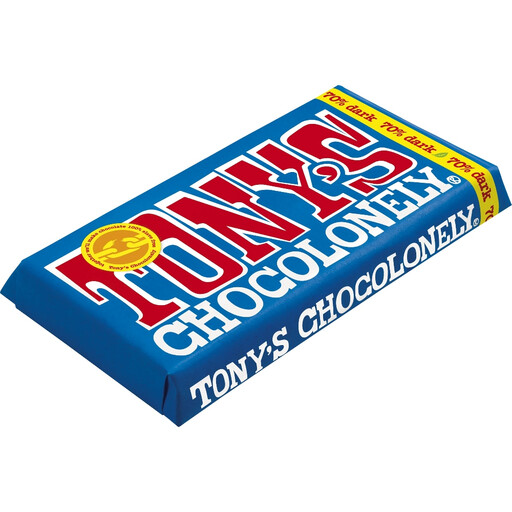 Image unavailable
Consider this 180g bar if a shared format suits your office. Its description states 70% minimum cocoa solids and says its cocoa mass, sugar and cocoa butter are traded in compliance with Fairtrade Standards; check the current pack for the mark and precise coverage. The description lists soya and warnings concerning gluten, eggs, milk, peanuts and nuts. Confirm the serving format if separate portions matter.
 Image unavailable
This 90g raspberry dark-chocolate bar is a different product from Divine’s 30-pack of 35g bars. Its description states at least 70% cocoa solids and claims Fairtrade cocoa and sugar; confirm the current pack’s mark before relying on that claim. The product information also lists milk despite vegan-friendly wording and warns about possible gluten and nuts. Check the pack and confirm the serving format before offering it to colleagues.
According to the Fairtrade Foundation, the classic Fairtrade Mark indicates that ingredients which can be Fairtrade-certified are Fairtrade-certified. The Fairtrade Sourced Ingredient mark identifies a named Fairtrade-sourced ingredient, such as cocoa; check the wording beside the mark to see what it covers.
No. A brand’s programme and the Fairtrade Mark make different claims. If your office requires Fairtrade certification, check the exact bar’s current mark and whether its ingredient coverage meets the purchasing specification.
Separate bars may be simpler when colleagues help themselves; Divine Chocolate’s cited pack contains 30 bars of 35g each. A larger bar may work for managed sharing, provided the current wrapper remains available so colleagues can check its ingredients and allergen information.
Read the current pack’s ingredients, allergen declarations and precautionary statements for the exact bar. The cited products have different warnings, and neither a dark-chocolate description nor vegan wording establishes suitability for every colleague with an allergy.
England’s Department for Education school-food guidance addresses food served in schools, including confectionery across the school day; it is not an office-snack purchasing rule. If the chocolate is for pupils rather than an ordinary office, check the currently applicable school-food requirements for that setting before ordering.