Students stocking a shared cupboard
A bar can be an easy moving-in treat, but check its Fairtrade claim and current allergen information before offering it to flatmates. A format that fits your storage space matters too.


For a Fairtrade-first purchase, check the mark on the individual chocolate bar: the Fairtrade Foundation says the standard black-background Mark covers every ingredient that can be Fairtrade-certified, while the Fairtrade Sourced Ingredient Mark identifies a particular Fairtrade-sourced ingredient. For a student move-in, choose a cocoa level the recipient enjoys, then check the current pack’s allergen and storage information before putting the bar in a shared cupboard.
A bar can be an easy moving-in treat, but check its Fairtrade claim and current allergen information before offering it to flatmates. A format that fits your storage space matters too.
If certification is the reason for buying, look at the mark on the exact product. The Fairtrade Foundation distinguishes between its standard Mark and a Mark covering a named sourced ingredient, such as cocoa.
Consider whether the recipient likes a 70%, 74% or 85% cocoa bar rather than choosing by percentage alone. Dark or vegan-labelled chocolate can still carry allergen warnings, so check the pack before sharing.
Start with the certification mark if Fairtrade coverage is essential. Then narrow the choice by the recipient’s taste, the people who may share the bar and where it will be kept.
| Priority | What to check | Your needs |
|---|---|---|
| Fairtrade scope | Find the mark on the exact pack. According to the Fairtrade Foundation, the standard black-background Mark covers all ingredients that can be Fairtrade-certified; the Fairtrade Sourced Ingredient Mark identifies a particular Fairtrade-sourced ingredient. | I want to know whether the claim covers every certifiable ingredient or a named ingredient such as cocoa. |
| Cocoa level | Check the stated cocoa percentage and choose for the recipient’s preferences. A percentage does not establish the bar’s Fairtrade certification scope. | If I am buying for someone else, I would rather choose a cocoa level they already enjoy than assume an 85% bar will suit them. |
| Allergens | Read the current ingredients, allergen declaration and any ‘may contain’ warning. The Food Standards Agency explains that precautionary allergen labelling communicates possible unintended allergen presence. | Before I share chocolate with flatmates, I need to check warnings relevant to their allergies; a vegan recipe alone does not settle that question. |
| Pack and storage | Check the bar size against how it will be used and follow its own storage instructions. Marks & Spencer, for example, says to keep its Fairtrade 85% bar in a cool, dry place away from sunlight. | A single bar may suit a moving-in treat; for a shared cupboard, I also need to know whether there is space to store the chosen format as directed. |
An ethical-sourcing description does not tell you which ingredients, if any, carry a Fairtrade Mark. Hotel Chocolat describes its own approach but says it cannot obtain traditional Fairtrade certification.
If certification is essential, inspect the mark on the exact bar and distinguish the standard Mark from the Fairtrade Sourced Ingredient Mark.
A 70% or 85% figure describes cocoa content, not the scope of a sourcing certification. Divine lists a Fairtrade-ingredient claim for its 70% bar, while Marks & Spencer identifies its 85% bar as Fairtrade; the percentage is not what establishes either claim.
Choose the cocoa level for the recipient’s taste and check the product’s Fairtrade wording separately.
A recipe description does not rule out a precautionary warning. Divine’s 70% bar says it may contain gluten, milk and nuts; Lindt says its vegan-recipe 85% bar is not suitable for people with a milk allergy.
Read the current pack before sharing and do not offer a bar carrying a warning relevant to the recipient’s allergy.
A larger quantity is only useful if it arrives when needed and there is somewhere suitable to keep it. Divine Chocolate’s 35 g multipack listing gives a UK delivery window of 2–4 working days.
Check the arrival window, quantity and storage instructions before choosing a multipack over a single bar bought locally.
These examples show why a brand’s broader position cannot replace checking the claim and warnings on the individual bar.
Divine describes itself as farmer co-owned and says it pays Fairtrade prices and premiums for every possible ingredient. Its 70% dark chocolate is listed as a 90 g bar.
Marks & Spencer lists a Fairtrade 85% dark chocolate bar made with cocoa beans from Peru.
Montezuma’s lists FitzRoy as a 74% cocoa, organic, vegan-labelled dark bar. Those descriptions do not establish Fairtrade certification for the product.
Lindt lists an Excellence 85% dark bar for shoppers seeking that cocoa level. Its sustainability wording does not establish that this exact bar is Fairtrade-certified.
Hotel Chocolat lists dark chocolates at several cocoa percentages, including 70% and 85% formats.
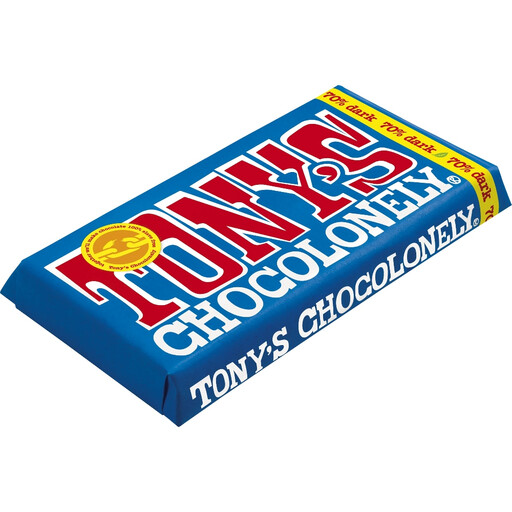
These bars include two Green & Black’s cocoa levels, a larger Tony’s bar and a raspberry-flavoured Divine bar. If the scope of Fairtrade certification matters to your choice, check the mark on the exact pack; do not infer it from the cocoa percentage or brand name.
 No image available
A 90 g bar to consider if the recipient likes 70% dark chocolate. Check the pack’s Fairtrade Mark for its certification scope and read the current allergen warning before sharing; the listing warns that the bar may contain almonds, hazelnuts and milk.
 No image available
This 90 g bar offers an 85% cocoa option for someone who already prefers that level. Check its exact Fairtrade Mark separately from the cocoa figure. The listing says it may contain almonds, hazelnuts and milk, so read the current pack before sharing.
 No image available
The 180 g format may suit a cupboard intended for sharing, provided everyone who might eat it can check the pack first. The listing says it contains soya and may contain cereals containing gluten, eggs, milk, nuts and peanuts. Check the exact Fairtrade Mark if its certification scope is decisive.
 No image available
A 90 g raspberry variation for someone who wants a flavoured 70% dark bar. The listing’s vegan-friendly wording conflicts with its milk information: do not rely on that wording for someone avoiding milk, and check the physical pack before sharing. Check the exact Fairtrade Mark for the certification scope too.
No. ‘Dark’ describes the chocolate, not its sourcing certification. If Fairtrade is your priority, check the mark on the individual bar rather than relying on ‘dark’, ‘ethical’ or sustainability wording.
The Fairtrade Foundation says its standard black-background Mark means all ingredients that can be Fairtrade-certified are certified. The Fairtrade Sourced Ingredient Mark identifies a particular Fairtrade-sourced ingredient, such as cocoa; it does not make the same claim about every certifiable ingredient in the bar.
Do not assume so. A vegan recipe can still carry a cross-contact warning: Divine’s 70% bar says it may contain gluten, milk and nuts, while Montezuma’s FitzRoy warns of possible traces of milk, nuts and peanuts. Read the current pack and avoid sharing a bar with a warning relevant to the person’s allergy.
Follow the instructions on its own pack. Marks & Spencer says its Fairtrade 85% bar should be kept in a cool, dry place away from sunlight. Check the current label as well as the available cupboard space before leaving chocolate in a shared kitchen.