Fairtrade-first tea-break shoppers
If Fairtrade sourcing is central to your choice, check the mark or wording on the particular bar. An ethical-sourcing description elsewhere in a brand’s range does not establish what this product claims.


Check the exact bar’s FAIRTRADE Mark or product-level Fairtrade wording before choosing a cocoa percentage for your tea break. Divine says every ingredient available on Fairtrade terms is bought that way for its 70% bar; M&S describes Fairtrade cocoa in its 75% and 85% bars. Your preferred flavour and the current allergen label still matter.
If Fairtrade sourcing is central to your choice, check the mark or wording on the particular bar. An ethical-sourcing description elsewhere in a brand’s range does not establish what this product claims.
A 70–75% bar and an 85–100% bar offer different cocoa profiles for a break with tea. Compare the percentage on the exact pack and consider whether you want a sweeter or more pronounced cocoa flavour.
A vegan description does not replace the allergen declaration. Check the current pack for ingredients and precautionary statements relevant to you, including milk, nuts or peanuts.
For a Fairtrade-focused tea break, establish what the exact bar claims first, then compare flavour, pack information and how you plan to buy it.
| Priority | What to check | Your needs |
|---|---|---|
| Fairtrade claim | Look for the mark and read which ingredients the claim covers. The Fairtrade Foundation says the classic FAIRTRADE Mark covers all ingredients that can be Fairtrade certified; a named Fairtrade-sourced ingredient claim has a narrower scope. Check the exact bar, not just the brand. | I want to know whether the claim applies to the ingredients in this chocolate, rather than relying on general ethical-sourcing language. |
| Cocoa profile | Compare the stated cocoa percentage and the product’s flavour description. If sugar content matters to your comparison, use the current nutrition labels on the same per-100g basis; a higher cocoa percentage is not a rule for every product’s sugar content. | With tea, I might prefer the reviewed Divine 70% bar’s described subtle sweetness, or the more intense profile M&S describes for its 85% bar. |
| Ingredients and allergens | Read the current ingredients, allergen declaration and any may-contain wording. Vegan wording alone does not establish suitability for a milk, nut or peanut allergy. | I need the particular bar’s label to address my dietary requirements; another dark bar from the same brand may carry different warnings. |
| Pack and availability | Confirm the bar size and format, then check the chosen shop’s local stock or the seller’s delivery options before planning a purchase. | For a short break, I want a bar I can portion as I choose and obtain through a convenient shopping route. |
The Fairtrade Foundation distinguishes the classic FAIRTRADE Mark, which covers ingredients that can be Fairtrade certified, from claims about a named Fairtrade-sourced ingredient. The reviewed Lindt EXCELLENCE 70% page uses sustainability wording that does not itself establish Fairtrade certification.
Read the mark or explicit Fairtrade statement for the exact bar before treating it as a Fairtrade choice.
The reviewed M&S vegan dark bars are marked unsuitable for people with milk, nut or peanut allergy. Other reviewed bars also carry precautionary allergen statements.
Check the current physical pack’s ingredients and allergen wording, particularly if a product has changed or been substituted.
The reviewed Montezuma’s Absolute Black is a 100% cocoa bar with no added sugar, whereas the reviewed 70–75% and 85% bars offer different stated flavour profiles. The highest percentage need not be the one you enjoy with tea.
Use the flavour description to choose a starting point, and compare sugar figures only on current labels with the same measurement basis.
M&S asks shoppers to select a Foodhall to see local availability, so a bar listed online may not be the one you find in your chosen shop.
Check the relevant store or delivery option before making a trip for a specific bar.
These references concern the particular bars or ranges described below; a brand name alone does not establish the Fairtrade status or allergen suitability of every product it makes.
Divine offers reviewed 70% and 85% dark chocolate bars in 90g formats. The company says it is co-owned by the Kuapa Kokoo cocoa cooperative.
The reviewed own-brand 75% and 85% dark bars carry product-level statements about Fairtrade cocoa.
The reviewed EXCELLENCE bar states 70% minimum cocoa solids.
The reviewed Absolute Black 90g bar contains 100% cocoa and has no added sugar.
Its reviewed dark-chocolate collection includes bars and other formats across several cocoa percentages.
These bars offer 70% and 85% cocoa choices for a Fairtrade-focused tea break, including plain and raspberry-flavoured options. Check each product’s current Fairtrade wording and allergen label before choosing.
 No image available
A 70% cocoa bar to consider if you want this cocoa profile with tea. Its product information names Fairtrade cocoa, sugar and vanilla and describes mass-balance sourcing, under which certified ingredients may be mixed with non-certified ingredients. The allergen wording says it may contain almonds, hazelnuts and milk; check the current pack.
 No image available
Consider the 85% cocoa version if you prefer the more intense, bitter profile described in its product information. That information names Fairtrade cocoa, sugar and vanilla and describes mass-balance sourcing. The bar may contain almonds, hazelnuts and milk; check the current pack.
 No image available
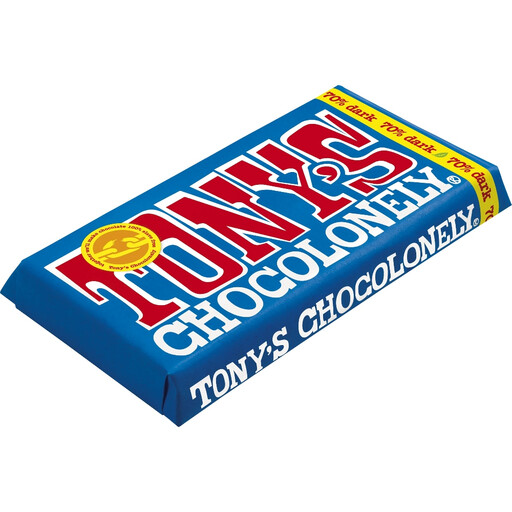
This larger bar is described in its product information as 70% cocoa. The listed cocoa mass, sugar and cocoa butter are described as traded in compliance with Fairtrade Standards. It contains soya and may contain cereals containing gluten, eggs, milk, nuts and peanuts; read the current pack.
 No image available
An 85% cocoa option for a tea break if you prefer a more pronounced cocoa profile. The information for this specific bar describes it as Fairtrade-sourced. It may contain cereals containing gluten, milk, nuts and peanuts; check the current pack.
 No image available
A raspberry-flavoured 70% cocoa bar if you would rather have fruit alongside the dark chocolate. Its product information states that it contains 3% freeze-dried raspberry pieces and identifies Fairtrade cocoa or ingredients. Check the current pack for dietary suitability: the product information calls it vegan-friendly in one place but lists milk in its ingredient or allergen information, and also says it may contain gluten and nuts.
No. The Fairtrade Foundation says the classic FAIRTRADE Mark indicates that all ingredients capable of Fairtrade certification are certified; a Fairtrade Sourced Ingredient claim identifies a particular ingredient, such as cocoa. Read the mark and wording on the exact bar to see what is covered.
Choose the flavour profile you expect to enjoy: Divine describes its reviewed 70% bar as having subtle sweetness, while M&S describes its reviewed 75% bar as deep and complex and its 85% bar as intense. Cocoa percentage alone does not establish a bar’s Fairtrade status or how its nutrition compares with another brand’s.
Not automatically. The reviewed M&S vegan dark bars are marked unsuitable for milk, nut and peanut allergy, and the reviewed Divine bars carry may-contain statements. Read the current physical pack’s allergen information for the particular bar.
Use it to narrow your choice, then read the pack before eating. M&S says product information, including ingredients and allergen details, can change and advises shoppers not to rely solely on its website for the final label information.