For an afternoon tea break, start with the Fairtrade Mark or a specific Fairtrade ingredient statement on the chocolate you intend to buy. Divine describes its 70% bar as cocoa-rich with subtle sweetness; M&S describes its Fairtrade-cocoa 75% and 85% bars as deeper and more intense options. Choose the format and flavour you want, then check the current pack for allergens.
Who might choose these formats?
Everyday Fairtrade chocolate buyers
If you want a bar for a short afternoon break, Divine describes its 70% dark chocolate as having pronounced cocoa flavour with subtle sweetness. Its ingredient statement names Fairtrade cocoa mass, sugar, cocoa butter and vanilla.
People seeking a more intense cocoa flavour
M&S offers a 75% bar made with Fairtrade cocoa and an 85% Fairtrade dark bar. Their product descriptions provide different flavour routes to consider alongside tea or coffee.
Buyers planning repeated or shared breaks
Divine also sells its 70% Fairtrade dark chocolate as 35g bars in a 30-bar pack. That format gives each person an individual bar, but is a larger commitment than trying one bar.
What should you check before buying?
Decide what the Fairtrade statement covers, then compare flavour, pack format and the current allergen label.
| Priority | What to check | Your needs |
|---|
| Fairtrade statement |
Check the mark on the exact pack and any named Fairtrade ingredients. The Fairtrade Foundation says the classic Mark covers all ingredients that can be Fairtrade-certified; its Sourced Ingredient Mark identifies a particular Fairtrade-sourced ingredient. |
I want to know whether the statement covers eligible ingredients throughout the recipe or a named ingredient such as cocoa. |
| Cocoa and flavour |
Compare the stated cocoa percentage with the maker’s flavour description. Divine describes its 70% bar as cocoa-rich with subtle sweetness; M&S describes fruity notes in its 75% bar and an intense taste in its 85% bar. |
For a short tea break, I would choose the flavour description that appeals to me rather than assuming the highest cocoa percentage is preferable. |
| Allergens |
Read the current ingredients and precautionary allergen statement, even when a bar is described as vegan. M&S marks its 85% bar as unsuitable for people with milk, nut or peanut allergies. |
If I am serving someone with an allergy, I need to check the physical pack before sharing the chocolate. |
| Bar format |
Compare a single bar with an individually sized multi-pack. Divine lists both a 90g 70% bar and a pack of 30 individual 35g 70% bars. |
A single bar works for trying a flavour; individual bars make more sense when I am planning repeated breaks or supplying a group. |
What is easy to overlook?
-
Taking responsible sourcing to mean Fairtrade certification
A brand’s sourcing programme and a product-specific Fairtrade statement answer different questions. The Fairtrade Foundation also distinguishes its classic Mark from its Sourced Ingredient Mark.
If Fairtrade is essential to your choice, check the mark or named ingredient statement on the exact chocolate pack.
-
Choosing by cocoa percentage alone
Divine describes its 70% bar as subtly sweet, while M&S describes different flavour profiles for its 75% and 85% bars. A larger percentage does not tell you which description you will prefer with tea.
Use the maker’s flavour description to choose an initial bar, particularly if you have not tried that cocoa percentage before.
-
Assuming a vegan label settles an allergy question
M&S states that its 85% dark bar is unsuitable for people with milk, nut or peanut allergies. The Food Standards Agency explains that a ‘may contain’ statement communicates possible unintended allergen presence.
Check the current physical pack’s ingredients and allergen statement before buying or serving chocolate for someone with an allergy.
-
Buying a multi-pack before trying the chocolate
Divine’s 35g 70% bars come in a 30-bar pack, a different commitment from its single 90g bar.
If you are unsure about the flavour, try a single bar before choosing the repeated-use format.
Which brands are relevant?
Fairtrade and other sourcing statements need to be checked on individual products, rather than assumed from a brand name.
Divine
Divine identifies Fairtrade ingredients in its 70% dark chocolate, offered as a 90g bar and as 35g bars in a 30-pack.
- Its 90g product statement names Fairtrade cocoa mass, sugar, cocoa butter and vanilla.
- Check the current pack’s allergen statement before serving it to someone with an allergy.
M&S
M&S describes Fairtrade cocoa in its 75% single-origin bar and Fairtrade sourcing in its 85% dark bar.
- The two cocoa percentages provide distinct choices for people comparing flavour descriptions.
- M&S marks its 85% bar as unsuitable for people with milk, nut or peanut allergies; read the current label.
Montezuma’s
Montezuma’s describes its Absolute Black bar as 100% cocoa. Check the individual pack if Fairtrade certification is a requirement.
- The 100% cocoa specification gives a clearly identified option for someone seeking that ingredient profile.
- Its product information says the bar may contain traces of milk, nuts and peanuts.
Lindt
Lindt lists dark chocolate at several cocoa percentages and describes its own cocoa-sourcing programme.
- Its UK dark range includes products labelled from 70% through 100% cocoa.
- A responsible-sourcing programme is not, by itself, a Fairtrade statement for a particular bar; check that bar’s pack.
Hotel Chocolat
Hotel Chocolat lists dark products at 70%, 80% and 85% cocoa and describes its approach to cacao sourcing.
- Its range includes different cocoa percentages and formats to compare.
- Its sourcing statements should not be treated as a Fairtrade claim for an individual product without checking the pack.
Dark-chocolate options on Joybuy
These bars offer different cocoa percentages, flavours and sizes for an afternoon break. If you require Fairtrade chocolate, check the current pack’s mark or specific ingredient statement for the bar you choose.
 No image available
Green & Black’s 70% Dark Chocolate 90g
A single 90g bar for trying a 70% dark chocolate during an afternoon break. Check the current pack for its Fairtrade wording and allergen information; the listing warns of possible milk and nut cross-contact.
View on Joybuy
 No image available
Green & Black’s 85% Dark Chocolate 90g
A 90g bar for someone who wants to try an 85% cocoa option. Check the current pack for the exact Fairtrade statement and allergen information; the listing warns of possible milk and nut cross-contact.
View on Joybuy
 No image available
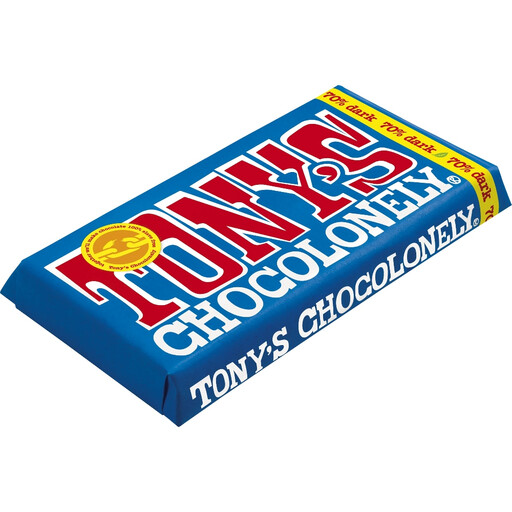
Tony’s Dark Chocolate 180g
The 180g bar is a format to consider when chocolate will be shared over more than one break. Check its current pack for the precise Fairtrade statement and allergens; the listing identifies soya and warns of possible cross-contact with other allergens.
View on Joybuy
 No image available
Divine 70% Dark Chocolate with Raspberries 90g
A 90g raspberry-flavoured option for a tea break. This is a different product from Divine’s plain 70% bar: check its own Fairtrade statement. The listing’s vegan-friendly wording conflicts with its milk information, so verify the current pack before buying or serving it for a dietary requirement.
View on Joybuy
Common questions
Does responsible sourcing mean dark chocolate is Fairtrade?
No. A brand’s responsible-sourcing programme is not the same as a Fairtrade claim for a particular bar. The Fairtrade Foundation says its classic Mark covers all ingredients that can be Fairtrade-certified, while its Sourced Ingredient Mark identifies a particular Fairtrade-sourced ingredient. Check which statement appears on the pack.
Which cocoa percentage should I choose for a tea break?
Choose by the flavour you want rather than treating one percentage as a universal winner. Divine describes its 70% bar as cocoa-rich with subtle sweetness; M&S describes fruity notes in its Fairtrade-cocoa 75% bar and an intense taste in its 85% Fairtrade dark bar.
Does a vegan label make dark chocolate suitable for someone with a milk or nut allergy?
No. Allergy suitability needs a product-specific check. M&S marks its 85% dark bar as unsuitable for people with milk, nut or peanut allergies. Read the current physical pack’s ingredients and allergen statement before buying or serving any bar.
What does ‘may contain’ mean on a chocolate label?
It is precautionary allergen labelling. The Food Standards Agency explains that it communicates possible unintended presence of an allergen, such as through cross-contact. Treat it as relevant information when checking a bar for someone with an allergy.


