Runners choosing a small ethical snack
If you enjoy dark chocolate around training, look for a portion and a Fairtrade claim that suit you. Keep a separate carbohydrate and fluid plan for longer sessions.


Choose dark chocolate with a Fairtrade claim that meets your requirements for a small training snack or post-run treat, rather than as your only fuel for a long run. World Athletics advises 30–60 g of carbohydrate per hour for exercise lasting 1–2.5 hours; Divine Chocolate lists 31.7 g per 100 g for its 70% bar, so a 35 g portion contributes about 11.1 g. Check the exact pack’s Fairtrade wording and allergen warnings, and plan longer-run fuelling separately.
If you enjoy dark chocolate around training, look for a portion and a Fairtrade claim that suit you. Keep a separate carbohydrate and fluid plan for longer sessions.
If certification matters to your purchase, read the mark and accompanying wording on the exact pack. A statement about sourcing is not necessarily a claim about every ingredient.
If you need to avoid an allergen, read the current ingredients and may-contain statements. A vegan recipe does not, by itself, establish suitability for a milk or nut allergy.
Start with the Fairtrade claim on the pack, then compare carbohydrate per portion and allergen information for the way you intend to use the chocolate.
| Priority | What to check | Your needs |
|---|---|---|
| Fairtrade claim | Read the exact pack’s mark and accompanying ingredient wording. The Fairtrade Foundation says its classic FAIRTRADE Mark covers all ingredients that can be Fairtrade certified. | I want to know whether the claim covers the chocolate’s eligible ingredients or refers to a particular sourced ingredient. |
| Carbohydrate | Compare grams per 100 g with the portion you will actually eat. World Athletics advises 30–60 g per hour for exercise lasting 1–2.5 hours; Divine Chocolate lists 31.7 g per 100 g for its 70% bar. | For a long run, I need a separate fuelling plan: a 35 g portion of that Divine bar contributes about 11.1 g of carbohydrate. |
| Allergens | Read the current ingredients, may-contain statement and manufacturer warnings for the exact bar. Do not use a vegan description as a substitute for those checks. | Milk, nuts or another allergen may affect which pack I can choose, even if the recipe is described as vegan. |
| Portion and storage | Check the bar size, whether it is individually portioned and the storage directions on its label. | A small piece may suit a snack; if I am taking chocolate with me, I also need a practical way to carry and portion it. |
World Athletics advises 30–60 g of carbohydrate per hour for exercise lasting 1–2.5 hours. A 35 g Divine 70% bar contributes about 11.1 g based on Divine Chocolate’s stated nutrition per 100 g.
Treat chocolate as an optional snack or supplement if it suits you. Plan carbohydrate and fluids for the session separately, and try your approach in training before race day.
A direct-farmer relationship, a general sustainability statement and a Fairtrade claim describe different things. The Fairtrade Foundation specifies what its classic FAIRTRADE Mark covers.
If certification is essential, check the mark and its accompanying wording on the exact pack rather than relying on a brand-level statement.
Recipe descriptions do not replace allergen warnings. Divine Chocolate’s 70% bar, for example, carries a may-contain warning for milk, gluten and nuts.
Read the current pack before eating, particularly if you need to avoid an allergen.
Marks & Spencer lists 32.6 g of carbohydrate per 100 g for its 75% dark bar and 24.6 g per 100 g for its 85% bar. Cocoa percentage alone does not tell you the carbohydrate in your portion.
Choose the cocoa percentage you want for flavour, then use the nutrition panel and your intended portion to assess its carbohydrate contribution.
These product and sourcing claims help distinguish options; they do not establish that every bar from a brand has the same Fairtrade status or allergen information.
Divine Chocolate’s UK 70% dark-chocolate listings identify Fairtrade cocoa and sugar. Its 35 g format provides a defined small portion.
Marks & Spencer describes its 75% dark bar as sourced from Fairtrade cocoa farms and lists an 85% Fairtrade dark bar.
Lindt’s Excellence 70% bar is another dark-chocolate option to compare for cocoa percentage and nutrition, rather than an assumed Fairtrade choice.
Montezuma’s describes its cocoa as certified, without naming a scheme in its corporate sourcing statement. That statement alone does not identify a particular bar as Fairtrade.
Hotel Chocolat describes direct relationships with farmers and lists several dark-chocolate cocoa percentages. Its sourcing account is distinct from a Fairtrade claim for an individual bar.
These bars are options to consider for a dark-chocolate snack around training. Check each pack’s Fairtrade claim and portion information before deciding; neither bar replaces a longer-run fuelling plan.
 No image available
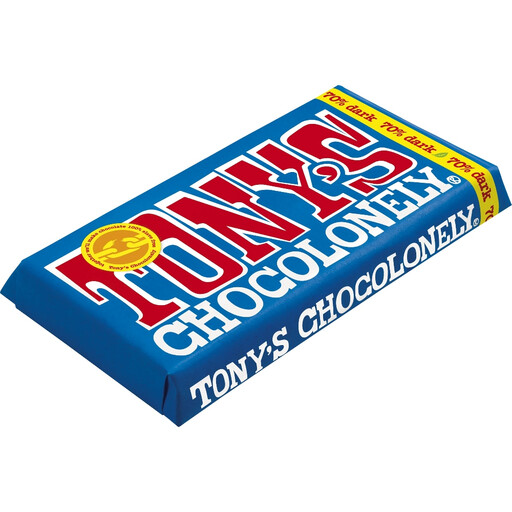
Consider this larger bar if you prefer to set aside your own snack-sized portion rather than buy an individually portioned bar.
If Fairtrade certification matters, check the exact pack’s mark and wording. Check its current allergen information too: the product information identifies soya and warns of possible contact with gluten-containing cereals, eggs, milk, nuts and peanuts.
 No image available
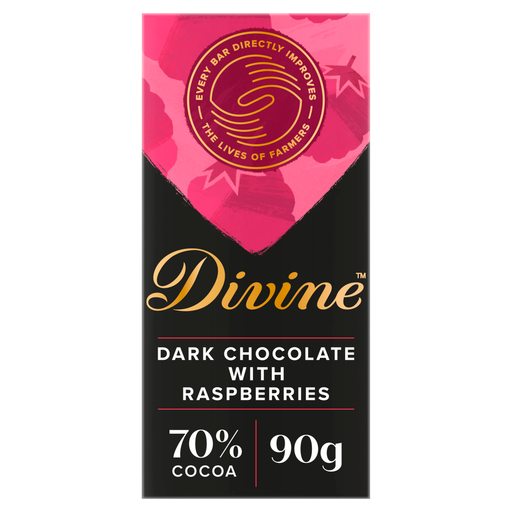
This raspberry bar is an option if you want to portion a 90 g dark-chocolate bar for a snack or treat.
Check the exact pack for its Fairtrade mark and claim scope. The product information conflicts on vegan suitability and also states that it contains milk, so rely on the current pack’s ingredients and allergen warning rather than a vegan description.
Do not rely on a small dark-chocolate portion as your only carbohydrate source. World Athletics advises 30–60 g per hour for exercise lasting 1–2.5 hours and up to 90 g per hour for events lasting over 2.5 hours. A 35 g Divine 70% bar contributes about 11.1 g based on Divine Chocolate’s stated nutrition per 100 g; plan and practise your broader carbohydrate and fluid approach separately.
Look for the mark on the exact pack and read its accompanying wording. The Fairtrade Foundation says its classic FAIRTRADE Mark means all ingredients that can be Fairtrade certified are Fairtrade-certified. An ingredient-specific statement should be read for what it says about that ingredient, rather than assumed to cover the whole bar.
Not necessarily. A brand may describe direct sourcing, sustainability or certified cocoa without making a Fairtrade claim for the exact product you are buying. If Fairtrade certification is essential, check that product’s pack for the mark and its scope.
A vegan description does not establish allergy suitability. Divine Chocolate’s 70% bar may contain milk and nuts, while Marks & Spencer lists its 75% and 85% dark bars as unsuitable for people with milk, nut or peanut allergy. Read the current ingredients and warnings for the exact pack before eating.
Follow the storage directions on the pack. Marks & Spencer instructs shoppers to keep its 75% and 85% dark bars in a cool, dry place away from sunlight; consider whether you can carry and portion the bar as intended during your session.