Choose a dark chocolate with a Fairtrade claim for the exact bar if you want a small treat alongside a pre-workout snack, rather than chocolate as the snack on its own. University College London Hospitals NHS Foundation Trust describes a snack 60–90 minutes before exercise as containing carbohydrate and protein with minimal fat; the Fairtrade dark bars discussed here contain substantial fat per 100g. Compare the pack’s Fairtrade wording, nutrition information, flavour and allergens before choosing a portion.
Who is this for?
People considering chocolate before training
A small piece may appeal as a treat, but it should not be mistaken for the carbohydrate-, protein- and minimal-fat snack described in University College London Hospitals NHS Foundation Trust’s pre-workout guidance.
Fairtrade-first chocolate shoppers
If Fairtrade is a requirement, check the mark or ingredient claim on the exact bar. A brand’s broader ethical-sourcing message does not establish what that bar’s certification covers.
Shoppers comparing cocoa percentages
A higher-cocoa bar may suit a preference for a more intense flavour. Compare its sugars, carbohydrate and fat on the same per-100g basis, and check its Fairtrade claim separately.
What should you check?
Start with the role chocolate will play in your pre-workout snack, then check the exact bar’s Fairtrade claim and label.
| Priority | What to check | Your needs |
|---|
| Snack timing |
Consider whether you ate a meal 2–3 hours earlier. For a snack 60–90 minutes before exercise, University College London Hospitals NHS Foundation Trust describes carbohydrate, protein and minimal fat; compare the bar’s fat and carbohydrate per 100g. |
I’m having chocolate as a small extra, not relying on it for the whole pre-workout snack. |
| Fairtrade claim |
Check the exact pack for a FAIRTRADE Mark or a statement identifying Fairtrade ingredients. The Fairtrade Foundation distinguishes the classic mark, which covers certifiable ingredients, from a Fairtrade Sourced Ingredient mark naming a particular ingredient. |
I want to know whether the claim covers the bar’s certifiable ingredients or a named ingredient such as cocoa. |
| Flavour and nutrition |
Compare cocoa percentage, sugars, carbohydrate and fat per 100g, then check any stated portion. Divine’s 70% bar lists 28.9g sugars per 100g; M&S’s Fairtrade 85% bar lists 15.9g, but the two also differ in carbohydrate and fat. |
A more intense cocoa flavour appeals to me, but I’ll compare the full label rather than treating cocoa percentage as a measure of pre-workout suitability. |
| Ingredients and allergens |
Read the current physical pack for ingredients and allergen warnings, particularly where milk or nuts matter. M&S cautions that online food information can change. |
If I need to avoid an ingredient, the label on the bar I receive matters more than an earlier online listing. |
Common buying mistakes
-
Treating chocolate as the complete pre-workout snack
The Fairtrade dark bars compared here contain substantial fat per 100g, unlike the minimal-fat snack described for the 60–90-minute pre-exercise window by University College London Hospitals NHS Foundation Trust.
If you need a snack in that window, consider carbohydrate and protein separately; keep chocolate as an optional small accompaniment.
-
Equating sustainable sourcing with Fairtrade
Dark chocolate or a general ethical-sourcing statement does not establish a Fairtrade claim for the exact product. The Fairtrade Foundation also distinguishes a whole-product FAIRTRADE Mark from a mark identifying one Fairtrade-sourced ingredient.
Check the bar’s mark and ingredient wording before treating it as a Fairtrade option.
-
Overlooking mass-balance wording
Green & Black’s 70% listing says its Fairtrade cocoa, sugar and vanilla may be mixed with non-certified equivalents on a mass-balance basis. That wording does not establish that the ingredients in an individual bar remained physically separate during processing.
Read the exact certification wording if physical segregation matters to your choice.
-
Applying school-food rules to ordinary shopping
England’s Requirements for School Food Regulations 2014 classify chocolate as confectionery. That school-food context does not, by itself, establish a general UK retail prohibition.
If chocolate is being considered for school provision, check the rules for the particular setting and UK nation rather than relying on an ordinary retail product listing.
Brand references
These examples concern particular bars or ranges; check the exact product rather than assuming every bar from a brand carries the same claim.
Divine
Divine identifies Fairtrade ingredients in its 70% Dark Chocolate 90g bar.
- Divine lists 31.7g carbohydrate and 44.3g fat per 100g for this bar.
- Its fat content does not match the minimal-fat pre-workout snack profile described by University College London Hospitals NHS Foundation Trust.
Green & Black’s
The Organic Dark 70% Chocolate 90g bar is listed as Fairtrade, organic and 70% cocoa.
- Its listing gives an 18g reference portion and lists 36g carbohydrate and 42g fat per 100g.
- The listing says Fairtrade cocoa, sugar and vanilla may be mixed with non-certified material on a mass-balance basis.
M&S
M&S identifies its Collection 85% Dark Chocolate 100g bar as Fairtrade and made with cocoa beans from Peru.
- M&S lists 15.9g sugars and 24.6g carbohydrate per 100g for this bar.
- It also lists 49.9g fat per 100g and advises reading the current pack label, including its allergen information.
Montezuma’s
Its dark-chocolate range includes the FitzRoy Organic 74% bar and Absolute Black 100% Cocoa.
- Cocoa percentage and an organic description do not establish Fairtrade status for either exact bar; check the pack if Fairtrade is required.
Lindt
Lindt’s EXCELLENCE 100% Dark Chocolate Bar 50g provides a high-cocoa comparison.
- Lindt lists no added sugar and, per 100g, 0.5g sugars, 11g carbohydrate and 54g fat for this bar.
- Lindt’s broader sustainable-sourcing description does not establish Fairtrade certification for this exact bar.
Hotel Chocolat
Its dark-chocolate range includes products described as 70%, 80% and 85% cocoa.
- Check the particular pack for a Fairtrade claim rather than inferring certification from its cocoa percentage or place in the range.
Fairtrade dark chocolate on Joybuy
These dark-chocolate options have Fairtrade ingredient claims and offer different cocoa percentages or flavours. Consider them as possible small accompaniments, not substitutes for the full pre-workout snack described above.
 No image available
Green & Black’s Dark Chocolate 70% 90g
A 70% cocoa option to consider as a small accompaniment. Its product information gives an 18g reference portion and lists 42g fat per 100g; Fairtrade cocoa, sugar and vanilla are subject to mass-balance wording. The listing says it may contain almonds, hazelnuts and milk, so check the current pack if these matter to you.
View on Joybuy
 No image available
Green & Black’s Dark Chocolate 85% 90g
Consider this 85% cocoa bar if you prefer a more intense chocolate flavour. Its product information identifies Fairtrade cocoa, sugar and vanilla with mass-balance wording, and lists 14g sugars and 50g fat per 100g. Check the current pack for its milk and nut warnings.
View on Joybuy
 No image available
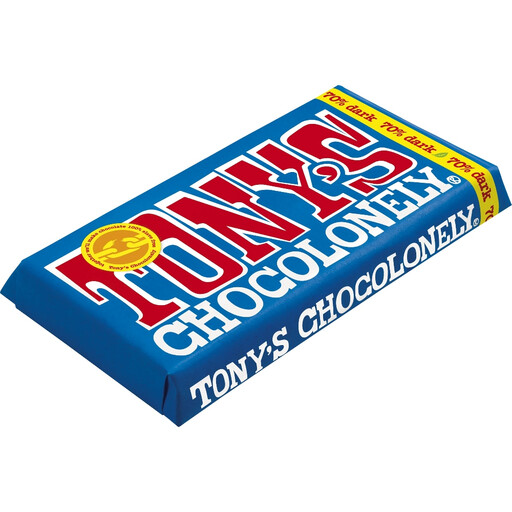
Tony’s Dark Chocolate 180g
This bar’s product information specifies at least 70% cocoa and identifies Fairtrade-traded cocoa mass, sugar and cocoa butter. It lists 42.3g fat per 100g, so consider chocolate as an accompaniment rather than the whole pre-workout snack. The listing identifies soya and possible gluten, egg, milk, peanut and nut allergens; read the current pack.
View on Joybuy
 No image available
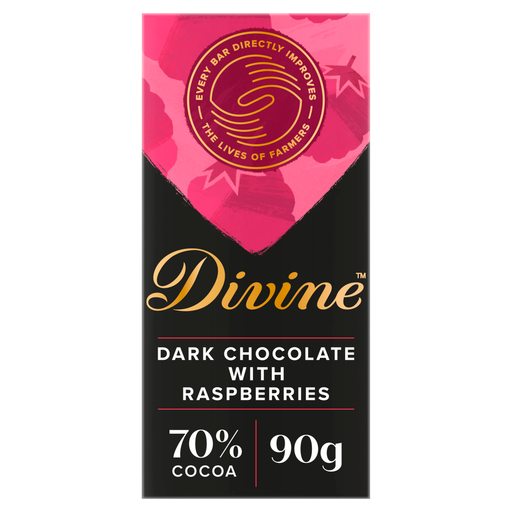
Divine Chocolate 70% Dark Chocolate with Raspberries 90g
A fruit-flavoured option with at least 70% cocoa, 3% raspberry pieces and a Fairtrade claim for cocoa and sugar. Its product information lists 44.9g fat per 100g. The listing has conflicting vegan and milk wording; check the physical pack before buying if you avoid milk, and read its other allergen warnings.
View on Joybuy
Questions about choosing a bar
Can dark chocolate be my only snack before a workout?
It does not match the minimal-fat snack profile described by University College London Hospitals NHS Foundation Trust for 60–90 minutes before exercise. That guidance calls for carbohydrate and protein as well as minimal fat; consider a small piece of chocolate as an accompaniment rather than relying on the bar alone.
How do I check whether a bar is Fairtrade?
Read the exact pack’s mark and ingredient wording. The Fairtrade Foundation says the classic FAIRTRADE Mark covers ingredients capable of Fairtrade certification, while a Fairtrade Sourced Ingredient mark identifies the named ingredient. A general sustainable-sourcing statement is not the same claim.
Is an 85% bar automatically a better pre-workout choice than a 70% bar?
No. Compare the full nutrition information on the same basis and consider the snack’s timing and purpose. For example, M&S lists 24.6g carbohydrate and 49.9g fat per 100g for its Fairtrade 85% bar; Divine lists 31.7g carbohydrate and 44.3g fat per 100g for its Fairtrade 70% bar.
Should I check the label when buying a familiar bar again?
Yes, particularly if ingredients or allergens affect your choice. M&S advises reading the product label because online food information can change; check the pack you receive rather than relying only on an earlier listing.


