Budget-led Fairtrade shoppers
If you want an explicitly Fairtrade dark bar, compare equivalent amounts when choosing between pack sizes. Check whether the figure you see depends on membership or an offer.


Choose a dark bar whose label explicitly identifies its Fairtrade status, then compare the current amount per kilogram rather than judging differently sized bars by their shelf figures. Membership offers and delivery conditions can change the budget decision; cocoa percentage, ingredient wording and the current pack’s allergen information matter too.
If you want an explicitly Fairtrade dark bar, compare equivalent amounts when choosing between pack sizes. Check whether the figure you see depends on membership or an offer.
A stated cocoa percentage helps you narrow down 70%, 85% and 90% bars, but it does not tell you everything about flavour. Check the ingredients and allergen statement for the bar you choose.
Look at the mark and the named ingredients rather than treating a broad ethical description as confirmation. Mass-balance wording is also relevant if physical separation of certified ingredients matters to you.
Start with the Fairtrade wording on the exact bar, then compare like-for-like shopping conditions and choose a cocoa level that suits your taste.
| Priority | What to check | Your needs |
|---|---|---|
| Fairtrade scope | Check the mark on the exact bar and which ingredients its wording covers. The Fairtrade Foundation says the classic Fairtrade Mark covers ingredients that can be Fairtrade-certified. | I want a clear basis for choosing Fairtrade chocolate, rather than relying on a general ethical claim. |
| Comparable value | Compare the current per-kilogram figures for 90g, 100g and larger bars. Check membership terms, offer dates and delivery conditions separately. | A smaller bar may suit my basket, but I do not want its pack size or a conditional offer to distort the comparison. |
| Cocoa and flavour | Read the stated cocoa percentage and ingredients. The listed options include 70%, 85% and 90% bars; percentage alone cannot establish which flavour you will prefer. | I may prefer a 70% bar to an 85% or 90% one, even when I am comparing Fairtrade options. |
| Ingredients and allergens | Check the current pack’s ingredients, allergen declaration and ‘may contain’ wording, particularly if the online listing may have changed. | Before eating, I need the information for the bar in my hand, not an assumption about all dark chocolate. |
Co-op lists its 85% Fairtrade bar with a member offer ending 4 October 2026. That condition changes the comparison for shoppers without membership or buying later.
Check eligibility and the offer end date, then compare the figure that applies to your purchase.
A 90g bar and a 100g bar contain different amounts of chocolate, so their displayed pack figures are not a like-for-like comparison.
Use the current per-kilogram figures and keep any delivery conditions separate.
The Fairtrade Foundation describes the classic Fairtrade Mark as covering ingredients capable of Fairtrade certification. Mass balance does not mean certified ingredients were physically separated in an individual bar.
Read the exact mark, ingredient wording and any mass-balance statement if those distinctions affect your choice.
Delivery conditions can change the basket comparison when ordering a single bar from a brand’s own shop.
Check the checkout total for what you actually intend to order rather than adding items solely to meet a delivery threshold.
These examples refer to specific Fairtrade dark bars; a brand name alone does not establish the certification or ingredients of another product in its range.
Co-op lists a Fairtrade 85% dark-chocolate bar in a 100g format.
Waitrose lists a 100g dark bar with 90% cocoa solids and Fairtrade certification under mass balance.
Divine sells a Fairtrade 85% dark bar in a 90g format. Divine says the business is farmer co-owned.
Tesco lists its Organic 70% Dark Chocolate Bar as Fairtrade in a 90g format.
M&S identifies its 100g 85% dark-chocolate bar as Fairtrade.
These Joybuy bars cover stated 70% and 85% cocoa options, including different pack sizes and a raspberry variation. Check the Fairtrade wording and current pack details for the particular bar you choose.
 Image unavailable
A 90g, 85% cocoa choice for shoppers looking for Fairtrade ingredient wording. The listing describes cocoa, sugar and vanilla under mass balance, and says the bar may contain almonds, hazelnuts and milk; check the current pack.
 Image unavailable
A 100g bar whose description identifies it as Fairtrade and states 85% cocoa. The listing says it may contain cereals containing gluten, milk, nuts and peanuts; check the current pack if these matter to you.
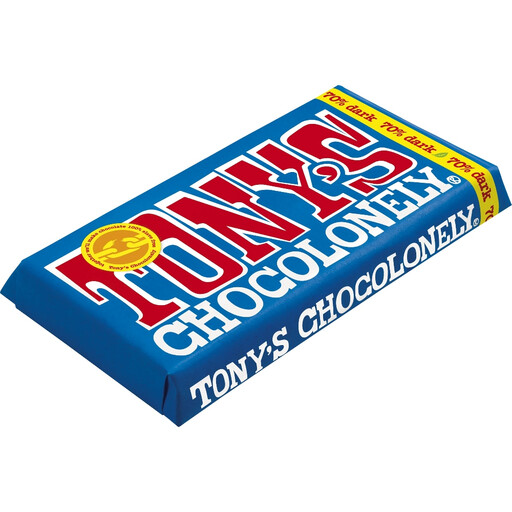 Image unavailable
A larger bar whose listing states a minimum of 70% cocoa and describes specified ingredients as traded in compliance with Fairtrade Standards. Check the pack for the precise certification scope. The listing says it contains soya and may contain gluten, eggs, milk, peanuts and nuts.
 Image unavailable
A Fairtrade-certified 90g bar listed with at least 70% cocoa and freeze-dried raspberry pieces. Its vegan-friendly wording conflicts with entries naming milk: check the current pack before buying if you avoid milk. The listing also warns that it may contain gluten and nuts.
Not necessarily. The Fairtrade Foundation says the classic Fairtrade Mark indicates that ingredients capable of Fairtrade certification are certified. Check the exact mark and ingredient wording on your chosen bar rather than assuming every ingredient has the same status.
Mass balance permits certified and non-certified ingredients to be mixed during processing while a corresponding volume is purchased on Fairtrade terms. It does not establish that the certified ingredient was physically separated in the individual bar, so read the bar’s wording if traceability matters to you.
Use the current per-kilogram figure to compare bars of different weights. Then check whether a membership offer or delivery condition changes what applies to your purchase.
Check the current physical pack before eating: ingredients and allergy advice can change. The listed bars have differing ingredient and ‘may contain’ statements, so a general assumption about dark chocolate is not enough.
No. Cocoa percentage tells you the stated cocoa-solids level, not whether the Fairtrade wording, flavour, allergens or shopping conditions suit you. Compare those points for the exact bars you are considering.