What should you check?
Check the Fairtrade statement first, then compare cocoa intensity and the current pack’s allergy information. Those are separate decisions: cocoa percentage cannot tell you which ingredients a Fairtrade claim covers.
| Priority | What to check | Your needs |
|---|
| Fairtrade scope |
Look for the mark or a Fairtrade statement on the exact bar. According to the Fairtrade Foundation, the classic mark covers all ingredients that can be Fairtrade-certified; the Fairtrade Sourced Ingredient mark identifies a named ingredient. |
I want to know whether the claim covers the certifiable ingredients throughout the bar or a particular ingredient. |
| Cocoa and sweetness |
Compare the stated cocoa percentage and nutrition declaration per 100 g. The reviewed 70% bars retain sugar in their ingredients; the reviewed Montezuma’s and Lindt 100% bars are described by their makers as having no added sugar. |
For a piece after supper, I might prefer the sweetness of a 70% bar. If I already enjoy a stronger cocoa flavour, I can consider 85% or 100% without assuming either is Fairtrade. |
| Allergens |
Read the current ingredient list, allergen statement and any ‘may contain’ wording. The Food Standards Agency explains that precautionary allergen labelling communicates possible unintended allergen presence. |
If I am serving someone with an allergy, I need the information for the exact pack; ‘dark’ or ‘vegan’ alone does not answer that question. |
Brand and product-line references
These examples show why the claim and allergy information need checking bar by bar; a brand’s wider sourcing position does not certify every product it makes.
Divine
Divine’s 70% dark bar provides an ingredient-level Fairtrade statement for shoppers considering a sweeter dark-chocolate option.
- Divine Chocolate lists Fairtrade cocoa mass, sugar, cocoa butter and vanilla for its 70% bar.
- The same product page says it may contain gluten, milk and nuts.
M&S
M&S describes its Collection 85% dark chocolate as Fairtrade, offering a higher-cocoa option within the products discussed here.
- Marks & Spencer lists 85% minimum cocoa solids for the 100 g bar.
- Its product information says the bar is not suitable for people with a milk or nut allergy; check the current pack.
Green & Black's
The reviewed Organic 70% bar combines an organic product description with a Fairtrade ingredient statement.
- Tesco’s listing identifies 70% minimum cocoa solids and names Fairtrade cocoa, sugar and vanilla.
- The listing says those Fairtrade ingredients may be mixed with non-certified equivalents on a mass-balance basis. It also warns that the bar may contain nuts and milk.
Montezuma's
Montezuma’s Absolute Black is a 100% cocoa option for someone choosing primarily by cocoa intensity, rather than relying on a Fairtrade claim for this bar.
- Montezuma’s describes Absolute Black as made without added sugar.
- Its product page says it may contain traces of milk, nuts and peanuts. Check the exact bar for any Fairtrade claim before treating it as a Fairtrade choice.
Lindt
Lindt Excellence 100% is another intensity-led option; Lindt’s wider cocoa-sourcing programme should not be mistaken for a Fairtrade claim for this bar.
- Lindt Shop UK lists 100% minimum cocoa solids and no added sugar for the reviewed Excellence bar.
- Its page says the bar may contain nuts, milk, soya and sesame.
Dark chocolate options on Joybuy
These bars offer 70% and 85% cocoa choices for an after-supper serving. Compare each product’s Fairtrade wording and current pack information, particularly when an ingredient claim or allergen warning affects your choice.
 No image available
Green & Black's 70% Dark Chocolate 90g
A 70% cocoa option if you want some sweetness after supper. The product information identifies Fairtrade cocoa, sugar and vanilla and says they may be mixed with non-certified equivalents on a mass-balance basis. It lists 29 g sugars per 100 g and warns that the bar may contain nuts and milk; check the current pack.
View on Joybuy
 No image available
Green & Black's 85% Dark Chocolate 90g
Consider this 85% cocoa bar if you prefer a more intense dark-chocolate flavour. Its product information lists 14 g sugars per 100 g and identifies Fairtrade cocoa, sugar and vanilla, with mass-balance mixing disclosed. It may contain nuts and milk; check the current pack.
View on Joybuy
 No image available
Morrisons The Best 85% Cocoa Ecuador Dark Chocolate 100g
An 85% cocoa option for someone seeking a more intense after-supper piece. The product description makes a Fairtrade sourcing claim, but check the current pack to see which mark and ingredients it covers. The product information lists 13.8 g sugars per 100 g and says it may contain cereals containing gluten, milk, nuts and peanuts.
View on Joybuy
 No image available
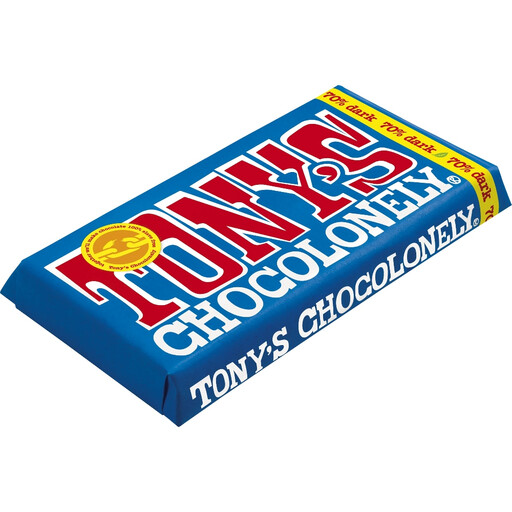
Tony's 70% Dark Chocolate 180g
A 70% cocoa bar in a 180 g pack if you want a sweeter dark-chocolate option to serve or share. Its product information says the cocoa mass, sugar and cocoa butter are traded in compliance with Fairtrade Standards; it also lists soya lecithin. It contains soya and may contain gluten, eggs, milk, peanuts and nuts, so check the current pack.
View on Joybuy
 No image available
Divine 70% Dark Chocolate with Raspberries 90g
A 70% cocoa option with 3% freeze-dried raspberry pieces for a fruit-flavoured after-supper piece. The product description claims Fairtrade certification and identifies Fairtrade cocoa. Its dietary and milk-allergen statements conflict, so check the physical pack before choosing it for anyone with an allergy or a requirement to avoid milk or soya.
View on Joybuy
Questions about Fairtrade dark chocolate
Does a higher cocoa percentage mean a bar is Fairtrade?
No. Cocoa percentage states the cocoa content, not the sourcing standard. Check the Fairtrade mark or a current Fairtrade statement for the exact bar and the ingredients it names.
What is the difference between the two Fairtrade marks?
The Fairtrade Foundation says its classic black-background mark means all ingredients that can be Fairtrade-certified are Fairtrade-certified. The Fairtrade Sourced Ingredient mark identifies a particular Fairtrade-sourced ingredient; check the name beside the mark.
What does the mass-balance wording mean for Green & Black's 70% bar?
Tesco’s product listing says the bar’s Fairtrade cocoa, sugar and vanilla may be mixed with non-certified equivalents on a mass-balance basis. If the distinction between that wording and physically separated ingredients matters to you, check the claim on the current pack before choosing it.
Is vegan dark chocolate suitable for someone with a milk or nut allergy?
Not automatically. Marks & Spencer describes its reviewed 85% bar as vegan but says it is not suitable for people with a milk or nut allergy. Read the current pack’s allergen and ‘may contain’ statements for the exact bar.
Should I choose 70%, 85% or 100% cocoa after supper?
Choose by the flavour and Fairtrade claim you want, rather than cocoa percentage alone. A Fairtrade-labelled 70% bar is an option if you want some sweetness; consider a Fairtrade-labelled 85% bar if you prefer a more intense cocoa flavour. The reviewed 100% bars offer another intensity choice, but check a specific pack before treating it as Fairtrade.


