Choose a Fairtrade decaf coffee in a format that fits your after-dinner routine: ground coffee if you use a cafetière or filter machine, instant if you want less preparation, or beans if you have a grinder. Check the Fairtrade statement on the exact product, then compare its stated flavour and caffeine information; the word ‘decaf’ alone does not establish either Fairtrade certification or zero caffeine.
Who might want Fairtrade decaf after dinner?
After-dinner coffee drinkers reducing caffeine
If you prefer decaf with dinner or afterwards, look at the caffeine statement on the individual product. Decaf does not necessarily mean caffeine-free, according to University Hospitals of Leicester NHS Trust.
Shoppers looking for a Fairtrade claim
If Fairtrade sourcing is a deciding requirement, check the exact coffee rather than relying on a familiar brand name. The cited Sainsbury’s ground coffees, Clipper instant coffee and Equal Exchange beans each have product-specific Fairtrade statements.
Households keeping preparation simple
An after-dinner cup needs to fit the equipment and preparation time you are willing to use. Instant coffee avoids brewing grounds; ground coffee needs a cafetière or filter setup, while whole beans also need a grinder.
What should you check before choosing?
Start with the Fairtrade claim on the exact coffee, then choose a format your household can prepare after dinner.
| Priority |
What to check |
Your needs |
| Fairtrade sourcing |
Look for a Fairtrade certification or standards statement on the exact pack or product page. Check the coffee you intend to buy, not just the brand. |
I want the Fairtrade claim to apply to this decaf product. Sainsbury’s ground-coffee listings and the Clipper instant listing each make an explicit product-level statement. |
| Residual caffeine |
Read any stated caffeine figure and its unit. Sainsbury’s Fairtrade Decaff House Blend states a caffeine content below 0.1% by weight; that is not a claim of zero caffeine. |
For an evening cup, I want to know whether the product gives a specific caffeine figure rather than relying on the word ‘decaf’. |
| Preparation |
Choose between brewing ground coffee, making instant coffee and grinding whole beans. Check that you have the equipment required by the chosen format. |
I would use instant when I want little preparation, ground coffee when I am happy to brew, or beans when grinding coffee is already part of my routine. |
| Pod compatibility |
For coffee pods, confirm the named capsule system against your machine before buying. Pod shape or packaging alone is not a compatibility check. |
If I use a pod machine after dinner, the capsules need to fit that particular machine. |
| Flavour description |
Compare the stated roast and tasting notes within the format you will use. Sainsbury’s describes its House Blend as smooth and malty and its Colombian decaf as sweet, nutty and malty. |
I can use the pack’s flavour description to choose between a familiar blend and a stated single-origin coffee, without assuming they will taste the same. |
Common buying mistakes
-
Assuming every decaf from a brand is Fairtrade
A decaf category listing can include products with different sourcing claims. Seeing a brand among decaf choices does not establish Fairtrade certification for every product it sells.
Read the Fairtrade wording on the exact pack or product page before treating certification as a reason to choose it.
-
Choosing a format that does not fit the evening routine
Ground coffee needs brewing equipment, and whole beans add a grinding step. Instant coffee uses a different preparation method from brewed ground coffee.
Match the format to the equipment you have and the preparation you are willing to do after dinner.
-
Reading ‘decaf’ as ‘caffeine-free’
University Hospitals of Leicester NHS Trust notes that decaffeinated drinks can still contain very low levels of caffeine. Sainsbury’s House Blend, for example, states a level below 0.1% by weight rather than zero.
Check the individual product’s caffeine statement if the remaining amount matters to you.
Relevant brand and product-line references
These examples show how Fairtrade claims and coffee formats vary by product; check the individual listing when choosing.
Sainsbury’s
Its Fairtrade decaf ground-coffee listings include a House Blend and a single-origin Colombian coffee.
- The House Blend listing states a caffeine content below 0.1% by weight and describes a smooth, malty flavour.
- Ground coffee needs brewing equipment such as a cafetière or filter machine.
Clipper
Its listed organic decaf instant coffee is an option when you would rather make instant coffee after dinner.
- The Sainsbury’s listing says the coffee is traded in compliance with Fairtrade standards, total 100%.
- Instant coffee is a different format from freshly brewed ground coffee.
Equal Exchange
Its decaf whole-bean listing offers an organic, Fairtrade-certified option for households with a grinder.
- The Tesco Marketplace listing describes medium-roast beans processed using Swiss Water.
- Beans require a grinder; check the Marketplace seller’s delivery and returns information for the order.
M&S
Its Decaf Americano Micro-Ground Instant Coffee is another Fairtrade-labelled instant format.
- M&S describes the coffee as 100% Arabica, Fairtrade and freeze-dried.
- Check availability at your chosen Foodhall.
Taylors of Harrogate
Tesco lists Taylors decaf beans and roast-and-ground coffee among its decaf choices.
- The listed formats provide a choice between grinding beans and brewing ground coffee.
- If Fairtrade certification is essential, check the claim on the exact Taylors decaf product before choosing it.
A Fairtrade decaf pod option on Joybuy
This option is for an after-dinner coffee made with pods. Confirm that the capsules fit your machine before choosing them.
 No image available
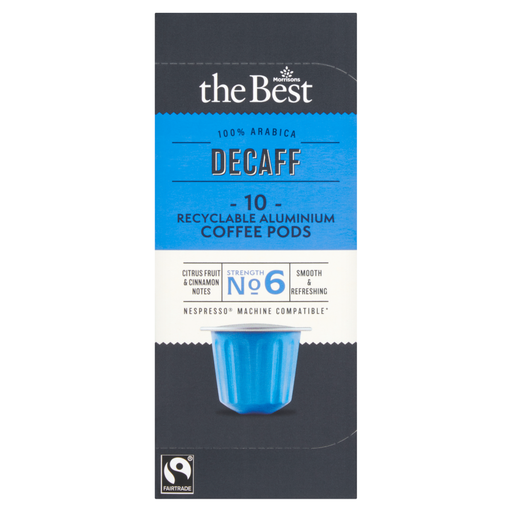
Morrisons The Best Fairtrade Decaf Pods 54g
These Fairtrade decaf pods offer a pod-format after-dinner coffee. The pack is 54g; check machine compatibility and the pack’s caffeine information if you need a specific residual-caffeine figure.
View on Joybuy
Questions about Fairtrade decaf coffee
How can I tell whether a decaf coffee is Fairtrade?
Check the exact product’s pack or listing for a Fairtrade certification or standards statement. Sainsbury’s labels its cited ground decafs Fairtrade, while the Clipper instant listing states that its coffee is traded in compliance with Fairtrade standards; a brand name or decaf category label alone does not establish the claim for another product.
Is decaf coffee completely caffeine-free?
No: decaf can still contain a small amount of caffeine, as University Hospitals of Leicester NHS Trust explains. Sainsbury’s Fairtrade Decaff House Blend states a caffeine content below 0.1% by weight, so check the figure on the coffee you intend to drink if the remaining amount matters.
Should I choose instant, ground coffee or beans for after dinner?
Choose the format that fits your equipment and preparation routine: instant avoids brewing grounds, ground coffee suits a cafetière or filter setup, and whole beans require a grinder before brewing. The cited Fairtrade decaf examples include Clipper and M&S instant coffee, Sainsbury’s ground coffee and Equal Exchange beans.


