Tent campers keeping the kit simple
Fairtrade decaf instant coffee suits a trip where you can heat water outdoors but do not want to carry filters or a coffee machine. Check the claim on the specific jar or pack.


For a tent trip with a simple hot-water setup, Fairtrade decaf instant coffee avoids carrying brewing equipment and dealing with wet grounds. Choose decaf coffee filters if you prefer a brewed cup and can manage the used filters; take capsules only if you have a compatible machine. Check the Fairtrade claim on the individual pack rather than treating a general responsible-sourcing statement as equivalent certification.
The useful distinction for a camping trip is how you will prepare the coffee and what you will need to carry away afterwards.
Fairtrade decaf instant coffee suits a trip where you can heat water outdoors but do not want to carry filters or a coffee machine. Check the claim on the specific jar or pack.
Decaf coffee filters offer a brewed option if you have a mug and can deal with the used, wet filters. Marks & Spencer describes its decaf coffee filters as made with Arabica beans from Fairtrade-certified farms.
Fairtrade decaf capsules are worth considering only when you can use a suitable machine on the trip. Confirm that the capsules fit your machine before packing them.
Start with the pack’s Fairtrade claim, then choose a format that fits your equipment, storage and plans for used coffee.
| Priority | What to check | Your needs |
|---|---|---|
| Fairtrade claim | Look for a Fairtrade Mark or explicit certification wording on the current pack. If the claim names a particular ingredient, check that it names the coffee. | I want the Fairtrade claim to apply to the decaf coffee I am taking, not just to a brand’s wider sourcing programme. |
| Preparation and waste | Instant coffee needs hot water; filters leave wet coffee and filter waste. Capsules need a compatible machine, so check the system before travel. | For a basic tent setup, I would rather carry a jar than brewing equipment. For a brewed cup, I can make room for filters and their used waste. |
| Decaf and ingredients | Read the exact product’s ingredients and any allergy information. If the decaffeination method matters to you, check its pack or manufacturer information. | I am choosing decaf to reduce caffeine, but I do not want to assume it contains none: Nescafé says traces can remain. |
| Hot-water setup | Plan to use a stove outdoors, away from tents and other enclosed camping spaces. Set it on a stable, safe surface before heating water. | I need a place to make coffee without bringing a fuel-burning stove inside my tent, awning or caravan. |
| Storage | Check the opened pack’s storage instructions against the conditions of your trip. Keep any coffee container properly closed. | On a longer trip, I need to know whether the coffee I choose has storage instructions I can follow. |
These descriptions do not establish the same thing. The Fairtrade Foundation defines what its Mark identifies; Kenco describes an equivalent-volume sourcing programme, which does not itself identify Kenco Decaf as Fairtrade-certified.
If Fairtrade is essential to your choice, check the Mark or explicit certification wording on the exact decaf product.
Coffee filters leave wet waste, while capsules cannot make a drink without a suitable machine. Either can complicate a trip built around a mug and hot water.
Choose instant coffee for that minimal setup; take filters if you can manage the used filters, or capsules if you have confirmed machine compatibility.
Nescafé notes that decaffeinated coffee can retain small traces of caffeine. The distinction matters if your caffeine intake is medically restricted.
Check information for the exact product and seek appropriate professional advice if you have a medical restriction.
Devon and Somerset Fire and Rescue Service warns against using stoves inside tents, caravans and awnings because of carbon monoxide and fire risks.
Heat water outdoors, well away from the tent, with the stove on a stable, safe surface.
A brand’s wider sourcing statement is not a substitute for checking the Fairtrade status of the coffee product you plan to pack.
Marks & Spencer describes both a Fairtrade decaf instant coffee and decaf coffee filters made with beans from Fairtrade-certified farms.
Kingdom Coffee lists Clipper Fairtrade Organic Instant Decaff as an instant option.
Nescafé provides decaf-coffee information relevant to shoppers comparing caffeine and decaffeination methods.
Kenco Decaf is an instant coffee prepared by adding hot water, according to Kenco.
This capsule option is relevant to a camping trip with a coffee machine; confirm compatibility before choosing it for a caravan or hook-up setup.
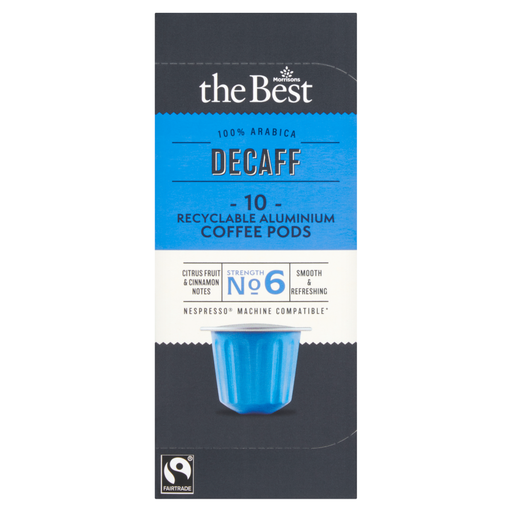 No image available
For trips with a suitable capsule machine, these pods are described as decaffeinated coffee made with 100% Fairtrade Arabica. The product description identifies aluminium capsules and a recyclable carton; confirm machine compatibility and check the current pack’s Fairtrade wording before packing.
No. Nescafé says decaffeinated coffee can still contain small traces of caffeine. If you must restrict caffeine for a medical reason, check the exact product and seek appropriate professional advice.
Read the current pack for a Fairtrade Mark or explicit certification wording. The Fairtrade Foundation says its classic black-background Mark indicates that all ingredients eligible for Fairtrade certification are certified; where a Mark identifies a specific sourced ingredient, check that the ingredient is coffee.
No. Devon and Somerset Fire and Rescue Service advises against using stoves inside tents, caravans and awnings because of carbon monoxide and fire risks. Heat water outdoors, away from the tent, on a stable, safe surface.
Yes. Check the current pack for ingredients, allergy information and storage instructions, particularly if any of these affect whether you can use the coffee on your trip. Do not rely on the product name alone.