Evening coffee drinkers seeking Fairtrade
If you want decaf later in the day and Fairtrade sourcing matters to you, look for a claim about the coffee itself. Decaf is not necessarily caffeine-free.


For a quick winter mug, choose a decaf instant coffee whose pack or product description explicitly identifies the coffee as Fairtrade. If you use a cafetière or filter, Fairtrade decaf ground coffee offers a brewed alternative; check the exact product rather than treating a general sourcing claim as certification. Decaf can still contain small traces of caffeine, as Nescafé UK explains.
If you want decaf later in the day and Fairtrade sourcing matters to you, look for a claim about the coffee itself. Decaf is not necessarily caffeine-free.
Instant or micro-ground instant decaf makes a mug with hot water, without a cafetière, filter machine or pod machine. Check the individual product for Fairtrade wording.
Ground decaf fits a brewed-coffee routine if you have suitable equipment. Check Fairtrade status on the exact product and follow its after-opening storage instructions.
Start with the Fairtrade claim, then choose a format that fits how you make coffee and check what decaf means for your caffeine needs.
| Priority | What to check | Your needs |
|---|---|---|
| Fairtrade sourcing | Look for the FAIRTRADE Mark or an explicit statement about the coffee on the exact pack or current product page. The Fairtrade Foundation distinguishes the classic mark from the Fairtrade Sourced Ingredient mark; check which ingredient the latter names. | I want the Fairtrade claim to apply to this decaf coffee, rather than relying on a broad statement such as ‘responsibly sourced’. |
| Caffeine | Check that the product is decaf, but do not assume it contains no caffeine. Nescafé UK says small traces can remain after decaffeination. | For a later mug, I would choose decaf while keeping any need to limit caffeine closely in mind. |
| Preparation | Instant coffee needs hot water; ground coffee needs a suitable cafetière or filter method. For pods, confirm that the specific capsules fit your machine. | A quick kettle-only drink suits my routine, or I have the equipment and time to brew ground coffee. If I use pods, machine compatibility comes first. |
A general sourcing statement does not establish Fairtrade certification for a particular decaf coffee.
Check the exact pack for the FAIRTRADE Mark or a product statement explicitly linking the coffee to Fairtrade sourcing.
Nescafé UK says decaffeinated coffee can retain small traces of caffeine. This distinction matters when you need to limit your intake closely.
Check the product information and consider caffeine from other drinks and foods too.
Ground coffee needs suitable brewing equipment; it will not prepare like instant coffee in a mug.
Choose instant for hot-water preparation, or ground coffee when you intend to use a cafetière or filter.
Product details can change, so an older description may not reflect the pack you receive.
Check the current pack for Fairtrade wording, format, ingredients and storage instructions before use.
These brand references help distinguish Fairtrade claims, decaf formats and preparation methods; they do not imply that every product from a brand has the same certification.
M&S says its tea and coffee are Fairtrade-certified. Its descriptions for Gold Decaf Instant Coffee, Decaf Americano Micro-Ground Instant Coffee and Decaf Ground Coffee each identify Fairtrade coffee.
Nescafé describes Original Decaf as instant coffee with most caffeine removed using water.
Taylors describes a water-based decaffeination method for its Decaffé coffee.
Kenco describes its Decaf instant coffee with an intensity rating of 7.
Tesco lists own-label decaf instant and ground coffees, allowing shoppers to compare preparation formats.
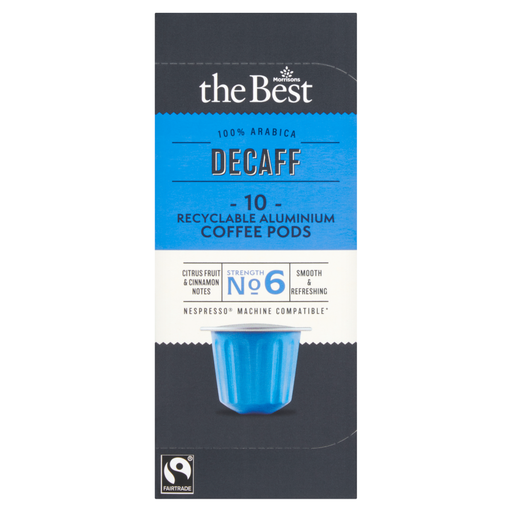
This Joybuy option is a Fairtrade-labelled decaf coffee in pod format. It is relevant if you use a pod machine, but check capsule compatibility and the Fairtrade wording on the pack before choosing it.
 No image available
These Fairtrade-labelled decaf coffee pods fit a pod-machine routine if your machine accepts the specific capsules. The pack is 54g; check machine compatibility and the Fairtrade wording on the pack.
No. Nescafé UK says decaffeination removes most caffeine, but small traces can remain. Check the exact product information if you need to limit caffeine closely.
Look for the FAIRTRADE Mark or an explicit statement that the coffee in the product is Fairtrade. The Fairtrade Foundation distinguishes the classic mark from the Fairtrade Sourced Ingredient mark, so check which ingredient a sourced-ingredient mark identifies. A general ‘responsibly sourced’ claim is not the same confirmation.
Choose Fairtrade decaf instant coffee if you want to make a mug with hot water. Ground coffee is an alternative if you have a cafetière or filter and want to brew it; M&S describes Fairtrade decaf products in both formats.
Follow the after-opening instructions on the exact pack, including its storage method and any stated period for use. Check those details when choosing ground coffee if you expect to use it over several weeks.