Fairtrade-first decaf drinkers
You want the coffee in your mid-morning cup to carry a product-specific Fairtrade claim, rather than relying on general responsible-sourcing language.


If Fairtrade is your priority, check the exact decaf coffee pack or current listing for a Fairtrade claim: Sainsbury’s identifies its Fairtrade Decaff House Blend as certified, while M&S says its Gold Decaf Instant Coffee comes from Fairtrade farms. Ground coffee suits a break with brewing equipment; instant suits a kettle-only break. A stated water-based decaffeination method is a separate consideration, not proof of Fairtrade certification.
You want the coffee in your mid-morning cup to carry a product-specific Fairtrade claim, rather than relying on general responsible-sourcing language.
You want an instant decaf you can prepare with hot water, but still need to check the exact product if Fairtrade matters to you.
You have time and equipment to brew ground decaf and want to weigh a Fairtrade claim against other product details, such as a stated decaffeination method.
Start with the claim that matters most to you, then choose a format that fits your break. Fairtrade status, brewing format and decaffeination method answer different questions.
| Priority | What to check | Your needs |
|---|---|---|
| Fairtrade claim | Check the exact pack or current listing for the Fairtrade Mark or an explicit product-specific claim. The Fairtrade Foundation says its classic black-background mark means all ingredients that can be Fairtrade certified are certified. | I want a clear Fairtrade claim for this decaf coffee, not just a general sourcing statement about its brand or range. |
| Brewing format | Check whether the coffee is instant or ground and whether you have the equipment its preparation requires. M&S describes Gold Decaf Instant Coffee as freeze-dried; Sainsbury’s Fairtrade Decaff House Blend is a ground-coffee option. | With only a kettle, I would choose an instant format. If I have a cafetière or filter machine and time to brew, ground coffee is an option. |
| Decaffeination method | Look for a method stated for the exact product. Nescafé says it removes most caffeine from Original Decaf using only water; Taylors of Harrogate describes a Pure Water Process for Decaffé ground coffee. Neither method establishes Fairtrade status. | I care how the coffee is decaffeinated, but would check Fairtrade certification separately if that is also important to me. |
| Caffeine information | Check the exact product’s caffeine information if you need a specific limit. Nescafé describes Original Decaf as having most of its caffeine removed, rather than none. | I do not want to assume that the word ‘decaf’ means caffeine-free. |
A sourcing statement or a water-based decaffeination method describes something different from Fairtrade certification. It may not answer a Fairtrade-first buying requirement.
Look for the Fairtrade Mark or explicit Fairtrade wording for the exact decaf product you intend to buy.
Ground coffee needs a suitable brewing method and preparation time; instant coffee is made for hot-water preparation.
Decide whether you will have only a kettle or also a cafetière or filter machine, then compare Fairtrade claims within a format you can use.
Decaffeination does not, by itself, establish that no caffeine remains. Nescafé describes Original Decaf as having most of its caffeine removed.
If a precise caffeine limit matters, check the information for the exact product rather than relying on its category name.
An image of a previous pack may not settle what the coffee you are buying currently claims.
Check the current listing and physical pack for the Fairtrade wording that matters to you.
These examples illustrate different claims and formats; a brand name alone does not establish the status of every decaf product it sells.
An instant-decaf route with an explicit Fairtrade sourcing statement for Gold Decaf Instant Coffee.
Ground-decaf choices for shoppers who can use brewing equipment and want a product-specific Fairtrade statement.
Its Decaffé ground coffee is relevant if a disclosed decaffeination method matters to you.
Original Decaf is an instant format for a kettle-only break.
Kenco describes Decaf as a medium-roast instant coffee blend.
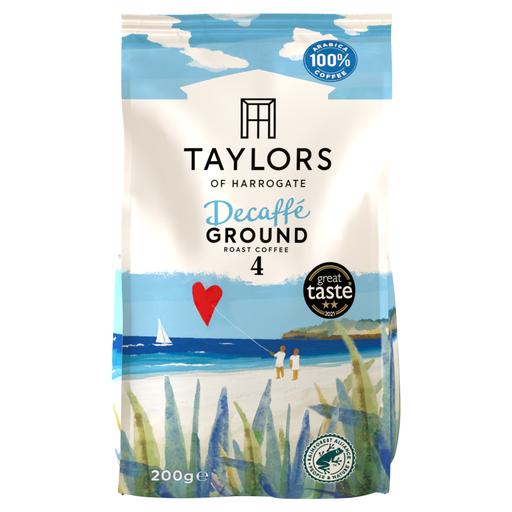
This ground decaf is an option for a mid-morning cup when you have brewing equipment. If Fairtrade certification is essential, check the exact product pack or current listing before choosing it.
 No image available
The ground format suits a break when you can brew coffee rather than prepare an instant cup. The listed pack is 200g; check its current Fairtrade wording, decaffeination-method claim and caffeine information if any of those details determine your choice.
Look for the Fairtrade Mark or an explicit Fairtrade claim on the exact decaf product. The Fairtrade Foundation says its classic black-background mark indicates that all ingredients that can be Fairtrade certified are certified; check the current pack or listing rather than assuming the claim applies across a brand’s range.
No. Responsible-sourcing language does not, on its own, establish Fairtrade certification. If Fairtrade is essential to your purchase, check for a product-specific mark or explicit certification wording.
Choose an instant format if you have only a kettle and want hot-water preparation. Ground decaf is an option if you have a cafetière or filter machine and time to brew; check the Fairtrade claim on whichever format you choose.
No: do not treat ‘decaf’ as a guarantee of zero caffeine. Nescafé, for example, says most caffeine is removed from Original Decaf. Check the exact product information if you need to know its stated caffeine content.