Budget shoppers requiring the FAIRTRADE Mark
You want a fruity hot drink for a budget shop, but will count a product as Fairtrade only after checking the individual pack.


Choose a fruit tea as Fairtrade only when the individual pack carries a FAIRTRADE Mark, and read any ingredient and sourcing information indicated by an arrow on the mark. A brand’s Fairtrade tea range does not establish that its fruit infusions are certified: Fairtrade International’s tea standard covers tea from the Camellia plant, while fruit infusions can be made without tea leaves. If a different named ethical certification meets your needs, Fair for Life is an alternative to consider, but it is not the FAIRTRADE Mark.
You want a fruity hot drink for a budget shop, but will count a product as Fairtrade only after checking the individual pack.
You prefer fruit, herb or spice infusions and want to distinguish the FAIRTRADE Mark from other named certification schemes.
You want to compare the number of servings without treating Fairtrade black tea as an interchangeable fruit infusion.
Start with the certification you require, then check the drink itself and the number of servings in the pack.
| Priority | What to check | Your needs |
|---|---|---|
| Fairtrade certification | Look for the FAIRTRADE Mark on the exact pack. Fairtrade International says an arrow on the mark directs shoppers to the back of pack for ingredient and sourcing details. | I need the fruit tea I buy to carry the FAIRTRADE Mark, not just another product from the same brand. |
| Type of drink | Read the ingredients for fruit, herbs, spices and any tea leaves. Twinings describes fruit tea as an infusion without Camellia sinensis leaves; Fairtrade International’s tea standard covers tea from the Camellia plant. | I’m looking for a fruit infusion, so Fairtrade black tea would be a different drink rather than a direct substitute. |
| Other ethical labels | Identify the named scheme and what the pack says it covers. Pukka says its teas carry Fair for Life certification; that label is not the FAIRTRADE Mark. | A separately certified fruit or herbal infusion could suit me if Fairtrade certification is not essential. |
| Servings and caffeine | Check the stated bag or sachet count and the exact pack’s ingredients and caffeine statement. Do not assume caffeine status from the words ‘fruit tea’ alone. | I want to know how many drinks the pack makes and whether this particular blend meets my caffeine preference. |
A brand can sell both Fairtrade tea and fruit infusions. Clipper’s product range, for example, lists Fairtrade Everyday Tea and Organic Blackcurrant & Blueberry Infusions as distinct products; one listing does not establish the other’s certification.
Check the FAIRTRADE Mark on the fruit infusion’s own pack and read any additional pack information indicated by an arrow.
Fair for Life and the FAIRTRADE Mark name different schemes. Teapigs also describes sourcing from Rainforest Alliance and Ethical Tea Partnership certified tea estates; that statement does not certify an individual fruit infusion as Fairtrade.
Decide whether the FAIRTRADE Mark is required or whether a different named scheme meets your preference, then check the product’s own label.
A larger pack of Fairtrade black tea does not provide the same drink as a fruit infusion. Sainsbury’s listings include both types, so bag count alone cannot settle a fruit-tea choice.
Compare serving counts among drinks you would actually choose, and check certification separately on each pack.
Clipper describes itself as the UK’s first Fairtrade tea company and lists UK stockists including Tesco and Sainsbury’s.
Pukka presents Fair for Life as the certification used for its teas.
Twinings lists fruit and herbal infusions separately from its Organic & Fairtrade tea collection.
Teapigs lists Super Fruit as a blend containing hibiscus and fruit ingredients.
Sainsbury’s lists own-brand fruit infusions alongside Fairtrade black tea.
Tesco has published information about sourcing for its UK own-brand tea.
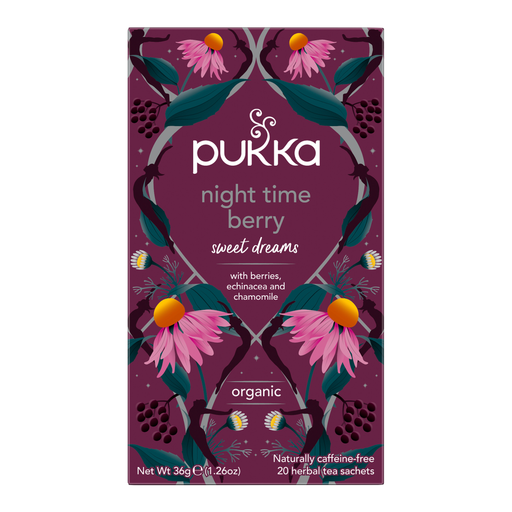
This berry herbal infusion is an option if you accept Pukka’s Fair for Life certification rather than requiring the FAIRTRADE Mark.
 No image available
A berry herbal tea for shoppers who are open to an ethical certification other than Fairtrade.
The listed pack contains 20 sachets and weighs 36g. Pukka says its teas are Fair for Life certified; this is not evidence that this pack carries the FAIRTRADE Mark.
Look for the FAIRTRADE Mark on the exact pack. Fairtrade International says that, if the mark has an arrow, the back of the packaging explains more about the certified ingredients and sourcing method.
Not necessarily. Clipper lists Fairtrade tea and fruit infusions as separate products, while Twinings has separate fruit-and-herbal and Organic & Fairtrade collections. Check the fruit infusion’s own pack.
Do not rely on the name alone. Twinings describes fruit tea as an infusion without Camellia sinensis tea leaves, but check the ingredients and caffeine statement on the particular blend you are buying.
No. Pukka says its teas are Fair for Life certified, which offers a differently named certification choice. If you specifically require the FAIRTRADE Mark, check for that mark on the individual product instead.
Only if black tea is a drink you would choose in its own right. Sainsbury’s lists fruit infusions and Fairtrade black tea as different products; the black tea’s certification does not certify the fruit infusion.