Choose a fruit or berry infusion with an explicit Fairtrade claim on its own pack if that claim is essential to your shop range. For visible counter service, check whether bags are individually enveloped; for frequent service, consider the pack count as well. Organic or Fair for Life-certified infusions can broaden the range, but those claims do not make a product Fairtrade-certified.
Who is this choice for?
The right starting point depends on whether the shop needs a Fairtrade shelf claim, a particular serving format or a wider fruit-infusion range.
Buyers planning a Fairtrade-labelled range
If Fairtrade will appear on shelf labels, menus or gift packaging, check the certification wording for each product rather than relying on the tea brand’s wider commitments. The Fairtrade Foundation distinguishes between the classic FAIRTRADE Mark and the Fairtrade Sourced Ingredient Mark.
Counter-service and hospitality buyers
For customer-facing service, decide whether each bag needs its own envelope and tag. UK trade retailer A1 Coffee lists Birchall Red Berry & Flower in a 250-count dispenser box of individually enveloped string-and-tag bags; pack count and presentation are separate choices.
Fruit-infusion range curators
If the range can include products without a Fairtrade claim, organic and other sourcing credentials offer a different route. Pukka describes its teas as Fair for Life-certified, while Twinings describes its Fruit & Herbal range as caffeine-free. Check those attributes on the particular product selected.
What should you check before buying?
Set the shop’s certification requirement first, then choose a serving format and inspect each blend’s ingredients and pack claims.
Explicitly Fairtrade-labelled infusion
Choose when: Fairtrade is part of the claim the shop needs to make about this particular fruit or berry product.
Bear in mind: A blended infusion’s Fairtrade claim does not necessarily mean every ingredient is certified; read the mark and accompanying wording.
Organic infusion with another sourcing credential
Choose when: An organic fruit range matters, but an individual Fairtrade claim is not required for every line.
Bear in mind: Pukka’s stated Fair for Life certification must not be described as Fairtrade certification.
Broader fruit-infusion range
Choose when: Fruit-infusion variety takes precedence over a Fairtrade claim on each product.
Bear in mind: A brand’s separate Fairtrade tea collection does not establish that its fruit infusions carry the same claim.
| Priority |
What to check |
Your needs |
| Fairtrade claim |
Read the mark and wording on the exact pack. For blends, check which ingredients the claim covers; the Fairtrade Foundation distinguishes the classic FAIRTRADE Mark from the Fairtrade Sourced Ingredient Mark. |
I need shelf and menu wording that accurately describes the product I stock, not just the brand. |
| Serving format |
Check whether bags are individually enveloped and tagged, how many come in a box and how the box dispenses them. A1 Coffee lists Birchall Red Berry & Flower as 250 individually enveloped string-and-tag bags. |
Will customers see each serving at the counter, or do I mainly need a format that is straightforward to replenish? |
| Blend and caffeine |
Read the ingredients and caffeine description for the exact blend. UK trade retailer Jurang describes Clipper Fairtrade Berry Burst as caffeine-free; a berry-flavoured name alone is not confirmation. |
I want to describe the infusion accurately when someone asks what is in it or whether it contains caffeine. |
| Other credentials |
Keep organic, Fair for Life, packaging and Fairtrade claims distinct. Pukka states that its products are organic-certified and its teas are Fair for Life-certified. |
An organic fruit line would add variety to my range, even if that particular product cannot be labelled Fairtrade. |
Which assumptions can cause problems?
-
Treating every ethical-sourcing claim as Fairtrade
Organic and Fair for Life are distinct from Fairtrade. Using them interchangeably can make a shelf or menu description inaccurate.
Use the wording supported by the current product pack. Pukka describes its teas as Fair for Life-certified; do not relabel that claim as Fairtrade.
-
Assuming every ingredient in a berry blend is Fairtrade-certified
Certification wording can apply differently across the ingredients in a blend. Single Portions states that Fairtrade-compliant hibiscus and rooibos make up 83% of its listed Lichfields Red Berries infusion.
Keep the stated ingredient coverage with the product description rather than turning it into a claim about the whole blend.
-
Choosing a large box without checking bag presentation
Pack count alone does not tell you how an individual serving will look at a counter or in a gift selection.
Check both the box size and the wrapping. A1 Coffee lists Birchall’s 250-count Red Berry & Flower box as individually enveloped; confirm the current pack before ordering for visible service.
-
Inferring caffeine status from a fruit-flavoured name
The flavour name does not describe every ingredient in a blend. Caffeine status matters when staff need to answer a specific customer question.
Check the ingredients and the caffeine wording for each product rather than applying one fruit infusion’s description to the whole range.
Which brands are relevant?
These brand and retailer references show different certification and range approaches; they do not establish that every fruit infusion from each name carries a Fairtrade claim.
Clipper
Clipper describes itself as a Fairtrade tea company. UK trade retailer Jurang lists its Fairtrade Berry Burst as an organic, Fairtrade-certified, caffeine-free berry tea in a 250-bag format.
- A named berry product offers a starting point for a Fairtrade-focused range.
- Check the current pack’s claim, ingredients and bag wrapping before deciding how to present it.
Birchall
UK trade retailer A1 Coffee lists Birchall Red Berry & Flower as Fairtrade-certified in a dispenser box of 250 individually enveloped string-and-tag bags.
- The listed wrapping and dispenser format provide distinct options for guest-facing service and replenishment.
- Confirm the current pack, ingredients and certification wording before listing the product.
Pukka
Pukka states that its products are organic-certified and its teas are Fair for Life-certified. It describes a range of organic fruit teas, with compostable tea bags protected by recyclable paper sachets.
- An option for a shop range built around organic fruit infusions.
- Fair for Life is not a Fairtrade claim; check the exact product before using either credential on shelf signage.
Twinings
Twinings describes its Fruit & Herbal range as caffeine-free and suitable hot or cold. It also has a separate Organic & Fairtrade collection.
- Its fruit-and-herbal range offers a route for shops prioritising infusion variety.
- A separate Fairtrade collection does not establish a Fairtrade claim for a particular fruit infusion.
Waitrose own label
Waitrose & Partners states that its own-label tea has been Fairtrade since 2020. That retailer-wide statement does not identify a particular Fairtrade fruit infusion.
- Relevant to buyers considering own-label tea alongside branded products.
- Inspect the exact fruit-infusion pack before making a product-specific Fairtrade claim.
Joybuy fruit-infusion options
This organic berry infusion is an option for a shop range that can include sourcing credentials other than Fairtrade. Assess its own pack claims before assigning it a place in a Fairtrade-labelled selection.
 No image available
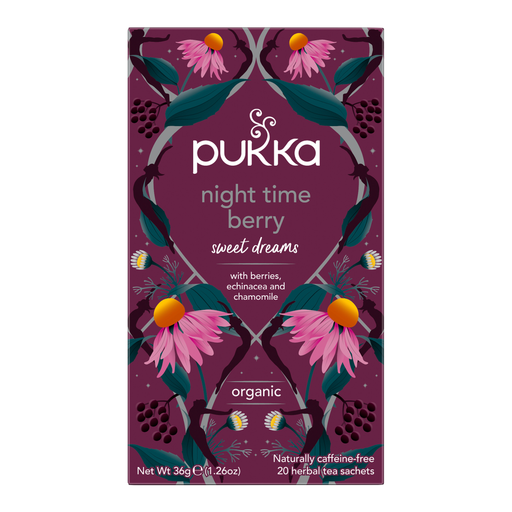
Pukka Night Time Berry Organic 20 Tea Sachets 36g
Consider this berry infusion if your range can include organic options without treating them as Fairtrade-labelled products. The pack contains 20 tea sachets and weighs 36g. Pukka states that its teas are Fair for Life-certified, a separate claim from Fairtrade. Check this pack’s certification wording, bag presentation and caffeine description if those details matter to your selection.
View on Joybuy
Frequently asked questions
Does a FAIRTRADE Mark mean every ingredient in a fruit infusion is certified?
Not necessarily. The Fairtrade Foundation says the classic FAIRTRADE Mark covers all ingredients that can be Fairtrade-certified, while the Fairtrade Sourced Ingredient Mark identifies the sourced ingredient. Read the wording on the particular pack: Single Portions states that Fairtrade-compliant hibiscus and rooibos account for 83% of its listed Lichfields Red Berries blend.
Can I describe a Pukka fruit infusion as Fairtrade because it is Fair for Life-certified?
No. Pukka states that its teas are Fair for Life-certified and its products are organic-certified; neither statement is a Fairtrade claim. Describe a particular fruit infusion using the claims supported by its own pack.
Which bag format should I consider for a customer-facing counter?
Individually enveloped bags are worth considering when each serving will be visible to customers. A1 Coffee lists Birchall Red Berry & Flower in a 250-count dispenser box with individually enveloped string-and-tag bags. Check the current packaging as well as the box count before ordering.
Can I assume a fruit-flavoured tea is caffeine-free?
No; check the exact blend. Twinings describes its Fruit & Herbal range as caffeine-free, and UK trade retailer Jurang describes Clipper Fairtrade Berry Burst as caffeine-free. Those descriptions should not be applied to a different product solely because its name mentions fruit.


