What matters when choosing?
Decide whether the essential requirement is a caffeine-free fruit infusion, a particular certification, or both. Then check the exact pack: a claim about another tea from the same brand does not settle the choice.
FAIRTRADE Mark required
Choose this route: When the named certification matters more than a general ethical-sourcing claim.
Trade-off: Clipper’s Organic & Fairtrade Everyday has an explicit Fairtrade tea statement, but it is black tea rather than a fruit infusion, according to Clipper Tea Shop.
Caffeine-free fruit infusion
Choose this route: When a fruity drink without caffeine is the priority; Twinings describes its fruit and herbal infusion range as naturally caffeine-free.
Trade-off: A caffeine-free description does not establish Fairtrade certification for an individual blend.
Alternative ethical certification
Choose this route: When the buyer accepts Fair for Life instead of requiring the FAIRTRADE Mark; Pukka states that all its teas are Fair for Life certified.
Trade-off: Fair for Life must not be treated as a FAIRTRADE Mark on a particular fruit tea.
| Priority |
What to check |
Your needs |
| Caffeine |
Read the caffeine statement on the exact blend. If choosing an assortment, check each included infusion. |
I’m serving a fruity afternoon drink to someone who prefers to avoid caffeine. |
| Certification |
Look for the applicable mark on the individual pack and check what it covers. The Fairtrade Foundation says the classic FAIRTRADE Mark covers ingredients that can be Fairtrade-certified. |
The FAIRTRADE Mark matters to me, so an organic claim or a different certification will not meet that requirement. |
| Ingredients |
Read the full list, including herbs, roots and flavourings. If medicines or a health condition raise a concern, seek advice about the particular ingredients. |
Before serving an older guest, I want to know what is in the blend, not just its fruit flavour. |
Brand references
These product-line examples help distinguish fruit infusions from certification claims; a brand name alone does not establish either property for every pack.
Clipper
Clipper Tea Shop describes its Organic Blackcurrant and Blueberry as a naturally caffeine-free herbal infusion. Its separately named Organic & Fairtrade Everyday product is black tea.
- The Everyday black tea has an explicit statement that its tea is traded in compliance with Fairtrade standards, total 100%.
- That statement does not establish Fairtrade certification for the Blackcurrant and Blueberry infusion.
Twinings
Twinings describes its fruit and herbal infusion range as naturally caffeine-free and presents its Fruit Discovery Collection as a mid-afternoon option.
- The collection contains four fruit infusions, offering a choice of blends for a shared serving.
- Check each blend’s ingredients and the individual pack if Fairtrade certification is required.
Pukka
Pukka offers fruit teas and states that all its teas are Fair for Life certified.
- Its stated certification offers an alternative for a shopper who accepts the Fair for Life scheme.
- Fair for Life is not the FAIRTRADE Mark; check the chosen blend separately for caffeine and ingredients.
Joybuy fruit and herbal tea options
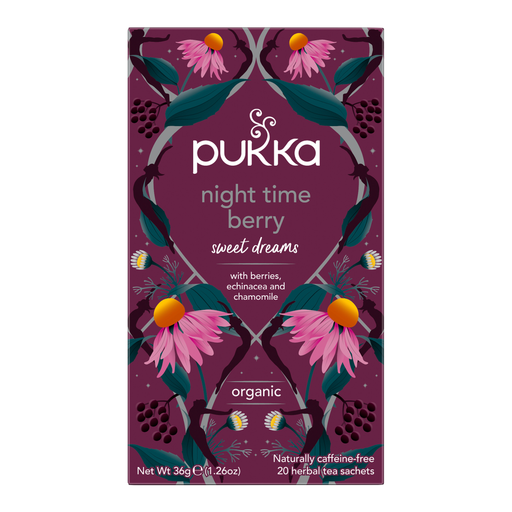
This Pukka berry tea is an option to consider if Fair for Life is acceptable instead of a required FAIRTRADE Mark. For an afternoon serving, check the exact pack’s caffeine statement and ingredients; its Night Time name does not answer those questions.
 No image available
Pukka Night Time Berry Organic, 20 tea sachets, 36g
For a berry tea when an alternative ethical-certification scheme is acceptable: Pukka states that all its teas are Fair for Life certified, which is distinct from the FAIRTRADE Mark. The pack contains 20 tea sachets and is labelled 36g. Confirm the caffeine status and read the ingredients before serving, especially if medicines or a health condition make a particular ingredient a concern.
Joybuy
Questions about fruit tea and Fairtrade
What counts as Fairtrade for this purchase?
Check the mark on the particular product, not a general ethical-sourcing statement. The Fairtrade Foundation says the classic FAIRTRADE Mark indicates that all ingredients capable of Fairtrade certification are Fairtrade-certified; check the label’s scope if a different mark appears.
Is every fruit tea caffeine-free?
Do not assume so from the name alone: read the exact product’s caffeine statement. Twinings describes its fruit and herbal infusion range as naturally caffeine-free, but that range description does not establish the status of every product sold as fruit tea.
What should I check before serving a fruit infusion to an older person?
Read the complete ingredients and consider any concerns relevant to the person drinking it. Clipper’s Blackcurrant and Blueberry infusion, for example, lists liquorice alongside other botanicals. If the blend is being used as a herbal remedy, or medication or a health condition raises a question about an ingredient, ask a pharmacist or clinician; NHS cautions about interactions involving some herbal medicines should not be taken as a claim that every fruit drink has that effect.
Does Pukka’s Fair for Life certification mean it has the FAIRTRADE Mark?
No. Pukka says its teas are Fair for Life certified, which is a different certification description from the FAIRTRADE Mark explained by the Fairtrade Foundation. If the latter is a requirement, check the mark on the specific tea pack.


