Shoppers checking Fairtrade claims
If the sourcing claim matters to your top-up purchase, look at the mark and wording on the individual sweet, not just the retailer’s Fairtrade range.


If Fairtrade sourcing is the priority, choose a chocolate treat whose own pack carries a FAIRTRADE Mark and check what the claim covers; chocolate is not the same treat as traditional fudge. If you specifically want fudge, check that product’s pack rather than assuming its chocolate flavour or a retailer’s wider Fairtrade commitments certify it.
If the sourcing claim matters to your top-up purchase, look at the mark and wording on the individual sweet, not just the retailer’s Fairtrade range.
If fudge is the treat you want, keep that format preference separate from certification. A fudge listing or chocolate flavour alone does not establish a Fairtrade claim for the product.
Check the current pack’s ingredients, allergens and suitability statements before choosing, particularly if you are switching from fudge to a chocolate bar.
Choose it when: A Fairtrade claim matters more to you than getting traditional fudge, and the individual pack confirms the claim.
The trade-off: A chocolate bar is a different treat, and a Fairtrade cocoa claim does not necessarily mean physically segregated cocoa.
Choose it when: Fudge’s format is your priority and you can check the exact pack for any sourcing claim you require.
The trade-off: A retailer’s Fairtrade commitments do not, by themselves, establish certification for an individual fudge product.
| Priority | What to check | Your needs |
|---|---|---|
| Fairtrade claim | Find the FAIRTRADE Mark on the exact pack and read which ingredient or product claim it identifies. The Fairtrade Foundation says its Fairtrade Sourced Ingredient Mark indicates one Fairtrade-sourced ingredient. | I want to know what the claim covers on the sweet I am buying, rather than relying on its flavour or where it is stocked. |
| Cocoa traceability | Read any traceability wording beside the mark. Fairtrade International permits mass balance for cocoa, so a Fairtrade claim alone does not establish physical segregation in an individual bar. | If physically segregated cocoa matters to me, I need more specific information than the word “Fairtrade” on its own. |
| Ingredients and allergens | Read the current pack’s ingredient list, allergen information and any relevant dietary statement; check precautionary wording as well. | I need the particular pack to fit my ingredient or dietary requirements, even if I have bought the product before. |
| Treat and pack size | Decide whether you want fudge or a chocolate bar, then check the pack weight. Waitrose & Partners lists fudge and Fairtrade chocolate in separate categories; one listing does not establish the other’s certification. | For a quick top-up, the type and size of treat matter to me, but I do not want to mistake chocolate-flavoured fudge for certified Fairtrade chocolate. |
Waitrose & Partners says the cocoa used in its own-label confectionery has been Fairtrade since 2020. That retailer-level statement does not establish the certification claim on every individual fudge pack.
Check the FAIRTRADE Mark and accompanying wording on the product you intend to buy.
Fairtrade International permits mass balance for cocoa, under which Fairtrade and non-Fairtrade cocoa can be mixed during processing. A Fairtrade cocoa claim therefore does not, on its own, establish physical segregation in the finished sweet.
If physical traceability matters to you, read the pack’s specific traceability information before choosing.
Ingredients and allergen information can change with a recipe, including for a familiar small treat.
Read the current physical pack for ingredients, allergens, precautionary statements and any dietary claim relevant to you.
Waitrose & Partners lists fudge and Fairtrade chocolate separately, making it useful for comparing the two types of treat.
A Waitrose & Partners listing identifies Divine Fairtrade 70% Dark Chocolate with Raspberries as made using Fairtrade cocoa and sugar.
Marks & Spencer lists fudge among its Foodhall sweets, including chocolate fudge.
Sainsbury's has a Fairtrade catalogue, but a Fairtrade range and a product name containing “fudge” are different kinds of information.
These two 180g chocolate bars are options if you are considering chocolate instead of traditional fudge. Check each physical pack’s Fairtrade mark and wording before relying on a sourcing claim.
 No image available
A caramel and sea-salt chocolate bar to consider if chocolate suits your top-up purchase instead of fudge. Check the exact pack’s Fairtrade claim and its current milk, soya and precautionary allergen information.
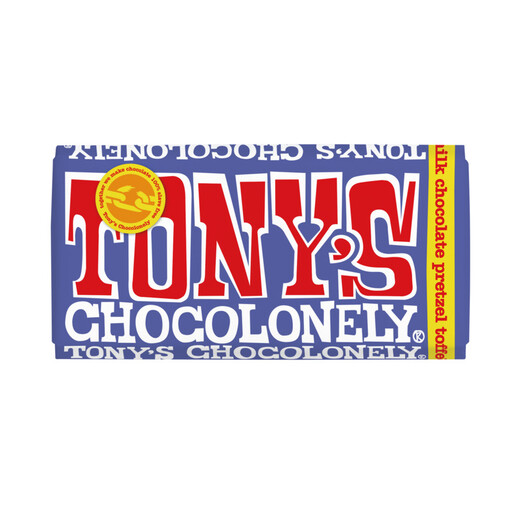 No image available
A pretzel-and-toffee chocolate bar, not a pack of traditional fudge. If its sourcing claim matters to you, check the mark and wording on the exact pack; also read its current milk, soya, wheat and precautionary allergen information.
No. Chocolate flavour or the presence of cocoa does not establish a Fairtrade claim. Check the exact pack’s FAIRTRADE Mark and wording; the Fairtrade Foundation says its Fairtrade Sourced Ingredient Mark identifies one Fairtrade-sourced ingredient.
Not necessarily. Fairtrade International permits mass balance for cocoa, which can allow mixing during processing. If physical segregation matters to you, look for specific traceability information on the pack rather than assuming it from a Fairtrade claim.
Use the listing to compare products, but read the current physical pack before eating or serving one. Ingredients and allergen information can change when a recipe changes.
Check the product name, ingredients and allergens, pack weight and date marking, as well as any Fairtrade claim. UK food-labelling guidance from the Department for Environment, Food & Rural Affairs and Food Standards Agency identifies ingredients including allergens, weight or volume, and a best-before or use-by date as information displayed on pre-packed food.