Who is each option for?
The choice depends on whether the stall’s priority is an accurate Fairtrade ingredient claim, straightforward presentation of a packaged product, or a recipe that meets the school’s allergy policy.
Organisers prioritising Fairtrade sourcing
Choose chocolate or cocoa with a Fairtrade statement you can check on the pack, and keep that pack with the stall’s ingredient records. The Fairtrade Foundation distinguishes a claim about a sourced ingredient from certification of the finished product, so describe homemade fudge accordingly.
Parents planning around allergies
Check declared ingredients, “may contain” warnings and the school’s nut policy separately. Tesco’s Green & Black’s cooking chocolate listing and Waitrose’s baking-chocolate listings carry nut warnings; changing the fudge recipe does not remove a warning on an ingredient.
Volunteers short on preparation time
Sealed, ready-made fudge lets you retain the original label for customers to inspect. Check the particular pack before sale: the ASDA listing for Thorntons Vanilla Fudge names milk and soya ingredients and warns that it may also contain egg and peanuts.
Relevant brand references
These examples help distinguish Fairtrade-labelled baking ingredients from ready-made fudge; a brand’s inclusion does not establish the status of every product it sells.
Waitrose
Waitrose Cooks’ Ingredients dark and milk chocolates are baking ingredients with Fairtrade cocoa statements.
- Waitrose lists 72% cocoa and a 99.5% Fairtrade total for its Belgian Dark Chocolate; its Belgian Milk Chocolate listing states a 76.2% Fairtrade total.
- The dark listing warns that it may contain milk and nuts, while the milk chocolate may contain nuts. Neither ingredient’s statement certifies homemade fudge.
M&S
M&S lists Fairtrade Cocoa Powder as an ingredient for a cocoa-based recipe.
- A cocoa powder gives organisers an alternative to making fudge with a chocolate bar.
- M&S says this powder is not suitable for people with a milk allergy. Check the purchased pack before using it.
Tesco
Tesco lists Green & Black’s cooking chocolate and Naturya cacao powder as Fairtrade-labelled ingredient options.
- Tesco’s Green & Black’s cooking-chocolate listing states 70% cocoa and a 100% total for Fairtrade cocoa, sugar and vanilla on a mass-balance basis.
- That chocolate may contain nuts and milk. Tesco says its Naturya cacao powder is packed in a facility that also handles peanuts and nuts.
Thorntons
Thorntons Vanilla Fudge is a ready-made option for a stall that wants to retain the original retail pack.
- The ASDA listing provides ingredients and precautionary allergen information for the 150g vanilla fudge.
- That listing names milk and soya and warns that the fudge may also contain egg and peanuts. Check the pack for any Fairtrade claim before describing the product as Fairtrade.
Joybuy ingredients to consider for homemade fudge
These are a dark chocolate bar and a cocoa powder to assess for a homemade fudge recipe, not ready-made fudge. Check recipe suitability, current pack statements and the school’s allergy policy before using either.
 No image available
Green & Black’s Dark Chocolate 70% 90g
Consider this bar if your fudge recipe calls for dark chocolate, but check that it suits the method you plan to use. Joybuy lists a minimum of 70% cocoa solids and says the Fairtrade cocoa, sugar and vanilla have a 100% total on a mass-balance basis; that statement does not certify the finished fudge. The listing warns that it may contain almonds, hazelnuts, milk and nuts, so check the current pack and school policy.
View on Joybuy
 No image available
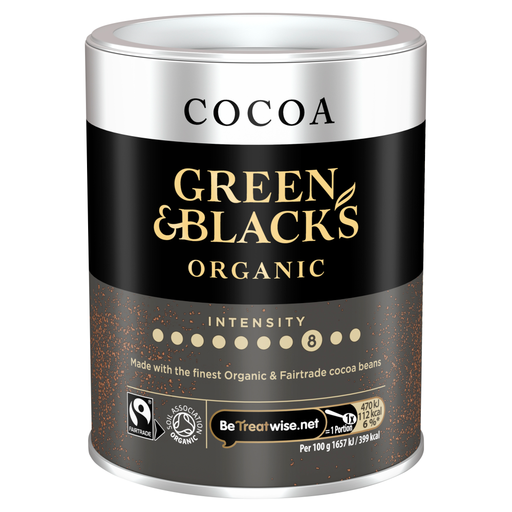
g&B Organic Cocoa 125g
Consider this cocoa powder for a cocoa-based fudge recipe. Check the purchased pack for its precise formulation and Fairtrade wording before describing the ingredient: the listing gives conflicting descriptions of the cocoa content. It also flags possible milk cross-contact; check the pack for nut warnings and follow the school’s policy.
View on Joybuy
Questions about Fairtrade fudge and allergens
Does Fairtrade chocolate make homemade fudge Fairtrade-certified?
No: a Fairtrade statement on the chocolate applies to the claim made for that ingredient, not automatically to the finished fudge. The Fairtrade Foundation distinguishes the classic FAIRTRADE Mark from a Fairtrade Sourced Ingredient claim; read the pack before choosing wording for the stall.
Can fudge made without added nuts be sold in a nut-free school zone?
Do not assume so. The Waitrose baking chocolates and Tesco’s Green & Black’s cooking chocolate listed here carry nut warnings. Check the school’s policy, every current ingredient label, and the preparation and packaging arrangements before deciding whether a recipe meets its requirements.
What ingredient information should a school stall keep?
Keep the packs for purchased ingredients or ready-made fudge, along with an accurate record of the complete homemade recipe. GOV.UK and the Food Standards Agency say food supplied at school fetes and fundraisers must be safe; ask the school or local authority what packaging and allergen information applies to the way your stall offers it.
Is sealed ready-made fudge simpler than making it?
It can simplify presenting the manufacturer’s original ingredient label, but it does not settle Fairtrade status or allergen suitability. For example, the ASDA listing for Thorntons Vanilla Fudge names milk and soya and warns that it may also contain egg and peanuts; check the particular pack before sale.


