Families looking for Fairtrade sourcing
If sourcing is the deciding factor, check the mark on the biscuit pack and whether it applies to the product or a named ingredient. Fairtrade International distinguishes between those types of claim.


Choose a Fairtrade-labelled ginger biscuit if its sourcing claim matters to you, but check the mark on the exact pack: a claim on chocolate or a different biscuit does not cover ginger nuts. For an occasional biscuit, also check the supplied pack’s allergens and per-biscuit nutrition. If you are choosing a routine after-school snack instead, NHS Healthier Families suggests options such as fruit and vegetables in place of biscuits.
If sourcing is the deciding factor, check the mark on the biscuit pack and whether it applies to the product or a named ingredient. Fairtrade International distinguishes between those types of claim.
Compare the intended portion and the supplied pack’s allergen advice. For routine after-school snacks, NHS Healthier Families suggests alternatives to biscuits, including fruit and vegetables.
Check the school’s allergy policy and whether the food provision falls under the rules for that setting. England’s school-food requirements should not be treated as rules for a snack eaten at home or assumed to apply across the UK.
Consider when: Fairtrade sourcing matters more than finding a biscuit specifically named a ginger nut, and the exact pack carries an applicable mark.
Keep in mind: Certification does not establish the biscuit’s nutritional or allergen suitability.
Consider when: The preference is for a ginger biscuit rather than verified Fairtrade sourcing.
Keep in mind: Check the particular pack for allergens and nutrition; neither the product name nor another product’s certification settles those questions.
Consider when: A routine after-school snack matters more than having a ginger biscuit. NHS Healthier Families suggests fruit and vegetables among its alternatives to biscuits.
Keep in mind: Choose an option that also fits the child’s allergies and the setting where it will be eaten.
| Priority | What to check | Your needs |
|---|---|---|
| Fairtrade claim | Look for the mark on the exact biscuit pack. Fairtrade International says its Sourced Ingredient Mark applies to a named ingredient; the Fairtrade Foundation describes the classic mark as covering all ingredients that can be Fairtrade certified. | I want to know whether the sourcing claim covers the biscuits I am buying, rather than a different ginger or chocolate product. |
| Portion and nutrition | Read the serving information and sugar figure for the exact variant, then consider the portion being offered. Do not combine per-biscuit figures from different pack sizes. | For an occasional biscuit, I want to compare what is on the pack. For routine snacks, I may prefer one of the alternatives to biscuits suggested by NHS Healthier Families. |
| Allergens and setting | Read the supplied pack’s ingredients and precautionary allergen statements. If the snack is going to school or a club, check its allergy policy and the rules applicable to that provision. | A biscuit’s name will not tell me whether it suits a child’s allergies, and a school may have requirements that do not apply at home. |
| Pack format | Check the pack weight and whether the listing is for one pack or a case. Confirm the label and availability before choosing a bulk format. | I want an amount that suits how often the biscuits will be served, without mistaking a case for a single pack. |
Fairtrade chocolate and ginger nuts are separate products. Waitrose’s certified-sustainable-palm-oil wording on Essential Ginger Nuts is also a different sourcing claim.
Check the exact biscuit pack for an approved mark and read whether an ingredient-specific mark names only one ingredient.
Allergen statements vary by formulation. Marks & Spencer says its Made Without Wheat Stem Ginger Snaps are not suitable for people with nut or peanut allergies.
Read the supplied pack’s ingredients and precautionary statements, and follow any relevant school allergy policy.
A Fairtrade claim addresses sourcing, not whether a biscuit is suitable as a routine snack. NHS Healthier Families suggests alternatives to biscuits, including fruit and vegetables.
If choosing ginger nuts as an occasional biscuit, compare the intended portion with the nutrition information on that pack.
Wish4 Fairtrade’s ginger-biscuit listing describes a case of twelve 220g packs, which is a different purchase quantity from one household pack.
Check the listed pack count, the supplied label and availability before choosing a bulk format.
Its Ginger Nuts are a conventional ginger-biscuit option, not an established Fairtrade choice.
Its own-label Ginger Nuts have separately listed 250g and 300g variants.
Its 300g Ginger Snaps offer a similarly named ginger-biscuit category, rather than a product called Ginger Nuts.
Essential Ginger Nuts are distinct from the retailer’s other ginger-containing products.
Its ginger biscuits are worth checking when a Fairtrade claim matters more than the exact Ginger Nuts name.
Its Ginger Snaps and Made Without Wheat Stem Ginger Snaps are distinct formulations.
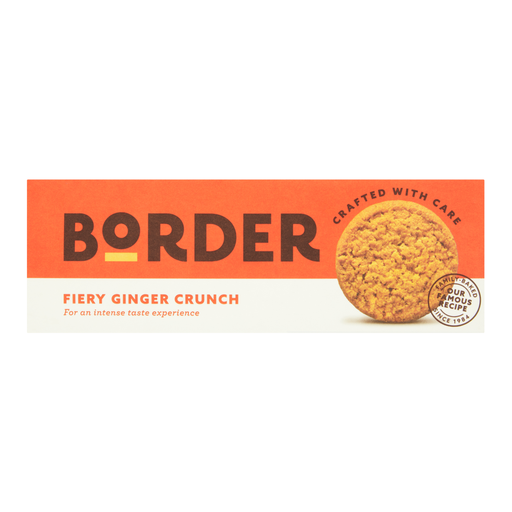
This ginger biscuit is an option to consider for an occasional after-school treat. Check its pack for Fairtrade claims, allergens and serving information if those affect your choice.
 No image available
A ginger biscuit to consider when choosing an occasional after-school treat. The pack is 135g; check the supplied label for allergens, serving information and any Fairtrade claim before deciding whether it fits your needs.
No allergen conclusion follows from the name. The checked McVitie’s Ginger Nuts listing identifies wheat, while Marks & Spencer warns that a different ginger biscuit is unsuitable for people with nut or peanut allergies. Read the supplied pack’s label and any relevant school allergy policy.
No. Fairtrade International’s mark guidance distinguishes a product claim from a claim about a named sourced ingredient. Check the mark on the ginger-biscuit pack itself.
Check the particular provision before serving them; a snack eaten at home is not the same as food provided to pupils by a school. The Requirements for School Food Regulations 2014 set nutritional requirements for food and drink provided to pupils in maintained schools and pupil referral units in England. Confirm how the current standards and the school’s allergy policy apply to the club rather than assuming a UK-wide permission or ban.
No blanket purchase ban follows from the Department of Health and Social Care’s guidance on restrictions affecting the promotion and placement of certain foods high in fat, salt or sugar in shops and their online equivalents. Those retail rules do not determine whether a school may serve a particular biscuit.
Read the supplied pack before serving the biscuits, particularly when an allergy is involved. Retailer product information can change, so use the ingredients and allergen statements on the pack you receive.